
Best Hearing Aids for Seniors (2026)
Quick answer: for most seniors with mild to moderate hearing loss, an OTC receiver-in-canal aid with rechargeable batteries and Bluetooth is the best starting point — and the right fit, trial, and support matter more than the brand name.

Affiliate disclosure: As an Amazon Associate I earn from qualifying purchases. This guide contains affiliate links — it costs you nothing extra and keeps our content free. Product picks come from our research into published specifications and owner feedback — prices and availability change, so check the current listing. Read our affiliate disclosure.
The best hearing aids for seniors are not the most expensive ones, and they are not the smallest ones either. The best choice is the aid that matches your kind of hearing loss, fits your ears and your hands, works in the rooms where you actually struggle, and comes with a trial long enough to prove itself in real life. That is the short answer, and it is worth holding on to, because most of the confusion in hearing aid shopping comes from ranking devices by a single feature, usually price or invisibility, while ignoring the fit, the follow-up care, and the noisy restaurant where the aid has to earn its keep.
One more honest note before the picks. We are not a testing lab, and we have not worn these devices, run laboratory measurements on them, or fitted them to patients. What we have done is compare published manufacturer specifications, recurring patterns in owner feedback, and the public guidance of hearing professionals, and we have organised that research around the questions seniors actually ask. Where a claim belongs to a manufacturer, we say so. Where a choice depends on your ears, we say that too, and we point you toward the professional who can settle it.
How We Picked: Public Specs, Not Pretend Lab Tests
Our method is deliberately plain, because hearing aid marketing is not. We started from the questions in a large set of real searches by American buyers, covering hearing loss types, OTC devices, Costco, tinnitus, ear fit and comfort, background noise, Medicare and insurance, and everyday use with phones, television, and music. Then we read the leading rival guides, including the OTC roundups from NCOA and HearingTracker, the SeniorLiving hearing aid guides, and the public Medicare coverage pages, and we noted what each of them did well and where each of them left a senior reader stranded.
Our comparison therefore judges categories by five criteria, stated openly so you can disagree with us. First, match to hearing loss: does this category suit mild to moderate loss, or does it belong in a professional fitting? Second, fit and handling: can the intended wearer put it in, take it out, clean it, and charge it without help? Third, speech in noise: does the design favour conversation in a restaurant or a family gathering, or only quiet-room clarity? Fourth, everyday connectivity: does it handle phone calls, television, and music in a way a non-technical wearer can actually use? Fifth, support after purchase: is there a trial period, a reachable support team, and follow-up help when the first settings do not work? A device that scores well on sound and badly on handling is a bad senior pick, however impressive its specification sheet looks.
We also deliberately refuse three things that rival guides often do. We do not print prices, because prices change constantly and a printed price is stale the week after publication; check the current listing instead. We do not print star ratings or review counts, because those numbers shift, can be gamed, and tell you nothing about whether the aid fits your ears. And we do not claim hands-on testing we did not do. If a guide tells you it laboratory-tested a device, ask what laboratory, what method, and what the raw results were; if it cannot answer, treat the claim as marketing.
The Short List: Six Categories Compared
Start here if you want the map before the detail. The table below compares categories, not individual winners, because the right category matters more than the right brand, and because brands change models faster than categories change. Read across the row that matches your situation, then read the section that explains it.
| Category | Best for | Style | Why it stands out | Watch out for |
|---|---|---|---|---|
| OTC receiver-in-canal | Most seniors with mild to moderate loss | Behind the ear, thin wire into the canal | Balanced sound, Bluetooth, rechargeable, app control | Needs a phone or app for full setup on many models |
| OTC in-the-ear | Wearers who dislike anything behind the ear | Sits in the ear, earbud style | Discreet, secure, familiar shape | Smaller to handle, shorter battery life on some models |
| Budget OTC | First-time buyers testing whether aids help | Usually in-the-ear or simple behind the ear | Lowest entry cost, simple controls | Less advanced noise handling, thinner support |
| OTC with remote care | Buyers who want professional help without clinic visits | Usually receiver-in-canal | Remote adjustments and ongoing support included | Higher tier, support quality varies, check the terms |
| Costco hearing aids | Buyers who want in-person testing and follow-up | Behind the ear and receiver-in-canal | Testing, fitting, and follow-up bundled in | Membership required, narrower range, warehouse travel |
| Prescription hearing aids | Severe, profound, or complex loss | All styles, custom fitted | Custom programming, in-person care, widest range | Highest cost tier, clinic visits required |
See these categories on Amazon (search links only; check the current listing for price, trial terms, and compatibility):
- OTC hearing aids for seniors — Check on Amazon
- Jabra Enhance hearing aids — Check on Amazon
- Audien hearing aids — Check on Amazon
- ELEHEAR hearing aids — Check on Amazon
- MDHearing hearing aids — Check on Amazon
- Sennheiser All-Day Clear hearing aids — Check on Amazon
- Behind-the-ear hearing aids for seniors — Check on Amazon
- Rechargeable hearing aids for seniors — Check on Amazon
Hearing Loss Types: Why the Kind of Loss Decides the Aid
Hearing loss is not one condition, and that is why a single best hearing aid cannot exist. The kind of loss you have decides which devices are even eligible, which features matter, and whether you should be shopping OTC at all. Start with the degree of loss. Mild loss means you miss soft sounds and struggle in noise but follow most quiet conversation. Moderate loss means ordinary conversation takes effort and you often ask for repeats. Severe loss means even loud conversation is hard without amplification. Profound loss means you may hear very little speech even with powerful amplification, and you need specialist assessment and possibly options beyond standard hearing aids. OTC aids are designed for the first two categories, mild to moderate, and that boundary is not a suggestion; it is the limit of what the category is built and regulated to serve.
Next, consider the pattern of loss, because two people with the same degree can need different help. High-frequency loss, the most common age-related pattern, takes the edges off speech: consonants blur, voices sound muffled, and women and children can be harder to follow than deep male voices. Low-frequency loss is less common and affects deeper sounds and the fullness of voices. A cookie-bite pattern, where mid-range frequencies dip while high and low frequencies hold up better, can make speech oddly uneven and is worth naming to a professional, because a preset designed for a typical age-related slope may not suit it. A flat loss across frequencies, a loss in only one ear, and a loss that differs sharply between ears each point toward different fittings, and a sharp difference between ears is itself a reason to seek professional assessment rather than ordering a pair online.

OTC vs Prescription: The Decision That Comes First
The FDA rule that created OTC hearing aids changed the market in a genuinely useful way: adults with perceived mild to moderate hearing loss can now buy a regulated hearing device without a prescription, a hearing exam, or an in-person fitting. That removed a real barrier of cost, travel, and waiting time, and for a senior with straightforward mild to moderate loss, it is a legitimate route. It did not remove the need for judgement. OTC suits straightforward cases. It does not suit severe or profound loss, sudden loss, one-sided loss that is sharply worse, or loss paired with the red-flag symptoms listed at the top of this guide.
Prescription hearing aids, by contrast, are fitted by a licensed professional after testing, and they can serve the full range of hearing loss, including severe and profound loss and complex patterns. The fitting itself is part of the product: the audiologist measures your hearing ear by ear, programs the aids to that measurement, checks how they perform in your actual ears, and adjusts them over follow-up visits. That care is why prescription aids sit in a higher cost tier, and why comparing an OTC price with a prescription price without comparing the care bundled into each is misleading. You are not buying the same thing at two prices; you are buying a device in one case and a device plus a professional service in the other.
Styles and Fit: Behind the Ear, In the Ear, and Bone Conduction
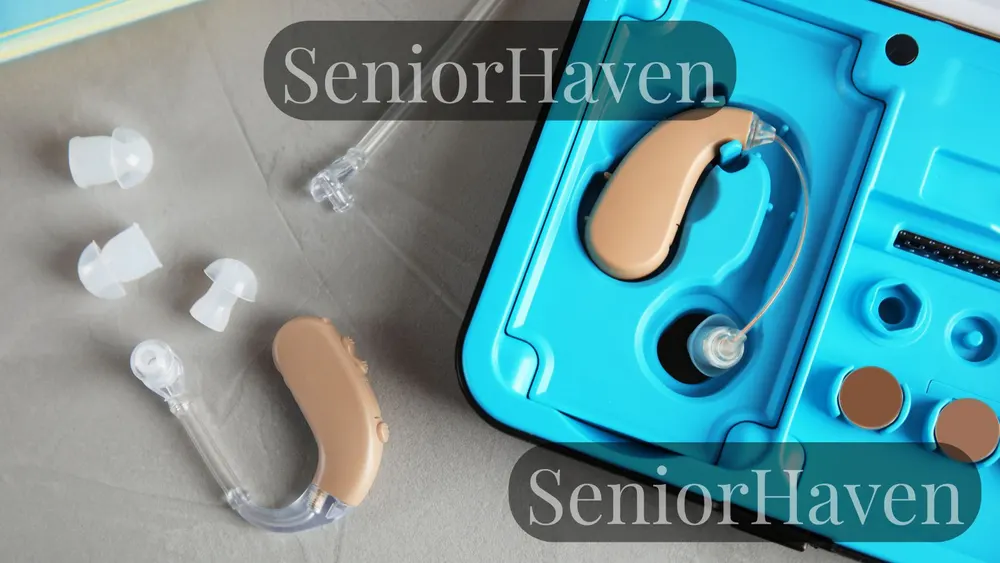
Four style families cover almost everything a senior will meet. Receiver-in-canal aids, often shortened to RIC, put the main body behind the ear and run a thin wire to a small receiver inside the canal. They are the most common OTC style, they balance sound quality, battery life, and Bluetooth well, and they suit most mild to moderate loss. Behind-the-ear aids, shortened to BTE, put more of the device behind the ear and suit stronger amplification, which is why they appear in prescription fittings for more severe loss. In-the-ear aids, including completely-in-canal models, sit inside the ear and are the most discreet, but they are smaller to handle, can be harder to insert and remove, and may offer less battery life and fewer features. Bone conduction devices, which send sound through vibration in the cheekbone rather than through the ear canal, suit specific situations such as certain conductive losses or single-sided deafness, and they belong in a professional conversation rather than an impulse purchase.
Fit is where many purchases quietly fail, and it is the section rival guides underwrite most. A hearing aid that whistles, slips, hurts after an hour, or falls out when you put on a coat has failed, however good its sound processing is. Ear canals differ in size and shape, and small ear canals in particular need the right dome or tip size; most brands include several sizes, and trying all of them is not fussy, it is the fitting. Earwax matters too: wax can block sound and cause whistling, and a cleaning routine, plus a wax guard where the design uses one, is part of owning the device, not an optional extra. If you produce a lot of wax, mention it to the seller or audiologist before you buy, because it affects which style and which maintenance routine suits you.
Dexterity deserves emphasis because it decides whether the aid gets worn at all. Small batteries, tiny buttons, and fiddly battery doors defeat many seniors, and the honest answer is to choose handling over invisibility. Rechargeable aids remove battery changes entirely. Larger behind-the-ear bodies are easier to grip than tiny in-canal shells. Tap controls and app controls can help, but only if the wearer can actually use the app; if the wearer cannot, a device with simple on-device volume control, or a device a family member sets once and leaves alone, is the better pick. Judge every candidate by this test: can the person who will wear it put it in, take it out, and charge it alone, on a bad day, without help?
Background Noise: Restaurants, Cars, and Family Gatherings
Three features do most of the work in noise, and they are worth understanding before you shop. Directional microphones favour sound from in front of you and soften sound from behind and to the sides, which helps when you face the person you want to hear. Noise-reduction processing tries to separate steady background sound, such as an air conditioner or traffic hum, from speech, and soften the former. Dedicated programs let you switch to a setting tuned for noisy rooms, rather than relying on one automatic setting to guess correctly. When you compare devices, ask how each of these works, whether you can switch programs yourself, and whether the switching is simple enough to do in a restaurant without pulling out a phone and an app manual.
Seating and positioning do as much as processing, and they cost nothing. Sit with your back to a wall, away from the kitchen door, the bar, and the music speaker, and face the person you most want to hear. In a car, the driver and the front passenger hear each other better than anyone in the back seat, and turning down the radio before starting a conversation is not rude, it is practical. At a family gathering, a smaller room beats a large echoing hall, and sitting at the end of a table beats sitting in the middle of a cross-talk. These are not consolation prizes for a weak device; they are how people with normal hearing manage noisy rooms too, and they multiply whatever your aids can do.
Tinnitus: What Hearing Aids Can and Cannot Do
Tinnitus, the ringing, buzzing, or hissing heard without an outside source, commonly travels with hearing loss, and it is one of the most searched reasons buyers come to hearing aids. The honest picture has two halves. On the one hand, hearing aids can help some people with tinnitus, because restoring everyday sound gives the brain something else to attend to, and because some devices offer masking sounds, steady noise or nature sounds, that sit underneath the ringing and make it less prominent. Several OTC models now include a library of masking sounds and let the wearer layer more than one, which is a genuinely useful feature if ringing bothers you most in quiet rooms or at night.
On the other hand, no hearing aid cures tinnitus, and any seller who promises a cure is selling, not advising. Masking helps some people a great deal, helps others only a little, and does nothing for some, and the only way to know which group you fall into is a trial in the rooms where the ringing bothers you. Also, tinnitus that is new, one-sided, pulsing in time with your heartbeat, or paired with hearing loss, dizziness, or pain deserves a medical check before any device purchase, because those patterns can signal conditions that need diagnosis first. Insurance, where it exists, generally ties any benefit to documented hearing loss rather than to tinnitus alone, so do not buy on the assumption that ringing by itself unlocks coverage.
The Costco Route: Membership, Testing, and Follow-Up
Costco occupies a distinctive place in American hearing care, and it deserves a fair hearing rather than either hype or dismissal. The model is straightforward: members visit a Hearing Aid Center inside a warehouse, receive a hearing test, are fitted with hearing aids from a limited range that includes the Kirkland Signature line alongside major manufacturer brands, and receive follow-up appointments for cleaning, adjustment, and maintenance as part of the ongoing relationship. For a senior who wants a person rather than an app, and who lives within reasonable reach of a warehouse with a Hearing Aid Center, that bundle is genuinely attractive, and it is one of the reasons Costco appears so often in buyer searches.
The trade-offs are equally straightforward. You need a membership to buy and to keep receiving the follow-up care, and the range on offer is narrower than the whole market, so a buyer who needs a specialised fitting or a particular brand may not find it there. High-volume retail fitting also suits straightforward cases better than complex ones: if your loss is severe or profound, if it is sharply one-sided, if you have tinnitus with complicating features, or if previous fittings have failed, a specialist audiology clinic with more time per patient and more fitting tools may serve you better, even at a higher cost. None of that makes Costco a bad choice; it makes it a choice with a clear best-fit buyer, namely the senior with straightforward loss who values in-person care and can travel to a warehouse.

Medicare, Insurance, and Veterans Benefits: Check Your Own Plan
Medicare is the most misunderstood part of hearing aid shopping, so let us be precise and cautious at the same time. Original Medicare, meaning Part A and Part B together, generally does not cover hearing aids or the exams used to fit them. Part B may cover diagnostic hearing and balance exams when a doctor orders them to investigate a medical condition, which is a different thing from a fitting exam, and confusing the two is a common and costly mistake. Medigap supplement plans generally follow Original Medicare, so they do not add hearing aid coverage on their own.
Medicare Advantage plans, known as Part C, are where a hearing benefit sometimes appears. Many such plans include some hearing benefit, often structured as a yearly allowance, a copay arrangement, or a benefit administered through a third-party hearing network, and the amount and the approved providers vary widely from plan to plan and from county to county. That variation is the whole story: two neighbours on two different Advantage plans can have completely different hearing benefits, and a benefit advertised in general terms may apply only to specific devices or specific providers. During open enrollment, compare the hearing benefit specifically, provider list and all, rather than assuming plans are alike.
Private insurance outside Medicare follows the same rule of variation. Some employer or marketplace plans include a hearing benefit, some cover hearing aids only for children, and many cover nothing at all for adult hearing devices. State rules differ too, and a handful of states require some hearing coverage, so your state of residence can matter. Before you buy, call your plan and ask, in plain language, whether a hearing benefit exists, what it covers, which providers it applies to, and whether OTC purchases count or only provider-fitted devices count. Write down the name of the person you spoke to and the date, because coverage answers given on the phone have a way of changing later.
Veterans should check the VA route before paying out of pocket, since eligible veterans may receive hearing testing, devices, and follow-up through the VA, depending on eligibility and enrollment. Charitable and community routes also exist in some areas, including service organisations that have historically helped with hearing aid costs, and state vocational or assistive technology programs, but these vary by location and by need, and none should be assumed. The practical order is: check the VA if you are a veteran, check your insurance or Advantage plan, check your state programs, and only then decide what you will pay yourself. Buying first and hoping for reimbursement later is the most common financial mistake in this market.
Bluetooth, Phones, Television, and Music
Compatibility is the catch, and it deserves a check before purchase, not after. Not every phone works with every aid for every feature: some combinations support streaming but not hands-free calling, some support one brand of phone better than another, and newer Bluetooth audio standards may work only with newer phones. Check the manufacturer's compatibility list for your exact phone model, not just your phone brand, and if you plan to change phones soon, factor that in. If the wearer does not use a smartphone at all, weigh Bluetooth less heavily and handling more heavily, because a feature that needs an app the wearer cannot use is decoration.
Television deserves its own thought, because it is the single most common daily complaint. Some hearing aids stream television audio through a phone or a dedicated TV accessory, and some wearers prefer a separate TV listening device, such as a headset or a speaker system designed for hearing loss, alongside or instead of hearing aids. Both routes are legitimate, and the right one depends on whether the problem is hearing the television at all, hearing it without disturbing others, or hearing it while also following conversation in the room. If television is your main complaint, test the aid with your actual television, at your normal volume, in your normal seat, during the trial period, rather than assuming a streaming feature will fix it.
Batteries and Charging: Rechargeable vs Disposable
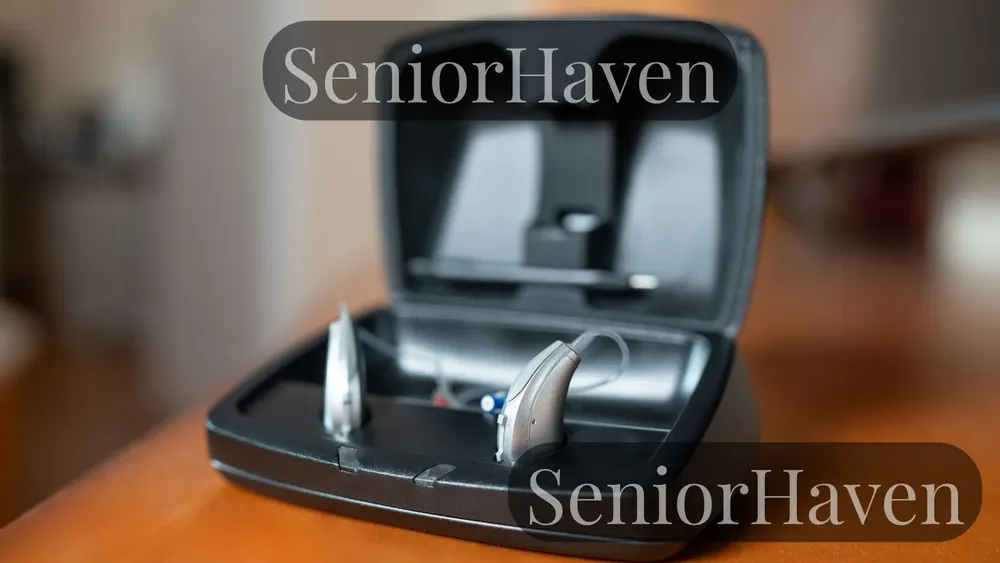
Almost every current OTC aid is rechargeable, and for most seniors that is the right default. You place the aids in their case at night, the case charges them, and in the morning they are ready, with no tiny batteries to buy, store, or fumble with. Cases differ: some hold extra charges for travel, some charge only from a wall outlet, and some are small enough to carry in a pocket while others belong on a bedside table. If you travel, or if power cuts are a concern, a case with spare charges is worth more than a slimmer case. If the wearer forgets routines, a single visible bedside charging spot, used every night without exception, beats a clever case that lives in a drawer.
The Buying Checklist: Trial, Returns, and Red Flags
Use this checklist in order, and do not skip steps because a listing looks convincing. First, clarify the loss: a recent hearing test, ear by ear, or at minimum an honest account of which situations cause trouble, and a red-flag check against the list at the top of this guide. Second, choose the route: OTC for straightforward mild to moderate loss, Costco or a local audiologist for buyers who want in-person care, prescription fitting for severe, complex, or one-sided loss. Third, choose the style by handling, not by photograph: can the wearer insert, remove, and charge it alone? Fourth, check compatibility: phone model, television setup, and glasses, tested together where possible.
Fifth, read the trial and return terms before you pay, and treat them as part of the product. How long is the trial, does the clock start on delivery or on first use, is return shipping free, is there a restocking charge, and what condition must the aids be in for a return? A generous trial is worth more than a small saving, because the only honest test of a hearing aid is weeks of real life. Sixth, confirm support: who do you call when sound is wrong, how quickly do they answer, and does support include remote adjustments or only troubleshooting? Seventh, plan the fitting follow-up: who adjusts the settings after week two, when the first impressions have settled and the real adjustments begin?
During the trial, keep a short daily note, not a formal diary, just a few lines: what worked, what whistled, what hurt, what you could not hear, and whether you wore the aids all day or took them out. That note is what turns a vague feeling that the aids are not right into a specific adjustment request, and it is what stops a buyer from returning a good aid that only needed a dome change, or keeping a bad aid out of politeness. At the end of the trial, decide on evidence: if the situations that mattered most are clearly better, keep them; if they are not, return them and try another route rather than settling.
Mistakes Buyers Make With Hearing Aids
Mistake one is buying for invisibility first. The smallest, most hidden aid is a wonderful thing if it also fits, sounds right, and can be handled, but invisibility alone is a poor reason to choose a device that is hard to insert, hard to charge, or weak in noise. Most people notice your hearing, not your hearing aid: they notice whether you follow conversation, not whether a device is visible behind your ear. Choose the aid people will see you wearing happily over the aid nobody sees because it sits in a drawer.
Mistake three is judging the aid on day one. The brain needs time to relearn sounds it has been missing, and day-one judgements, in either direction, are unreliable. A device that sounds odd on day one may sound natural by week three, and a device that sounds impressive in a quiet shop may disappoint in a restaurant. Give the trial its full length, and judge by the situations that matter, not by the first hour.
Mistake five is buying on price alone, in either direction. The cheapest device is not the best value if it cannot handle noise, cannot be adjusted, and ends up unworn, and the most expensive device is not the best choice if its extra features serve needs you do not have. Value means the right category, the right fit, and the right support for your loss and your life, at a cost you can sustain if settings or hearing change later.
For Caregivers: Ease of Use, Dementia, and Daily Routines
Caregivers buy or manage hearing aids more often than guides acknowledge, and their questions differ from the wearer's. The first caregiver question is handling: can the person put the aids in and take them out alone, or will you be doing it every morning and night? If you will be doing it, choose a style you can handle confidently yourself, practise insertion together during the trial, and keep a spare set of domes and a cleaning tool in one known place. A device the caregiver cannot manage is a device that will not be worn on the days the caregiver is away.
Dementia adds a layer that deserves plain discussion. Hearing loss and dementia commonly travel together, and untreated hearing loss can worsen isolation and confusion, because a person who cannot follow conversation withdraws from it. At the same time, a person with dementia may remove aids, lose them, or be distressed by new sounds, and an app-controlled device they cannot operate is the wrong tool. For this buyer, simplicity wins: a rechargeable behind-the-ear aid with minimal controls, a single routine, and a caregiver who manages charging and cleaning. Discuss the plan with the person's doctor or audiologist, because the right approach balances hearing benefit against distress and loss risk, and there is no one-size answer.
Budget Tiers Without the Hype: Entry, Mid-Range, and Premium
The mid-range tier is where most seniors with mild to moderate loss will find their best balance. Devices here typically offer rechargeable batteries, Bluetooth streaming, app control, noise-reduction programs, and some form of remote or in-person support. They handle restaurants better than entry devices, they offer more adjustment when the first settings do not suit, and they remain far below the cost tier of a full prescription fitting. If you have one tier to investigate thoroughly, investigate this one.
The premium tier, whether premium OTC with extensive remote care or full prescription fitting, suits buyers who need the most: complex loss, demanding listening environments, a strong need for ongoing professional adjustment, or a history of failed fittings. The extra cost buys care and customisation more than raw loudness, and for the right buyer that care is worth it. For a buyer with straightforward mild loss, premium care may be more than needed, and spending more does not automatically buy better hearing.
When OTC Is the Wrong Answer
OTC hearing aids are a genuine advance, and this guide recommends them warmly for the buyers they suit. They are the wrong answer in a clear set of cases, and naming those cases plainly is part of honest advice. OTC is wrong for severe or profound loss, because it is not designed or regulated for that range. It is wrong for sudden hearing loss, for loss sharply worse in one ear, and for loss paired with pain, drainage, dizziness, or one-sided ringing, because those patterns need medical assessment first. It is wrong as a substitute for a professional fitting when previous fittings have failed, when the ear canal is unusually shaped or very small, or when a condition such as Meniere disease or an acoustic neuroma is part of the picture.
If you recognise yourself in any of these cases, the next step is not another product page but an appointment: an audiologist for testing and fitting, or a doctor if red-flag symptoms are present. Take this guide's checklist with you, take your glasses, take a list of the situations where you struggle, and take a family member if you can. A good professional will welcome an informed buyer, and the appointment will settle questions that no guide, including this one, can settle from a distance. That is not a disclaimer; it is the honest endpoint of good shopping advice.
Frequently Asked Questions
- What is the difference between OTC and prescription hearing aids?
- OTC hearing aids are sold directly to adults with perceived mild to moderate hearing loss, without a prescription, a hearing exam, or an in-person fitting. Prescription hearing aids are fitted by a licensed professional and can serve a wider range of hearing loss, including severe and profound loss and more complex cases. OTC is a starting point for straightforward mild to moderate loss, not a replacement for professional care when the loss is severe, sudden, one-sided, or paired with pain, drainage, dizziness, or ringing that is new.
- Does Original Medicare pay for hearing aids?
- Generally, no. Original Medicare does not cover hearing aids or the exams used to fit them, though it may cover diagnostic hearing and balance exams ordered by a doctor to investigate a medical condition. Some Medicare Advantage plans offer a hearing benefit, but the amount, the approved providers, and the devices covered vary widely from plan to plan. Check your own plan documents or call your plan before you assume anything is covered, and do not buy on the basis of a general promise in an advertisement.
- Are hearing aids covered by private insurance?
- Sometimes, partly, and only under your own plan rules. Some private plans and some Medicare Advantage plans include a hearing benefit with an allowance or a network of providers, while many plans cover nothing at all for hearing devices. Ask three questions before you buy: does my plan include a hearing benefit, which providers and devices does it apply to, and is there a yearly allowance or a copay structure. Get the answer in writing if you can, because a phone assurance is hard to rely on later.
- What hearing loss do OTC hearing aids suit?
- OTC hearing aids are intended for adults with perceived mild to moderate hearing loss. In plain language, that means you notice you miss soft voices, you struggle in noisy rooms, or you often ask people to repeat themselves, but you can still follow most conversations one to one in a quiet room. If you cannot follow ordinary conversation even in a quiet room, if one ear is much worse than the other, or if your hearing changed suddenly, talk to an audiologist or doctor first rather than ordering OTC and hoping.
- Which hearing aid style is easiest for seniors with arthritis or poor dexterity?
- For most people with stiff or sore fingers, a behind-the-ear style with a rechargeable case is the easiest to live with. There are no tiny batteries to fumble with, the body of the aid sits behind the ear where it can be gripped, and the charging case is large enough to hold. In-the-ear styles that sit fully inside the canal are more discreet, but they are smaller to handle and harder to insert and remove. If dexterity is a real concern, judge the aid by how it feels in your hands, not by how invisible it looks in a photograph.
- Do hearing aids help with tinnitus?
- Hearing aids can help some people with tinnitus, mainly because restoring sound makes the ringing less noticeable, and some devices also offer masking sounds such as steady noise or nature sounds that sit underneath the ringing. That is not the same as a cure, and no device should be sold to you as one. If ringing is new, one-sided, pulsing, or paired with hearing loss, dizziness, or pain, talk to a doctor or audiologist before buying anything, because those patterns deserve a medical check first.
- What hearing aids does Costco sell, and do I need a membership?
- Costco sells hearing aids through its Hearing Aid Centers, including its own Kirkland Signature line alongside major manufacturer brands, and buying there generally requires a Costco membership. The appeal is in-person testing, fitting, and follow-up appointments bundled into the purchase. The trade-off is that you must be able to get to a warehouse with a Hearing Aid Center, and the range on offer is narrower than the whole market. If you live far from a Costco or you need a specialist fitting, that convenience may not apply to you.
- Can I wear hearing aids with glasses?
- Yes, and millions of people do, but the combination deserves a test before you commit. A behind-the-ear aid and a glasses arm share the same small patch of skin behind the ear, so thick or heavy frames can push the aid out of place or press uncomfortably. Take your own glasses to the fitting or the trial, wear both together for a full day if you can, and check comfort when you put the glasses on and take them off. Slimmer frames and a receiver-in-canal style usually share the space more peacefully.
- How do I hear better in noisy restaurants with hearing aids?
- Start with the features, then with the seating. Directional microphones and noise-reduction programs are designed to favour speech in front of you and soften sound from behind and to the sides, and a program you can switch to for noisy rooms is worth more than a long feature list. In the restaurant itself, sit with your back to the wall, away from the kitchen door and the music speaker, and face the person you most want to hear. No hearing aid restores normal hearing in a loud room, so the honest goal is clearer conversation, not perfect silence around it.
- Should I get hearing aids for one ear or both?
- If both ears have hearing loss, two aids usually work better than one, because the brain locates sound and separates speech from noise by comparing what both ears hear. With one aid, sound can feel lopsided and noisy rooms get harder. If only one ear has meaningful loss, a single aid for that ear is the sensible answer. A hearing test that measures each ear separately is what settles this, not a guess based on which ear you think is worse.
- How long does it take to get used to hearing aids?
- Most new wearers need weeks, not hours, and the first days can feel odd. Ordinary sounds such as running water, rustling paper, and your own voice may seem loud or tinny at first, because your brain has been living without those sounds for a long time. The usual advice is to build up wearing time gradually, start in quiet rooms, and give the settings a fair trial before judging them. If sound stays painful, distorted, or one-sided after the adjustment period, go back to the provider rather than quietly leaving the aids in a drawer.
- Are hearing amplifiers the same as hearing aids?
- No, and the difference matters. A personal sound amplifier simply makes everything louder, including background noise, and it is not regulated as a hearing device for hearing loss. A hearing aid, including an OTC hearing aid, is regulated, is designed to shape sound for hearing loss rather than just turn up the volume, and must meet safety and labelling rules. If a product is marketed only as an amplifier and is very cheap, treat it as a different category, not as a bargain hearing aid.
- Can veterans get hearing aids through the VA?
- Veterans may be able to get hearing aids and hearing care through the VA, depending on eligibility, enrollment, and the rules that apply to their situation. The VA route is worth checking before you pay out of pocket, because it can include testing, devices, and follow-up that would otherwise be a large expense. Contact the VA or your local VA medical center and ask what hearing benefits apply to you, since eligibility is individual and cannot be promised in a general guide.
- What should I check during a hearing aid trial period?
- Test the situations that matter to you, not just the quiet living room. Make a short list before the trial starts: a one-to-one conversation at home, a phone call, a television program at normal volume, a noisy meal, and a walk outside. Note what works, what whistles, what hurts, and what you cannot adjust. Also check the practical things: can you put the aids in and take them out alone, can you charge them without help, and do you know how to reach support. A trial that only proves the aids work in silence has proved very little.
- When should I see an audiologist instead of buying OTC?
- See an audiologist or doctor if your hearing loss is severe or profound, if it is much worse in one ear, if it changed suddenly, or if you have ear pain, drainage, dizziness, pulsing ringing, or ringing in only one ear. Also seek professional care if a previous fitting failed, if you have a condition such as Meniere disease or an acoustic neuroma, or if you need a custom fit for a very small or unusually shaped ear canal. OTC is for straightforward mild to moderate loss; anything complicated belongs with a professional.