← Back to Mobility & Daily Living
Mobility & Daily LivingBest Lightweight Wheelchairs for Seniors: Light, Foldable and Easy to Lift
Six lightweight wheelchairs that fold small, lift easy, and roll well — with the honest wheelchair-vs-transport-chair guide every family should read first.
Affiliate disclosure: as an Amazon Associate, SeniorHaven earns from qualifying purchases. Product picks come from our research into real reviews and manufacturer specifications — prices and availability change, so check the current listing. It costs you nothing extra, and it keeps this site free. Read our affiliate disclosure.
Finding the best lightweight wheelchairs for seniors usually starts in a parking lot — a hospital discharge, a parent who cannot manage the walk to the car, or a family discovering that the borrowed steel wheelchair weighs a ton and will not fit in the trunk. Here is the direct answer: for most seniors, the best lightweight wheelchair is the Drive Medical Viper Plus GT — an aluminum self-propelled chair that folds flat, lifts easily, and rolls well enough for daily use. If the person will never push themselves and you just need the easiest thing to lift into a car, skip the big wheels entirely and get a transport chair like the Medline Lightweight Transport — lighter still, and it folds to nearly nothing. Whichever you choose, measure the narrowest doorway first: a chair that cannot get through the bathroom door is a very expensive coat rack. Below are six real, heavily reviewed models, plus the wheelchair-vs-transport-chair guide and the buying mistakes I see families make most.
I will tell you the story I hear from families again and again, because if you are living it right now, you are not alone. It is 2 p.m. on discharge day. Your dad — 78, proud, exhausted after a knee replacement — is wheeled to the entrance in the hospital's battered steel loaner chair. It weighs a small planet. You get him into the passenger seat, fold the chair, and discover it does not fit in your sedan's trunk. Not even close. So the chair rides home tilted across the back seat while your dad watches the road in silence, and you are both doing the math: every doctor's appointment, every family lunch, every trip to the pharmacy — this, over and over. That afternoon, sitting in the driveway with a trunk that won't close, is exactly when most families start researching lightweight wheelchairs. Consider this guide the answer you wish you had found the night before.
A lightweight wheelchair is not just lighter. It is the difference between going and staying home. A heavy chair means every outing needs two people, ten minutes, and a back you are willing to risk. A light chair means one person — even a petite daughter or an elderly spouse — can fold it, lift it, and get going. That is what you are really buying here: outings that actually happen, instead of appointments that keep getting cancelled because the chair is too much trouble. If the next appointment is this week, start with the wheelchair-vs-transport-chair section below — choosing the right type takes five minutes and prevents the most expensive mistake in this guide.
| # | Chair | Type | Best for | Watch out for |
|---|---|---|---|---|
| 1 | Drive Medical Viper Plus GT | Self-propelled lightweight | Best overall | Heavier than ultra-light models |
| 2 | Karman Healthcare S-115 Ergonomic | Ultra-light self-propelled | Easiest to lift and fold | Smaller seat options |
| 3 | Drive Medical Silver Sport 2 | Self-propelled lightweight | Best budget | Basic padding, heavier frame |
| 4 | Medline Lightweight Transport Wheelchair | Transport chair | Best for car travel | Cannot be self-propelled |
| 5 | Drive Medical Silver Sport 2 with Elevating Leg Rests | Self-propelled, elevating rests | Leg elevation needs | Heavier than the standard config |
| 6 | Medline Bariatric Transport Chair | Heavy-duty transport | Taller and heavier users | Bulkier fold, needs wide doors |
How We Picked These Chairs
SeniorHaven does not do hands-on testing — we are honest about that, because a review site that pretends it tested forty wheelchairs is lying to you. What we do instead is slower and, we believe, more useful: we dig through manufacturer specifications, read owner-review patterns (what repeat buyers praise, what they complain about after six months), and check the picks against safe-transfer guidance from occupational-therapy practice. A chair made this list only if it has a long track record on the market, consistently positive real-world feedback, and no recurring red-flag pattern in owner complaints. No brand pays for placement, and nothing here is sponsored. If you want the full methodology, it is in our editorial policy.
Best Lightweight Wheelchairs for Seniors — Our 6 Picks
1. Drive Medical Viper Plus GT — Best Overall
This is the chair I recommend first to most families, and the reason is boring in the best way: it handles the widest range of situations without a glaring weakness. The aluminum frame folds side-to-side into a slim package, the seat-to-floor height works for most adults, and the push-to-lock wheel brakes do their job without drama. It is self-propelled, so a senior with reasonable arm strength can roll themselves around the house — and that independence is worth more than any feature on a spec sheet. As general guidance, aluminum chairs in this class land roughly in the low-to-mid 30s of pounds, which is the range where one person can realistically lift a folded chair into a trunk. Check the current listed weight and seat-width options before ordering, since configurations change.
Pros
- Aluminum frame folds flat for the trunk
- Self-propelled — protects independence
- Balanced across weight, comfort and durability
Cons
- Heavier than true ultra-light models
- Basic seat padding — add a cushion for long days
- Not the narrowest folder for tight doorways
2. Karman Healthcare S-115 Ergonomic — Best Ultra-Light for Travel
When the lifting is done by a petite daughter or an elderly spouse — and this is extremely common — every pound matters, and the Karman S-115 is the pick that respects that. Its claim to fame is the S-shaped ergonomic seat, which spreads sitting pressure more evenly than a flat sling seat (a comfort difference you feel on hour two of an outing). It folds down narrow, and among self-propelled chairs it sits near the light end of the class — this is the chair for families who live out of the car: doctor's offices, church, grandchildren's houses. The honest trade-off: seat-width options are more limited than bigger models, and it costs more than the budget picks. If lifting is the whole problem, this is your answer.
Pros
- Among the lightest self-propelled chairs in its class
- Ergonomic S-shaped seat for longer sits
- Folds narrow for small trunks
Cons
- Limited seat-width options — measure hips first
- Costs more than budget picks
- Footrests are simple swing-away style
3. Drive Medical Silver Sport 2 — Best Budget
Here is the honest truth about the Silver Sport 2: it is the chair most families actually end up with, and there is nothing wrong with that. It has been around for years, it shows up in doctor's offices everywhere, and it does the core job — a senior sits safely, rolls, folds the chair, and goes home — without ceremony. The frame is heavier than the aluminum picks above, and the padding is basic, but the price reflects that honestly. If the budget is the deciding factor, this is the right low-cost chair, not a flimsy compromise. Do add a seat cushion if the person will sit for more than an hour or two — the stock padding is the one place the low price shows.
Pros
- Honest low price from a long-standing model
- Simple, proven design — nothing to break
- Widely available wear parts
Cons
- Heavier than aluminum picks
- Basic padding — budget for a cushion
- Seat depth can feel short for tall users
4. Medline Lightweight Transport Wheelchair — Best for Car Travel
This is the chair for the family that lives in the car. The Medline transport chair folds down to almost nothing — this is the flattest-folding option on this list — and it is the lightest class of chair here, because there are no big wheels and no handrims. The push handles have hand brakes, which genuinely matter on slopes and ramps: the caregiver squeezes to slow the chair instead of fighting gravity with their arms. The non-negotiable truth: this is not a wheelchair in the self-propelled sense. There are no handrims, so the person sitting in it cannot move themselves — a caregiver must push at all times. If your parent still has arm strength and values independence, buy pick #1 or #2 instead. If the chair's whole job is getting a frail parent from the car to the appointment and back, nothing beats this for convenience.
Pros
- Flattest fold — easiest trunk fit
- Lightest class on this list
- Push-handle hand brakes for slopes
Cons
- Cannot be self-propelled — always needs a pusher
- Small wheels struggle on rough ground
- Narrower seat — measure hips carefully
5. Drive Medical Silver Sport 2 with Elevating Leg Rests — Best with Elevating Leg Rests
This is the same honest chair as pick #3, ordered in the configuration for legs that need to be up — swollen ankles, post-surgery recovery, long days where the feet need elevation. The elevating leg rests swing away for transfers, which matters because a chair you cannot get into easily is a chair that breeds resentment. Two honest notes: this configuration costs more and weighs more than the standard Silver Sport 2, and elevating leg rests are not a recliner — they raise the legs, they do not fix circulation on their own. Follow whatever the doctor or therapist said about elevation time and height; the chair is the tool, not the treatment plan. If the legs are the issue but the budget is tight, this is still cheaper than the premium elevating models.
Pros
- Elevating rests for swollen or recovering legs
- Swing-away rests for easy transfers
- Same proven Silver Sport 2 frame
Cons
- Heavier and pricier than the standard config
- Not a recliner — elevation has limits
- Rests add length when folded
6. Medline Bariatric Transport Chair — Best for Taller and Heavier Users
Weight capacity is not a detail to round up on — it is the spec that matters most after fit, and this is where the bariatric line earns its place. The Medline bariatric transport chair has a wider seat (the 22-inch version is the common one), a reinforced frame, and a weight rating substantially higher than standard chairs. It also suits taller users well, because the extra seat depth and height options give long legs somewhere to go. The trade-offs are real: it folds bulkier, it weighs more than standard transport chairs, and it needs genuinely wide doorways — measure the narrowest door in the house before anything else. Always verify the current weight rating on the product listing before buying, since manufacturers revise models; treat the rating as a tested maximum, not a target, and choose comfortably above the user's weight.
Pros
- Wide seat and genuinely higher capacity
- Good fit for taller users too
- Same simple transport-chair folding
Cons
- Bulkier fold than standard chairs
- Heavier to lift into the trunk
- Needs wide doorways — measure first
Wheelchair vs Transport Chair: Which One Do You Actually Need?
This is the decision that matters more than any brand, so let us settle it properly. A self-propelled wheelchair has two large rear wheels with handrims — the metal rings the person grips to push themselves. If your parent can still push, even slowly, a self-propelled chair protects the single most precious thing in this whole situation: the feeling of moving yourself. A transport chair has four small wheels and no handrims — it cannot be self-propelled, full stop. A caregiver pushes it everywhere, always.
| Feature | Self-propelled wheelchair | Transport chair |
|---|---|---|
| Who moves it | The person in the chair (with arm strength) | A caregiver, always |
| Rear wheels | Large, with handrims | Small, no handrims |
| Weight | Heavier (big wheels cost pounds) | Lighter |
| Folded size | Slim but tall | Flattest option |
| Best when | Independence matters | Car travel and appointments dominate |
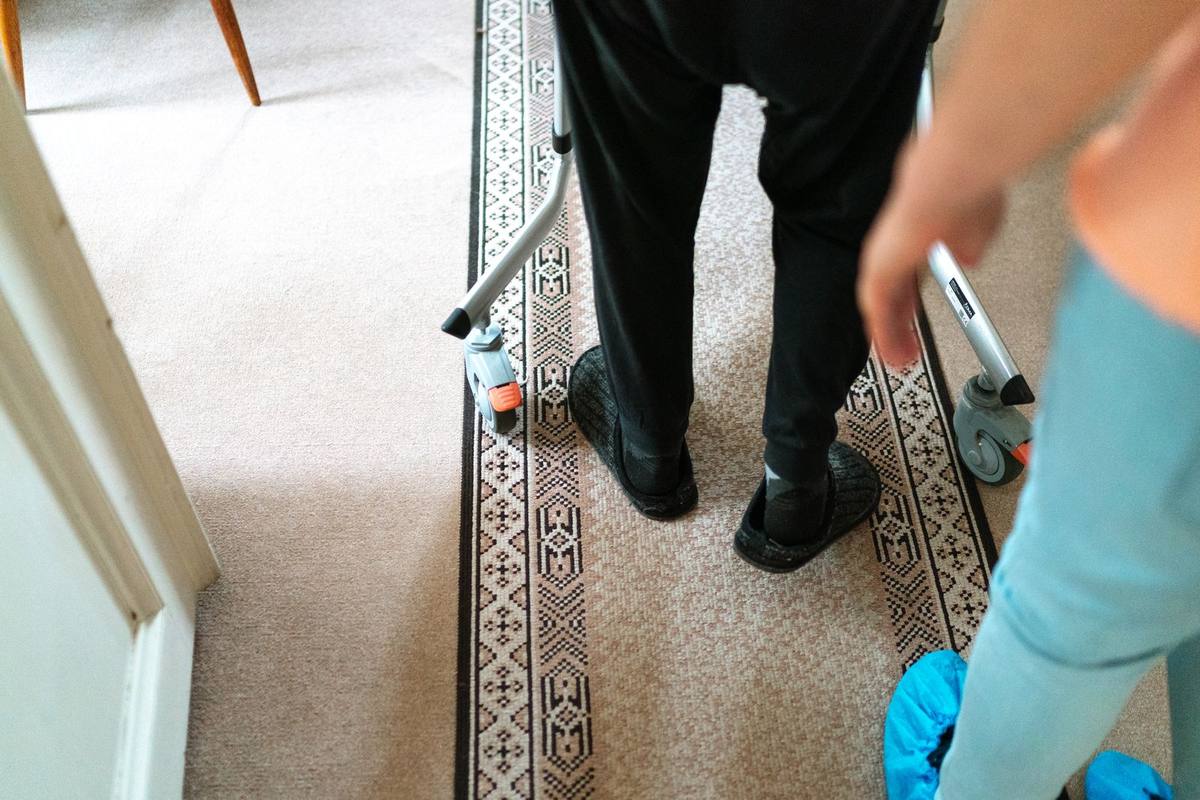
The expensive mistake is buying a transport chair for a parent who could have self-propelled — you save a few pounds and a few dollars, and you take away their independence. The other expensive mistake is buying a big self-propelled chair for a frail parent who will only ever be pushed — you pay in weight and trunk space for wheels nobody will use. Be honest about which person you actually have, not the person you wish you had. And one related thought: if your parent can still walk with support but tires quickly, a walker may be the better daily tool — the chair is for the distances the walker cannot cover.
Car Trunk Lifting & Folding — Make Every Trip Easy
Here is the routine that turns a dreaded lift into a non-event. First, lighten the chair before you fold it — swing away or remove the footrests (they usually lift straight off), take off the seat cushion, and if the chair has quick-release rear wheels, pop them off. Most people skip this and then complain the chair is heavy; the chair is fine, the routine is wrong. Second, fold it side-to-side — grab the seat front and back and pull up; most lightweight chairs collapse into a slim package. Third, lift with your legs, not your back — bend your knees, keep the chair close to your body, and avoid twisting while you lift. Fourth, measure your trunk once — the opening, not just the interior, because the opening is what defeats people. A folded transport chair slides into trunks that defeat a folded self-propelled chair, which is the whole reason pick #4 exists.
Two more practical notes. If the trunk still will not take it, the back seat works fine — fold the chair, lay a blanket down, and slide it in. And if the lifting is done by a petite elderly caregiver (a wife lifting her husband's chair, the most common situation of all), do the whole lighten-first routine every single time and consider the ultra-light pick #2 — the extra cost is cheaper than a back injury, and I mean that literally, not dramatically.
Seat Width & Weight Capacity — The Two Non-Negotiables
Seat width: sit the person down and measure their hips at the widest point, then add about an inch or two of clearance per side. Most adult chairs come in general categories of roughly 16, 18, and 20 inches — 18 suits most average-sized adults, 16 suits smaller frames, and 20 suits larger frames. Too narrow pinches the hips and makes every transfer a fight; too wide lets the person lean and slide, which makes pushing harder and sitting less stable. Then measure the narrowest doorway in the house — a comfortable 20-inch chair is useless if the bathroom door is 24 inches and the chair's overall width with wheels is 26. The chair must fit the person and the house.
Weight capacity: treat the listed rating as a tested maximum, not a target. As a general category pattern, most standard models are rated in the neighborhood of 300 pounds, with heavy-duty and bariatric models rated substantially higher — always verify the current rating on the product listing, since manufacturers revise models. Choose a chair rated comfortably above the user's weight, because sitting down, shifting, and hitting a bump all load the frame harder than sitting still. Never guess the user's weight; ask, or weigh. This is the one spec where optimism is genuinely dangerous.
Caregiver Notes: Pushing Without Wrecking Yourself
A few things nobody tells the pusher. On slopes and ramps, slow the chair with the brakes — transport chairs with push-handle brakes (like pick #4) exist precisely for this; without them, your arms do all the braking, and on a long ramp that gets old fast. Curbs: tip the chair back slightly onto its rear wheels and roll the front casters up first — practice this on your own street before you need it at a busy intersection. Never hang heavy bags on the push handles — a loaded bag can tip a chair backward, especially a light transport chair; use a lap tray or a bag hung low on the frame. For confused or restless sitters, keep the brakes locked whenever you stop, stay within arm's reach, and consider a simple lap belt — not as restraint, but as a reminder that stays put. And the unglamorous truth: check the person's skin and comfort on long days out — a cushion, a short walk break, and a position shift do more than any expensive seat. Caregiving is a team sport; if you are the whole team, our caregiver guides have your back.
Common Mistakes Buyers Make
I have watched families make the same six mistakes for years. Learn from them instead of repeating them:
1. Buying a transport chair for someone who could self-propel. It is lighter and cheaper — and it quietly takes away the person's independence. If there is arm strength, buy the big wheels.
2. Buying a self-propelled chair for someone who will only be pushed. The mirror image: you pay in weight and trunk space for handrims nobody will ever touch. Be honest about the actual user.
3. Not measuring the narrowest doorway. The #1 cause of returns in this category. The bathroom door is almost always the narrowest — measure it before you order anything.
4. Choosing seat width by guessing. Too narrow and every transfer is a fight; too wide and the person leans, slides, and sits unstable. Tape measure, hips, one to two inches of clearance. Thirty seconds.
5. Shopping by weight alone. A featherweight chair with bad brakes and a flimsy seat is a bad chair. Weight matters most for the person lifting it into the car — brakes, seat, and fit matter most for the person sitting in it.
6. Assuming insurance will cover it. "Medicare will pay for it" is the most expensive sentence in this guide when it turns out to be wrong. Check the plan before you buy — get it in writing.
If Budget Is Tight — Honest Alternatives
Mobility should not depend on a big budget, and I would rather you hear this than buy a flimsy no-name chair that flexes under weight. A few honest options: for short-term recovery, renting usually beats buying — medical supply stores commonly rent wheelchairs by the week, and a month of rental is often less than a budget purchase. A used chair from a thrift store or a friend is perfectly fine for longer use — inspect the frame for cracks, make sure the brakes lock firmly, and budget for new wear parts (tires, brake handles, cushion), which are cheap while the frame is the expensive part. Many communities have medical equipment lending programs — ask your local area agency on aging, because a free three-month loan solves a surprising number of situations. As a stopgap, a shower chair for the bathroom plus a bed rail for the bedroom covers the two riskiest rooms while you sort the chair. And the small comfort accessories — a cup holder, a lap tray, a carry bag for the folded chair — make genuinely useful gifts; our grandma gift guide has the wider idea list. What I do not recommend: the cheapest unknown-brand chair on a marketplace. A bad chair is worse than waiting a week with a rental and a helping hand.
The Decision Checklist — Wheelchair, Transport Chair, or Something Else?
- Can they push themselves? Arm strength and the will to use it → self-propelled wheelchair. No → transport chair, and stop paying for big wheels.
- Who lifts it, into what car? Petite caregiver + sedan trunk → ultra-light or transport chair, lighten-first routine every time. Strong lifter + SUV → more options open up.
- Measure the narrowest doorway. The chair's overall width with wheels and arms must clear it with room to spare. The bathroom door decides.
- Measure the hips. Add an inch or two per side. 18 inches suits most adults; go by the tape, not by feel.
- Capacity with margin. Choose a rating comfortably above the user's weight, and verify the current rating on the listing — treat it as a maximum, not a target.
- Test before the first real trip. Fold it, lift it, roll it around the house, lock the brakes on a slope. The driveway is a fine classroom; the hospital parking lot is not.
Chair Care & Maintenance — The 5-Minute Monthly Routine
- Test the brakes. Lock them on a gentle slope — if the chair creeps, adjust or replace the brake assembly before the next outing. Brakes are the whole safety system; everything else is comfort.
- Check the tires. Pneumatic tires need air; solid tires need checking for cracks and flat spots. Worn tires are the most common reason a chair that was fine starts feeling wrong.
- Inspect the upholstery. Tears in the seat or back sling change how the person sits. Replace worn slings — they are inexpensive and they keep posture honest.
- Tighten the bolts. Folding chairs loosen with use. A quick pass over the frame fasteners every month keeps the chair from developing the wobble that precedes real problems.
- Keep the folding mechanism clean. The cross-brace under the seat collects grit. Wipe it down and make sure the chair folds and unfolds without forcing — forcing means something is wrong.
- Store it dry. A garage corner is fine; a damp shed is not. Aluminum resists rust, but upholstery and bearings do not forgive standing water.
When to Call a Professional
Most lightweight wheelchairs are assemble-and-roll. Bring in an occupational or physical therapist when: transfers look unsafe even with the right chair (they will assess the whole person and may recommend a different seating setup entirely); the person has complex positioning needs after a stroke or with progressive conditions — a seating clinic fitting is worth every minute; or falls keep happening despite the equipment, because the problem may be strength, vision, or medication rather than the chair. And be honest with yourself: a wheelchair helps a person who can sit upright and transfer with support — it is not the answer when fall risk is high and supervision is thin.
Cost Planning Without the Guessing
- Medicare and insurance: rules vary widely — some plans cover wheelchairs as durable medical equipment with documented medical need, others do not, and the paperwork differs by plan. Check with your plan or supplier and get the answer in writing before buying. This guide cannot give coverage advice.
- HSA/FSA: many plans accept these funds for mobility equipment — keep receipts and confirm with your plan administrator.
- Rent vs buy: weeks of need → rent; months and beyond → buy. Do the honest math on your situation, not the optimistic one.
- The cheap mistake is the wrong class. A bargain transport chair for someone who needed to self-propel solves nothing. Decide the class from the checklist above, then shop within it.
Quick answers
Best overall: Drive Medical Viper Plus GT — the do-most-things-well lightweight default for most seniors and most homes.
Best for car travel: Medline Lightweight Transport Wheelchair — the flattest fold and lightest lift, but a caregiver must push it at all times.
Best budget: Drive Medical Silver Sport 2 — the honest low-cost lightweight that has been getting the job done for years.
Frequently asked questions
- How much does a lightweight wheelchair usually weigh?
- Most aluminum lightweight wheelchairs land roughly in the low-to-mid 30s of pounds, while a basic steel chair often weighs around 40 pounds or more. Ultra-light models go lighter still, usually with more expensive frame materials. Remember that the listed weight typically excludes add-ons like leg rests and cushions, so the chair you actually lift is a little heavier. If the lightest lift matters most, remove the footrests and the cushion before folding it into the trunk - that alone can make a chair feel like a different, much lighter object.
- What is the difference between a wheelchair and a transport chair?
- A standard wheelchair has large rear wheels with handrims, so the person sitting in it can roll themselves. A transport chair has small rear wheels with no handrims - it cannot be self-propelled, so a caregiver must push it at all times. Transport chairs are usually lighter and fold flatter, which makes them the better choice for frequent car travel, while self-propelled wheelchairs are the better choice for a senior who still has arm strength and wants to stay independent.
- How wide should a wheelchair seat be?
- Measure the person's hips at their widest point and add about an inch or two of clearance on each side - snug is stable, and too wide means leaning and sliding. Most adult wheelchairs come in 16, 18, and 20-inch seat widths as general categories, and 18 inches suits most average-sized adults. Also check the overall width with wheels and arms, because a chair that feels comfortable can still be too wide for the home's doorways - the chair must fit the person and the house.
- Will a lightweight wheelchair fit in a car trunk?
- Most folding wheelchairs fold side-to-side and fit in an average sedan trunk, but 'most' is doing real work in that sentence - measure your trunk's opening and interior, especially with today's smaller sedans. Taking off the quick-release footrests and the seat cushion makes the fold flatter and the lift lighter, and removing the rear wheels takes another big chunk off the width if the chair has quick-release axles. Test the fold at home before you need it at a doctor's office - the parking lot is a bad classroom.
- Does Medicare cover a wheelchair?
- Coverage rules vary - Medicare and private plans sometimes cover wheelchairs as durable medical equipment when there is documented medical need, but the rules, the paperwork, and which models qualify differ by plan and change over time. This guide cannot give coverage advice; the reliable next step is to call your plan or your durable-medical-equipment supplier and ask exactly what they require. Do not buy an expensive chair on the assumption that reimbursement will follow - get it in writing first.
- Should I buy a used wheelchair or rent one?
- For short-term recovery - a few weeks after surgery - renting usually beats buying, and medical supply stores often rent by the week. A used chair from a thrift store or a friend is fine for longer use if you inspect it: the frame must be straight with no cracks, the brakes must lock firmly, the wheels must spin true, and the upholstery must be tear-free. Replace worn tires, brake handles, and cushions - the wear parts are cheap and the frame is the expensive part. Skip any chair with a bent frame or brakes that don't hold, whatever the price.