
← Back to Mobility & Daily Living
Mobility & Daily LivingBest Mobility Scooters for Seniors (2026)
Quick answer: the best mobility scooter for seniors is the one that fits your home, your car, and your longest regular day — folding travel models win on portability, compact 4-wheel models win as all-rounders, and heavy-duty models win outdoors. Start with fit, not with a ranking.

Affiliate disclosure: As an Amazon Associate I earn from qualifying purchases. This guide contains affiliate links — it costs you nothing extra and keeps our content free. Product picks come from our research into published specifications and owner feedback — prices and availability change, so check the current listing. Read our affiliate disclosure.
The best mobility scooters for seniors are not the ones with the longest specification sheets. They are the ones that turn inside your home, lift into your car by the person who will actually lift them, cover your longest regular day on one charge, and feel comfortable after an hour, not just after five minutes in a showroom. That is the short answer, and it honestly covers most of what a family needs to know. The rest is detail worth getting right: folding against disassembling, three wheels against four, battery range against real hills and loads, and the Medicare and airline rules that decide whether a scooter can even travel with you.
| # | Scooter type | Best for | How it travels | Watch out for |
|---|---|---|---|---|
| 1 | Folding travel scooter | Best for flights and car trips | One folded unit | Folded weight can still be heavy |
| 2 | Disassembling travel scooter | Best for lifting in pieces | Several lighter pieces | Reassembly at every stop |
| 3 | Compact 4-wheel home scooter | Best all-rounder | Folds or breaks apart by model | Wider turn than 3-wheel models |
| 4 | 3-wheel indoor scooter | Best for tight homes | Folds or breaks apart by model | Less steady on rough ground |
| 5 | Heavy-duty outdoor scooter | Best for long days outdoors | Usually neither — needs a ramp or lift | Too heavy to lift into a car |
| 6 | Portable scooter plus accessories | Best for daily errands | Depends on base scooter | Accessories never fix a wrong fit |
See the scooter types on Amazon (listings change often, so we never print prices here):
- Folding mobility scooters for seniors — Check on Amazon
- Lightweight portable mobility scooters — Check on Amazon
- Travel mobility scooters for seniors — Check on Amazon
- Mobility scooters for outdoor use — Check on Amazon
- Heavy-duty mobility scooters for seniors — Check on Amazon
- Mobility scooter accessories — Check on Amazon
How We Picked — An Honest Method, Stated Up Front
The first thing to understand about this market is that it is really several markets wearing one name. A folding travel scooter, a disassembling home scooter, and a heavy-duty outdoor scooter solve different problems, and comparing them on a single spec sheet is how buyers end up with the wrong machine. That is why this guide is organized by situation first and by specification second. If you know your situation — small apartment, frequent flights, long outdoor days, a car trunk that must be loaded alone — the right category narrows fast, and the specification checks inside that category become simple.
The third thing is that fit is physical, not numerical. Two scooters with the same weight capacity can feel entirely different to sit on for an hour, because seat width, seat height, armrest position, tiller angle, and foot platform size all change posture. If you can try a scooter in person — at a dealer, a showroom, or a medical equipment supplier — do that before you buy, and bring the person who will ride it, not just measurements. Sit, transfer on and off, turn in a tight space, and load it into the car. Ten minutes of that teaches more than ten pages of specifications.
Pick by Situation: Which Scooter Fits Your Life
- Folding travel scooter (best for flights, cruises, and car trips) — Right for you if one person must fold, lift, and store a single unit. Skip it if you need long outdoor range or a wide, plush seat.
- Disassembling travel scooter (best for lifting in pieces) — Right for you if the heaviest single piece matters more than folding speed. Skip it if reassembling several pieces at every stop sounds like a chore nobody will do.
- Compact 4-wheel home scooter (best all-rounder) — Right for you if most riding is indoors and around the neighborhood on smooth paths. Skip it if your regular routes include grass, gravel, or steep driveways.
- Heavy-duty outdoor scooter (best for long days and rough ground) — Right for you if range, ground clearance, and higher capacity matter more than portability. Skip it if it must be lifted into a car or stored in a small apartment.
- 3-wheel indoor scooter (best for tight homes) — Right for you if narrow hallways and small rooms are the daily reality. Skip it if outdoor slopes and uneven ground are regular features of your week.
- Portable scooter plus accessories (best for errands) — Right for you if baskets, cane holders, and weather covers turn a scooter into a daily tool. Skip accessory-first shopping if the base scooter does not fit — no basket fixes a wrong frame.
Notice what this list does not do: it does not crown one overall winner. A folding scooter that wins on portability loses on outdoor comfort, and a heavy-duty scooter that wins on range loses on lifting. Buyers who insist on one winner usually buy the scooter that wins the category they do not live in. Start from your week, not from a ranking. Write down your five most frequent trips — the grocery store, the clinic, the park, the church hall, the airport — and score each scooter type against those five trips. The type that handles all five without a workaround is the type to shop within.
Folding Scooters vs Scooters That Come Apart
These are the two portability systems, and confusing them is the single commonest buying mistake in this category. A folding scooter collapses into one unit, usually with a lever, a remote, or a powered fold. A disassembling scooter breaks into four or five pieces — seat, battery pack, front section, rear section — each lifted separately. Both can fit in a car trunk. They feel completely different to live with.
Folding wins on speed and simplicity. One motion, one unit, no parts to lose, no reassembly at the destination. It wins again in airports and cruise terminals, where unfolding at the gate matters more than saving a few pounds of lifting weight. It loses when the folded unit is still heavy, because the whole weight must be lifted at once, and it loses when the folded shape is long or awkward even though it is technically compact. Always check the folded dimensions and the folded weight together, and try the lift yourself.
Disassembling wins on lifting weight. The heaviest piece — often the rear section with the motor — is far lighter than the whole scooter, which matters enormously for a spouse or adult child doing the loading. It loses on time and fiddliness: every stop becomes a small assembly job, pieces must be stored without damage, and connectors and latches wear with repeated use. It also loses if the battery pack is the piece that must come out for charging, because that adds a daily handling step.

Lightweight and Portable: What Light Really Means
Lightweight is the most abused word in scooter listings. A scooter described as lightweight may still weigh as much as a large suitcase, and a scooter described as ultra-light may achieve that weight with a smaller battery, a narrower seat, or smaller wheels. Weight is a trade, never a free gift. Every pound removed comes from somewhere: frame material, battery size, seat padding, tire size, or suspension. The honest question is not how light the scooter is, but what was given up to make it light, and whether you will miss that thing.
Start with the lift, not the label. Find the heaviest piece you will actually lift, and compare it with what the lifter can manage repeatedly, not once in a showroom with adrenaline helping. A lift that is fine once, on a good day, becomes a burden on the twentieth rainy day. If the lifter has shoulder, back, or grip limits, that limit is a specification too, and it outranks every other number in this section. Consider a ramp, a vehicle lift, or a disassembling model before accepting a heavier single unit.
Then check what lightness cost. Small solid tires ride harder on cracked sidewalks and transmit every joint and pebble. A narrow seat saves weight but punishes long rides. A small battery saves weight but shortens range and may need charging mid-day. A frame without suspension saves weight but turns a park path into a jarring trip. None of these trade-offs is wrong — a light scooter for airport terminals does not need park-path suspension — but each trade-off should be chosen knowingly, for your routes, not discovered on the first long day out.
3-Wheel vs 4-Wheel: Turning Room Against Steadiness
Wheel layout is the clearest either-or choice in this guide, and it maps neatly onto where you ride. Three wheels turn tighter. Four wheels feel steadier, especially when stopped, when turning on a slope, and when crossing uneven ground. Neither layout is better in general. Each is better somewhere specific, and your somewhere specific should decide.
Three-wheel scooters shine indoors. The single front wheel swings through doorways, turns inside small kitchens, and navigates shop aisles with room to spare. For a rider whose world is mostly a home, a senior living community, and smooth indoor floors, that agility is the daily difference between independence and asking for help at every corner. The honest limits are outdoor: a single front wheel follows ruts and cambers more readily, and it feels less planted on grass, gravel, and sloped driveways. If your outdoor time is mostly paved and flat, those limits may never bite. If it is not, they will.
Indoor vs Outdoor: One Scooter Rarely Does Both Perfectly
Many buyers want one scooter for the house and the park, the shop and the trail. Some compact four-wheel models come close, but the honest answer is that indoor and outdoor use pull the design in opposite directions. Indoor wants small wheels, a tight turn, a narrow body, and quiet operation. Outdoor wants larger wheels, ground clearance, suspension, a longer wheelbase, and a bigger battery. A scooter optimized for one will compromise the other, and the compromise should be chosen for the place you ride most.
For outdoor-first riders, the checklist flips. Tire size and type decide how grass, gravel, and cracked sidewalks feel. Suspension decides whether a long ride ends in comfort or in aches. Ground clearance decides whether curbs, roots, and path edges are obstacles or non-events. Battery range decides whether the ride home is relaxed or anxious. Weather matters as well: outdoor scooters face rain, dust, and sun, so check the maker guidance on wet use, storage, and cleaning, and never assume a scooter is built for rain just because it has outdoor tires.
Battery Range and Charging: Reading Range Honestly
Range is the number buyers obsess over and the number most likely to disappoint, because the conditions behind it are rarely the conditions of your life. Makers generally state range for a light rider, on flat ground, at a steady moderate speed, with a new battery. Add a heavier rider, hills, stops and starts, a loaded basket, cold weather, and an aging battery, and the real range falls. That is not deception — it is physics — but it means you should plan with a margin, not with the headline.
The practical method is simple. List your longest regular day, in miles or in hours out, whichever you know better. Add a margin for a detour, a hill, or a longer stop than planned. Then look for a scooter whose stated range exceeds that total by a comfortable amount. If your longest day is uncertain — a day trip, a theme park, a cruise excursion — that is the day to plan for, not the average Tuesday. A scooter that barely covers the average day will fail on the memorable day, and the memorable day is the one you bought it for.
Weight Capacity and Rider Fit: Tall, Broad, and Heavy Riders
Weight capacity is a ceiling, not a target. A scooter rated for a given load should carry the rider plus regular cargo with room to spare, because riding at the limit strains the motor on hills, shortens range, and leaves no margin for a winter coat, a full basket, or a bag of groceries. If the rider is near a capacity boundary, step up to the next capacity class rather than hoping the margin will never matter. The cost of stepping up is usually weight and size; the cost of staying at the limit is performance exactly when you need it most.
Capacity alone does not describe fit. Tall riders need legroom: check the distance from seat to foot platform, whether the tiller adjusts, and whether knees clear the tiller at full turn. Long-legged riders often find that a scooter with generous capacity still feels cramped, because the seat-to-tiller distance was set for an average frame. Broad riders need seat width and armrest width, and should check whether armrests adjust outward or remove for transfers. Short riders need the opposite check: can feet rest flat and comfortably on the platform, and can the rider reach the tiller and controls without stretching?
Seat Comfort and Controls: The Parts You Touch Every Day
Seat comfort is the complaint that surfaces most in owner feedback, and it is the hardest thing to judge from a listing. Padding thickness, seat width, backrest height, armrest padding, and suspension all contribute, and none of them appears honestly in a headline. A thin, flat seat that feels fine for five minutes can become punishing after an hour, and a plush seat that feels luxurious at first can trap heat on a summer day. Where possible, sit for a realistic stretch, in the clothes you will ride in, and pay attention to pressure points at the seat edges and lower back.
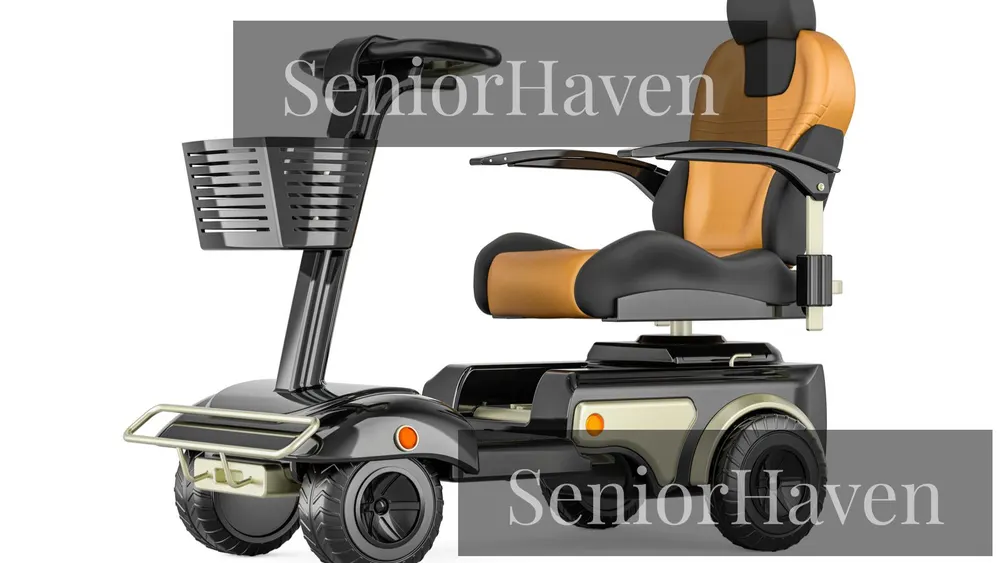
Controls are the second half of comfort. The tiller — the steering column — should adjust to the rider's height and reach, and the throttle control should be operable with the hands that will use it, including hands with reduced grip or arthritis. Some riders prefer a thumb lever, others a finger pull or a delta tiller with wraparound handles; there is no universally best control, only the control that this rider can operate smoothly without strain. Test forward, reverse, and stopping at slow speed in a safe space, and check that the speed control can be set low enough for crowded indoor use. A scooter that only feels controllable at outdoor speed is not controllable where it matters most.
Turning Radius and Small Spaces: Measure Your Home First
Turning radius is the specification that decides whether a scooter works in your home, and it is the specification most often skipped. It is the smallest circle the scooter needs to turn around, and it must fit your tightest real turn — the bathroom doorway, the kitchen corner, the hallway bend — not an empty showroom floor. A scooter that cannot turn where you need it to turn will be reversed, manhandled, and eventually left by the door.
Measure before you shop. Measure the narrowest doorway the scooter must pass through, the narrowest hallway, and the smallest room where a full turn is needed. Write those figures down and carry them when shopping. Compare them with the turning radius and overall width the maker states, and remember that the rider's feet, the basket, and the tiller all add to the swept space. A figure that matches your doorway exactly is not a fit — it is a scrape waiting to happen. Leave margin for hands, for a bag on the tiller, and for a slightly imperfect approach angle, because real approaches are never as neat as diagrams.
Hills, Rough Ground, and Suspension: Outdoor Honesty
Outdoor riding is where optimistic listings meet reality fastest. Hills drain batteries, rough ground punishes small wheels, and slopes test both motor and rider judgement. The honest way to shop for outdoor use is to describe your actual outdoor week — the driveway gradient, the park path surface, the curb heights, the grass verge to the mailbox — and to check each scooter against those specifics rather than against a generic outdoor label.
Slope limits deserve respect. Makers state a maximum slope for each model, and that figure assumes a rider within the weight limit, a charged battery, and a steady approach. Exceeding it, or approaching it with a loaded basket and a low battery, invites stalling or rollback. If your daily route includes a steep driveway or a hilly street, that slope is a pass-or-fail test for the scooter, and it outranks range, speed, and appearance. Walk the route with a critical eye before you buy, and note the steepest ten yards, not the average gradient.

Travel: Airlines, Cruises, and the Car Trunk
Travel is where a mobility scooter either earns its keep or becomes a logistical project, and the difference is almost always preparation. The scooter that travels well is the one whose battery rules, folded size, and lifting weight were checked before booking, not discovered at check-in. This section gives you the checks that matter, in the order to make them.
For flights, start with the battery. For lithium-ion mobility devices, the widely published United States guidance allows a single battery up to 300 watt-hours, or one spare up to 300 watt-hours, or two spares up to 160 watt-hours each, with removed batteries carried in the cabin and terminals protected against short circuits. Tell the airline in advance what you are bringing: battery type, watt-hour rating, battery location, and whether the battery removes. Carry the manual page stating the rating, tape or pouch removed terminals as directed, and arrive early, because mobility-device handling takes time. Airline policies vary by carrier and by aircraft, so the airline you fly with — not a general guide — has the final word, and a scooter that one airline accepts may need different handling on another.
For cruises, start with the cabin. Measure the scooter against the cabin doorway and the space available for storage and charging, and ask the cruise line directly about scooter storage, charging points, and where scooters may be used onboard. Some lines restrict scooters in dining rooms or theaters, and some ships have limited accessible cabins with wider doors. If flying with a scooter feels daunting, ask about rental scooters delivered to the ship, and confirm the rental model, its dimensions, and its battery arrangements before you sail. A rental that does not fit your cabin is no better than a scooter left at home.

Medicare: An Honest Guide, Without Promises
Medicare questions dominate the search data for this topic — thirteen rows in our keyword sheet alone — and they deserve a careful, promise-free answer. Medicare Part B may cover a power-operated scooter as durable medical equipment, but coverage is a medical-necessity decision about home use, not a shopping benefit, and no seller, guide, or advertisement can guarantee it in advance.
In general, the pathway looks like this. Your treating provider examines you face to face and documents a mobility limitation that significantly affects daily activities inside the home, such as bathing, dressing, or using the bathroom, and that cannot be sufficiently resolved with a cane, walker, or manual wheelchair. The provider submits a written order stating the medical need for a scooter for home use. Both the provider and the equipment supplier must be enrolled in Medicare and accept Medicare, and the supplier must confirm the scooter can be used within your home — doorways, turning space, surfaces. After the Part B deductible, the beneficiary generally pays one-fifth of the Medicare-approved amount. These are general descriptions of the published rules, not a checklist that guarantees approval, and individual cases vary with documentation and plan details.
What should you actually do? Start with your treating provider, not with a scooter seller. Ask whether a face-to-face mobility evaluation is appropriate, what documentation would be needed, and which Medicare-enrolled suppliers serve your area. Ask your plan, including any Medicare Advantage plan, how it handles power mobility devices, because plan rules can differ from original Medicare. And keep the two tracks separate in your mind: the medical track decides whether coverage applies, and the shopping track in this guide decides which scooter fits if you buy one. Confusing the two is how families end up with a scooter that is neither covered nor suitable.
Shopping on Amazon: A Checklist That Prevents Regret
Amazon is where many senior households actually buy, and it is also where the weakest listings thrive, because a headline can hide every important figure. Use this checklist on every listing, and do not buy from a listing that fails it. First, the maker description — not the title — should state weight capacity, folded dimensions or heaviest disassembled piece, battery type and watt-hour rating, turning radius, and seat dimensions. If any of those figures is missing, the listing is incomplete, and an incomplete listing for a mobility device is a reason to keep looking, not a reason to guess.
Third, treat owner feedback as pattern-spotting, not voting. One complaint about a seat may be one rider's shape. Ten complaints about the same fold mechanism, the same battery fade, or the same control stiffness are a pattern, and patterns are the closest thing listings offer to honest data. Look for comments from riders with similar homes, routes, and lifting situations to yours, and discount comments that praise speed or appearance without mentioning fit, turning, or charging. The comments that help most are the boring ones: how it turns in a hallway, how heavy the piece is, how long the battery lasts on a real day.
Useful Amazon searches, all as search links so you can compare current listings rather than a frozen snapshot:
- Folding travel scooters — Check on Amazon
- Lightweight portable scooters — Check on Amazon
- Disassembling travel scooters — Check on Amazon
- Heavy-duty outdoor scooters — Check on Amazon
- Mobility scooter baskets and storage — Check on Amazon
- Mobility scooter weather covers — Check on Amazon
Common Mistakes Buyers Make With Mobility Scooters
Mistake one: buying on total weight. A folding scooter is lifted whole, a disassembling scooter is lifted in pieces, and total weight describes neither lift. Always ask for folded weight and heaviest-piece weight, and test the actual lift. Mistake two: buying on headline range. Range is a best-case figure, and your hills, load, and cold mornings will reduce it. Buy range margin, not range headlines. Mistake three: buying on speed. Most senior riding happens at walking pace in shops and on sidewalks, and a scooter that feels exciting at top speed may feel twitchy at the speed you actually use.
Mistake four: skipping the home measurement. Doorways, hallways, turning rooms, trunk openings, and storage footprints are all measurable in ten minutes with a tape measure, and every one of them has caused a return. Mistake five: skipping the transfer test. A scooter that is hard to get on and off will be used less, however good its specifications look, and transfer difficulty is only visible when the actual rider tries it. Mistake six: buying for one trip instead of the week. The airport trip, the theme park day, or the holiday matters, but the grocery run, the clinic visit, and the hallway turn happen fifty times for every holiday, and they should carry fifty times the weight in the decision.
If Your Budget Is Tight: Honest Alternatives
A mobility scooter is a significant purchase, and honesty about budget is part of honesty about buying. If a new scooter strains the household budget, the answer is not to buy the cheapest listing with the thinnest specifications — that scooter is often the one that gets returned, repaired, or abandoned, which costs more in the end. The better alternatives start with need: is the scooter needed daily, or for occasional trips? Daily need justifies a better scooter bought carefully; occasional need may justify renting, borrowing, or buying used with checks.
Community routes deserve a real look before any purchase. Local loan closets, charities, veterans services, and senior centers sometimes lend equipment, and some dealers offer refurbished models with a warranty. Ask your Area Agency on Aging what exists locally — the answer varies by county, and a phone call costs nothing. If you do buy new on a tight budget, prioritize fit and battery over appearance and accessories: a plain scooter that turns in your home and covers your day beats a featured scooter that does neither, and accessories can be added later when funds allow.
A Note for Caregivers: The Scooter They Will Actually Keep Using
If you are buying for a parent, your job is not to pick the most impressive scooter. It is to pick the scooter your parent will actually use, without resentment, without fear, and without needing you for every trip. That means involving them in the choice, even when the choice is slower and messier than ordering alone. Let them sit, transfer, turn, and fold. Let them say the seat feels wrong, even if the specifications say it should feel right. A scooter imposed on a reluctant rider becomes furniture, and expensive furniture at that.
Plan the household system, not just the purchase. Who charges it, and when? Who lifts it, and is that person reliably available? Where does it live, and can it be reached without moving other things? Who calls the dealer if it faults? Write those answers down before buying, and test them for a week in your head: the charging routine on a busy evening, the loading routine in rain, the storage routine when guests visit. If any routine depends on one person who is sometimes away, that routine will fail, and the scooter will sit.
Storage, Maintenance, and Making a Scooter Last
A scooter that lives well lasts longer, and living well mostly means dry, clean, and charged. Store indoors where possible, away from damp, direct rain, and extreme cold. If garage storage is the only option, keep the scooter off bare concrete where feasible, cover it, and bring the battery indoors for charging in cold weather where the maker allows removal. Wipe down the frame and tires after wet or muddy trips, and keep the charging area clear of clutter and bedding. These are small habits, but they protect the electrical connectors and battery that decide the scooter's working life.
Maintenance is mostly inspection, not repair. Check tires for wear, cracking, and correct inflation where the maker specifies it. Check that the seat lock, armrest locks, tiller adjustment, and folding latches engage firmly, and that brakes stop smoothly without grabbing. Listen for new noises — grinding, clicking, or squealing — and treat them as early warnings, not background sound. Keep the manual accessible, note the model and battery figures somewhere the household can find them, and contact the dealer or maker for anything electrical rather than improvising a fix.
Frequently asked questions
- What is the best mobility scooter for seniors?
- There is no single best scooter, only the best fit for one rider, one home, and one routine. Start with where you will ride most, how you will move the scooter, and how much weight it must carry, then narrow by wheel layout, seat fit, and battery range. A folding travel scooter that is perfect for airport trips can be the wrong choice for long outdoor days, and a heavy-duty outdoor scooter can be the wrong choice for a small apartment. Use the sections in this guide in order and the right category usually picks itself.
- Should I choose a 3-wheel or a 4-wheel mobility scooter?
- Choose 3 wheels when tight indoor turns matter most and your routes are mostly smooth and flat, because the single front wheel turns in a smaller circle. Choose 4 wheels when outdoor stability, uneven paths, and stopping on slopes matter more, because the wider front stance feels steadier at rest and on ramps. If you split time between a small home and outdoor paths, a compact 4-wheel travel scooter is often the compromise worth testing in person, with a dealer, before you buy.
- Folding scooter or a scooter that comes apart — which is easier?
- A folding scooter is easier when one person must load it quickly, because it stays in one piece and folds like a single unit. A scooter that disassembles is easier when lifting is the problem, because the heaviest single piece is lighter than a whole folded scooter, even though loading takes more steps. Ask for the folded weight and the heaviest-piece weight separately, and never judge lifting effort from the total weight alone. If the heaviest piece is still too heavy for the person who will lift it, neither style is the right buy.
- How far will a mobility scooter go on one charge?
- It depends on rider weight, hills, surface, speed, and temperature, so treat every published range as a best-case figure on flat ground. A useful rule is to buy more range than your longest regular day needs, so a normal outing never ends with a low battery. If your longest day is a morning of errands plus an afternoon outing, look for a scooter whose stated range comfortably covers both trips combined, and plan charging as part of the routine, not as an afterthought.
- Can I take a mobility scooter on a plane?
- Often yes, but the battery rules decide it, so check with your airline before you book. For lithium-ion mobility devices, the widely published United States guidance allows a single battery up to 300 watt-hours, or one spare battery up to 300 watt-hours, or two spare batteries up to 160 watt-hours each, carried in the cabin when a battery is removed. Tell the airline the battery type, size, and location in advance, protect removed-battery terminals against short circuits, and carry the manual page that states the watt-hour rating. Airline policies still vary, so the airline you are flying with has the final word.
- Can I take a mobility scooter on a cruise?
- Often yes, and cruise lines generally treat a personal mobility scooter differently from a rental, but cabin door width and onboard storage decide whether it works in practice. Measure your scooter against the cabin doorway, ask the cruise line where scooters may be stored and charged, and check whether scooters are allowed in dining rooms and theaters or must be parked elsewhere. If you do not want to fly with a scooter, ask the cruise line and the port about rental scooters delivered to the ship, and confirm the rental model fits your cabin before you sail.
- Will a mobility scooter fit in my car trunk?
- Measure twice, and measure the right things. Measure the trunk opening, not just the trunk floor, because a folded scooter that fits the floor may not pass through the opening. Measure the folded scooter, or each disassembled piece, including the seat and tiller if they do not fold flat. Then lift the heaviest piece into the trunk yourself, or with the person who will actually do the lifting, before you commit. A scooter that fits on paper but cannot be lifted safely is not a fit.
- Does Medicare cover mobility scooters for seniors?
- Medicare Part B may cover a power-operated scooter as durable medical equipment, but only when it is medically necessary for use in the home, and coverage is never promised in advance. In general, you need a face-to-face examination with your treating provider, a written order stating the medical need for home use, and a Medicare-enrolled supplier that accepts Medicare. A scooter needed only outdoors, or bought from a general retailer and submitted afterward, generally does not qualify. After the Part B deductible, the beneficiary generally pays one-fifth of the Medicare-approved amount. Check your own plan and talk to your provider before you buy, because individual cases vary.
- Can I get a free mobility scooter?
- There is no guaranteed free scooter, and any seller promising one deserves skepticism. The legitimate routes are narrow: Medicare coverage when the home-use medical-necessity rules are met, veterans benefits for those who qualify, and local charities, loan closets, and community programs that sometimes lend or donate equipment. Contact your provider, your local Area Agency on Aging, and veterans services if they apply, and be wary of any offer that asks for payment upfront or for personal health details before any examination has taken place.
- What weight capacity do I need in a mobility scooter?
- Choose a capacity comfortably above the rider plus everything the scooter will regularly carry, including bags, groceries, and any added accessories. Running a scooter near its stated limit can shorten battery range and strain the motor on hills, and it leaves no margin for a heavier coat, a full basket, or a guest bag. If the rider is tall or broad, check seat width, legroom, and foot platform size as well, because capacity alone does not tell you whether the seating position will be comfortable for an hour at a time.
- What turning radius do I need for indoor use?
- Measure the tightest turn in your own home, not the showroom floor. Measure the narrowest doorway, the narrowest hallway, and the smallest room where you must turn around, then compare those figures with the turning radius the maker states for the scooter. Three-wheel scooters usually turn tighter, while four-wheel scooters need more room. If the scooter cannot turn in your bathroom doorway or your kitchen, it will spend its life parked, however good it looks on paper.
- Are mobility scooters allowed in shops and on sidewalks?
- It depends on the place and the locality, so check before you assume. Most shops allow mobility scooters, but individual stores may ask riders to use a store cart instead, and narrow aisles can make a larger scooter impractical even where it is allowed. Sidewalk and path rules vary by state and city, and some shared paths restrict motorized devices. Ask the store, check your city rules, and ride at walking pace around pedestrians, because courtesy keeps access open for everyone.
- How do I charge and look after a mobility scooter battery?
- Charge in a dry, ventilated spot away from bedding and clutter, using only the charger supplied for that model, and follow the maker instructions for that battery type. Avoid running the battery completely flat on a regular basis, avoid leaving it discharged for weeks, and store the scooter where rain and extreme cold cannot reach it. If the range drops sharply or charging takes far longer than the maker states, contact the dealer or maker before the problem strands you, and never open a sealed battery pack yourself.
- What should I check on an Amazon listing before buying a mobility scooter?
- Check that the listing states the weight capacity, the folded dimensions or the heaviest disassembled piece, the battery type and watt-hour rating, the turning radius, and the seat dimensions, in the maker description rather than only in a headline. Check the return terms, the warranty, and who provides service and parts, because a scooter is not a throwaway purchase. If a listing hides the weight, the battery rating, or the return terms, treat that silence as information and keep looking.
- What should I do if a mobility scooter feels unstable or uncomfortable?
- Stop riding it in the situations where it feels wrong, and do not try to fix stability by leaning, overloading the basket, or changing tires or wheels yourself. Check first that you are within the stated weight limit, that the tires are inflated as the maker directs, and that the seat and tiller are set for your height. Then contact the dealer or maker, and talk to your clinician if transfers, seating, or control use are part of the problem. A scooter that does not fit the rider is a fitting problem to solve, not a fault to push through.