
Best Stairlifts for Seniors (2026)
Quick answer: there is no single best stairlift for every senior — the right one is decided by your staircase shape first, then by the rider's seat, swivel, capacity, and battery backup needs, then by the installer and the written quote.

Affiliate disclosure: As an Amazon Associate I earn from qualifying purchases. This guide contains affiliate links — it costs you nothing extra and keeps our content free. Picks come from our research into manufacturer specifications and feature criteria — prices and availability change, so check the current listing. Read our affiliate disclosure. A stairlift itself is never sold through these links: it is bought from a dealer after a home survey.
The best stairlifts for seniors are not a single model you can name, because the right stairlift is the one matched to your staircase, your body, and your landings. If your stairs run straight, a standard rail lift is the simplest answer. If they turn or land halfway, you need a rail made to follow that shape. And in both cases, the features that decide whether the lift is actually used every day are the swivel seat, the weight capacity, the battery backup, and the dealer who answers the phone when it stops. This guide works through each decision in order, so you can walk into a home survey knowing exactly what to ask.
Start with the most important warning in this guide: a stairlift is an installed product, not a parcel. It is bought through a dealer after a home survey, fitted to your staircase by an installer, and serviced by that dealer for years. Any article that links you to a checkout page for a stairlift is skipping the step that matters most.
| Option | Fits | Rail | Best for | Watch out for |
|---|---|---|---|---|
| Straight indoor stairlift | One unbroken flight, no turn, no landing | Standard rail cut to length | Most homes with a single straight staircase | Top and bottom landing space still matter |
| Curved indoor stairlift | Stairs with a turn, landing, or winding steps | Rail made to follow your staircase shape | Split flights and turned staircases | Made to measure, so the wait is longer |
| Outdoor stairlift | Porch, deck, or garden steps | Straight or curved, weather-protected | Getting in and out of the house | Rain, snow, ice, and sun wear on the chair |
| Standing or perch stairlift | Narrow stairs or knees that bend poorly | Straight or curved rail | Riders who cannot sit low comfortably | Needs good balance and a secure hold |
| Two straight lifts with a transfer | Two flights joined by a flat landing | Two standard rails | Cutting cost where a curved rail is not needed | The rider must change chairs at the landing |
| Rented straight stairlift | Straight stairs, short-term need | Standard rail, installed and later removed | Recovery after surgery or a temporary stay | Usually straight stairs only, with a minimum term |
Related stair-safety products on Amazon (a stairlift itself is an installed product bought through a dealer, never a parcel you order online — these are the smaller items that make the stairs around it safer):
- Stair handrail — Search on Amazon
- Wall-mounted grab bars for stairs — Search on Amazon
- Non-slip stair treads — Search on Amazon
- Motion sensor stair lights — Search on Amazon
- Stair edge nosing strips — Search on Amazon
How We Chose This Guide
That honesty shapes the whole guide. Most stairlift articles online read like product roundups with a winner, a price, and a star rating. That format misleads here, because a stairlift is not a toaster you order and plug in.
Instead, use it as a decision framework. Work through the sections in order: first the staircase shape, then the rider, then the features, then the installer and the quote. By the end you will know which type you need, which features are worth paying for in your situation, which questions separate a careful dealer from a careless one, and which funding claims to treat with suspicion.
Stairlift Types Compared
The table near the top of this guide is the fastest way to orient yourself, and it is worth reading before the detail below. Its message is simple: the rail type is decided by the staircase, not by the rider's taste or the dealer's stock.
Standing and perch lifts solve a narrower problem: a rider who cannot bend their knees enough to sit low, or a staircase so narrow that a seated chair leaves no walking room for anyone else. They trade seated comfort for a smaller footprint and a more upright posture, and they demand better balance and grip. They are a genuine option for the right rider and a poor one for anyone unsteady on their feet, which is why the section on who should not buy a stairlift comes before any decision, not after.
Straight vs Curved: The First Decision
Stand at the bottom of your stairs and look up. If the flight runs in one unbroken line from bottom to top, with no turn, no landing, and no winding pie-shaped steps, you need a straight stairlift. The rail is a standard length cut to fit, the chair is a standard model, and installation is usually the quickest of all the options. This is the simplest case, and it is the one where shopping around and comparing quotes is easiest, because dealers are pricing the same kind of job.
If the staircase changes direction at any point, has an intermediate landing, or includes winding steps, the answer changes. You generally need a curved stairlift, whose rail is made to follow the exact shape of your staircase: around the bend, across the landing, and on to the next flight. That custom work is why curved lifts take longer from survey to installation and why they sit at the expensive end of every comparison. The rail cannot be made until the staircase has been measured precisely, and it cannot be adjusted on the day if the measurement was wrong, so the survey matters more here than anywhere else in this guide.
There is one workaround worth knowing about, and honest dealers will mention it without being asked. Where two flights are joined by a flat landing, two straight lifts can sometimes be installed instead of one curved lift, with the rider transferring from one chair to the other at the landing. It is cheaper and faster, and it suits a rider who transfers comfortably and does not mind the pause.
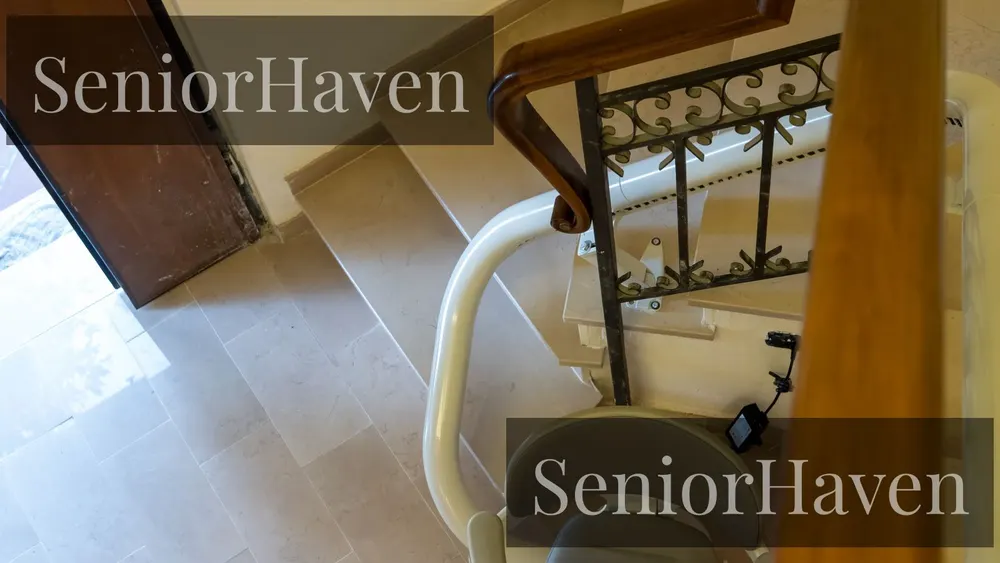
Two details catch buyers out on curved stairs. First, the rail follows the inside or the outside of the bend depending on the staircase and the model, and that choice affects where the chair parks and how much walking room remains.
Indoor vs Outdoor Stairlifts
An outdoor stairlift lives a harder life than an indoor one. Rain, sun, frost, and wind act on the chair, the rail, and the controls every day, so outdoor models carry weather protection as standard: sealed controls, treated or covered upholstery, a rail that resists corrosion, and usually a cover for the chair when it is parked. Ask what exactly is weatherproofed and what is merely weather-resistant, because those words are not the same, and ask how the chair should be covered and uncovered by someone with limited strength.
Climate honesty matters. In regions with heavy snow and ice, an outdoor stairlift may not be practical for every day of the year, and a dealer who promises otherwise without asking about your winters is overselling.
Power outdoors needs a plan too. The lift still needs household power for charging, so the surveyor must confirm where the supply comes from, how it is protected from weather, and what happens to charging if the outdoor supply trips. Battery backup works the same way outdoors as indoors, with the same limits: a limited number of trips, not endless running, and batteries that age faster in extreme cold or heat. Ask how battery life is affected by your climate and what replacement involves.

Seat, Swivel, and Footrest Features That Matter
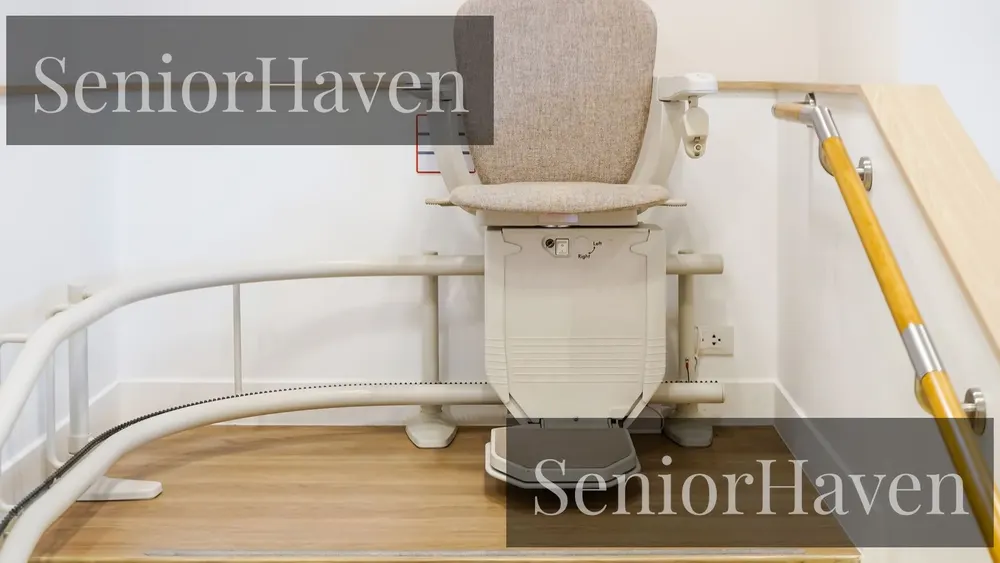
The seat is where comfort and safety meet, and it is where a showroom visit pays for itself. Sit in the chair if you can, or have the rider sit in it, and notice three things: whether the seat is wide and deep enough without squeezing, whether the back supports without pushing forward, and whether getting on and off feels steady. Seat widths and depths vary by model, and makers state their own dimensions, so compare the numbers for the exact model rather than trusting a general claim.
The swivel seat is the feature most worth understanding. At the top of the stairs, the seat rotates so the rider faces the landing rather than the staircase, then locks in place while they stand up. Without it, the rider must step off sideways with the drop behind them, which is the riskiest moment of the whole ride.
Footrests follow the same logic. A manual footrest must be folded down by hand or foot before the ride and folded up after, which means bending and balance at the exact moment the rider is standing on the stairs. A powered footrest folds itself, which helps anyone who cannot bend comfortably or safely.
Controls should be usable without thinking hard. Most lifts use a joystick or toggle on the armrest, pressed and held to travel, releasing to stop. That continuous-pressure design is a safety feature, not an annoyance: if the rider lets go, the lift stops. Try the control in the showroom with the rider's own hands, including any arthritis, tremor, or weakness, and check whether the control can be mounted on either side. Remote call-and-send controls, which summon the chair from the other end of the stairs, matter in homes where more than one person uses the lift, or where the chair must be parked out of the way.
Smaller features add up. A seat belt is standard and should be easy to fasten with one hand. Safety sensors that stop the lift if something blocks the rail protect feet, pets, and objects left on the steps.
Weight Capacity: Leave Room, Not Just Enough
Every stairlift carries a maker-stated weight capacity, and that number is a hard limit, not a suggestion. Standard models commonly state capacities around three hundred pounds, while heavy-duty models state higher capacities for larger riders. Treat those figures as the starting point for a conversation, not as a verdict, because the right capacity is the rider's weight plus a comfortable margin, plus anything regularly carried on the ride such as a bag, a laundry basket, or a pet that insists on coming along.
The margin matters for two reasons. First, weight changes over time, and a lift bought at the exact limit leaves no room for that change. Second, running a lift at its limit strains the motor and the rail and can shorten its working life, while a lift with headroom runs more easily.
Capacity also interacts with the staircase itself. A heavier rider on a longer or curved rail puts more demand on the whole system, and the installer should confirm that the rail fixings and the staircase structure suit the combination, not just the chair.
One warning: never exceed a stated capacity to save money, and never accept a dealer who waves the number away. Overloading can trigger safety sensors, stop the lift mid-stair, void the warranty, and put the rider at risk. The capacity question takes thirty seconds to ask and protects every ride that follows.
Battery Backup: What Happens When the Power Goes Out
Most modern stairlifts run on rechargeable batteries that are topped up from a household supply whenever the chair is parked at a charging point, usually at the top or bottom of the stairs. That design is what makes battery backup possible: when household power fails, the charged batteries keep the lift running for a limited number of trips.
The honest limits matter as much as the feature. Battery backup is a bridge through an outage, not a second power supply. If the outage lasts for days, or if the chair was not parked on a charging point before the power failed, the trips available will be fewer than the headline figure. Batteries also age: after a few years they hold less charge, and a lift whose batteries have never been replaced will not perform like a new one. Ask how to tell when batteries need replacing, what replacement involves, and whether it is covered by the warranty or the service plan.
Charging discipline is part of the feature. The chair must be parked at a charging point after every ride, not left mid-rail, or the batteries will slowly drain and the backup will not be there when it is needed. In practice this means the rider, or a family member, needs a habit: always send the chair fully to the end after use. Remote call-and-send controls help here, because the chair can be parked correctly from the other end of the stairs without walking up to do it.
Make an outage plan before you need one. Agree what the rider does if the power fails: how many trips to keep in reserve, where the phone or alert device is kept, and who to call if the lift stops mid-ride. Never buy a stairlift without battery backup for a home where the rider lives alone or cannot manage the stairs on foot, and confirm the backup in writing for the exact model, not as a general assurance.
Rail Length, Landings, and the Space at Each End
The rail is only half the installation. The other half is the space at each end, and it is where disappointing installations are born.
Rail length follows the staircase, but the ends need decisions. A straight rail often runs a little beyond the bottom step so the rider can sit and stand on level ground rather than on the first step. Where a doorway sits close to the bottom of the stairs, a folding rail section can hinge up out of the way when the lift is parked, so the door can still open and people can still pass.
Parking matters too. When the lift is not in use, the chair should park clear of the walking route, ideally at a charging point at one end. On narrow stairs, a folded chair with folded armrests and footrest leaves the most room for other people, but it still takes some width, and other household members will be sharing the stairs with it every day. If the staircase is the only route to a bedroom or bathroom, talk through the shared-use reality honestly before signing, and check the folded width against the remaining walking width.
Headroom, handrails, and wall features complete the survey. Low ceilings over part of the staircase, a handrail on the rail side, radiators, light switches, and pictures on the wall can all interfere with the rail or the chair's path.
Rental vs Purchase: Which Fits Your Timeline
Renting suits a need with an end date. Recovery after surgery, a temporary stay with family, or a trial period while a longer-term housing decision is made are all cases where a rental makes sense: the dealer installs a straight lift, services it during the rental, and removes it when it is no longer needed. Rentals usually require a minimum term, because installation and removal take real work, and they usually cover straight stairs only, because a curved rail cannot be re-used on another staircase.
Buying suits a need without an end date. If the rider expects to use the lift for years, buying almost always costs less over time than renting, and it allows the exact model, seat, and options to be chosen rather than accepting whatever rental stock is available.
Refurbished lifts sit between the two. A dealer-refurbished straight lift, fitted with a written warranty and a service plan, can lower the upfront cost without the gamble of a private sale.
The Installer Survey: Questions to Ask Before You Sign
The home survey is the most important hour of the whole purchase, and it should be free, unhurried, and done by someone who will be involved in the installation, not just a salesperson with a tape measure. A good surveyor measures the staircase, photographs the landings and doorways, asks about the rider's strength, balance, and grip, and watches the rider get on and off a chair if a showroom visit is possible.
Take this list to every survey, and write down the answers for each dealer so the quotes can be compared fairly:
- Who will install the lift, and are they certified or factory-trained for this exact model?
- What is the exact model, seat size, swivel type, and stated weight capacity being quoted?
- Is the rail straight or curved, and if curved, how is it measured and how long does making it take?
- Where will the chair park, where are the charging points, and does the layout need a folding rail?
- What electrical work is needed, and is it included in the quote or charged separately?
- What does the warranty cover, for how long, and does it separate parts from labor?
- What does the service plan include, what does it cost after the first year, and how fast is emergency call-out?
- What happens if the lift breaks down: is there a loan arrangement, and who pays for parts during the warranty?
- What is the total quoted figure, itemized, and what could change it after the survey?
- What does removal cost if the lift is no longer needed, and can the rail holes be made good?
- Can the rider try the exact chair, or at least the same seat type, before signing?
- Are there references from recent local installations, and can any be contacted?
Compare quotes on the itemized detail, not on the bottom line. A cheaper quote that excludes electrical work, a powered swivel the rider needs, or the first year of service is not cheaper, it is incomplete.
What Drives the Cost Up or Down
This guide deliberately gives no prices for stairlifts. Rival articles disagree widely on figures, prices vary by region and by staircase, and a printed number would be out of date before it was read. What this guide can do honestly is explain what moves the cost, so you can read any quote and see where the money goes.
Rail type and length are the biggest drivers. A standard straight rail is the simplest job. A curved rail, made to measure for one staircase, adds manufacturing and fitting work that grows with every bend and landing.
Options come next. Powered swivel seats, powered footrests, wider or heavy-duty seats, additional safety features, and premium upholstery each add cost, and each should be judged against the rider's actual needs rather than a brochure.
Installation scope and aftercare complete the picture. Electrical work, moving a handrail, making good after the rail is fitted, and the length and breadth of the warranty and service plan all sit inside or outside the headline figure depending on the dealer. Regional labor differences matter too. The honest way to compare is itemized quotes, side by side, with the same model and the same options. Anything less is a guess dressed as a price.
Ways to keep the cost honest, without cutting corners that matter: consider two straight lifts instead of one curved lift where the landing allows it, consider a refurbished straight lift with a written warranty, strip out options the rider does not need, and ask whether any part of the work can be scheduled in a quieter period. Never save money by skipping battery backup, dropping the swivel the rider needs, accepting a capacity at the limit, or buying from a dealer with no service plan.
Funding Honesty: Medicare, Medicaid, and Other Help
Start with the fact most buyers wish were different: Original Medicare generally does not pay for stairlifts. Medicare treats a stairlift as a home modification rather than durable medical equipment, so Parts A and B do not ordinarily cover the purchase or the installation. That is the consistent position across Medicare guidance and dealer advice, and any seller who promises Medicare coverage for a standard stairlift should be asked to show it in writing from the plan, not from a brochure.
There are narrower doors worth checking, each with its own conditions. Some Medicare Advantage plans offer supplemental benefits that may include home safety modifications, but coverage varies by plan, by area, and by year, and a general home-safety benefit does not necessarily include a stairlift. The only reliable check is a call to the plan itself, asking specifically about stairlift coverage and any limits or approvals required. Medicaid home and community based services waivers may help in some states, with eligibility and scope varying widely, so the state Medicaid office or a local aging agency is the place to ask, not a sales representative.
Veterans may have routes through VA housing and accessibility grant programs, and eligibility depends on service and disability criteria that the VA itself confirms. Local Area Agencies on Aging can point to state, county, and nonprofit home modification programs, grants, or loans, though funding varies by region and by year and waiting lists are common. Some long-term care insurance policies cover home modifications that help the policyholder stay at home, which means reading the actual policy rather than assuming.
Dealer financing is the last route, and it needs the same caution as any loan. Read the total cost, the term, and what happens if the lift is returned or the rider's needs change.
Stairlift Alternatives Worth Comparing First
A stairlift is the right answer for many homes, but it is not the only answer, and comparing the alternatives before signing is how you avoid buying the wrong solution well. Each alternative suits a different rider and a different home, and each has a catch that honest dealers will state plainly.
A home elevator or through-floor lift carries the rider, and often a wheelchair, vertically between floors without using the staircase at all. It suits full-time wheelchair users, multi-floor homes, and families planning for decades in one house.
A platform lift carries a wheelchair or a standing rider up a short rise, such as porch steps or a garage entrance, on a platform rather than a chair. It suits entryways and split levels where the rise is modest.
Moving the bedroom and bathroom downstairs is the lowest-technology alternative, and sometimes the best one. If the ground floor can hold a bedroom, a bathroom, and the daily routine, the stairs stop being a daily barrier at all.
Stair climbers, which carry a seated rider up the stairs with a helper operating the device, suit occasional use and short-term needs, but they depend on a helper being present and able, which is not independence. Ramps suit a gentle rise with enough length to keep the slope safe, which many front gardens do not have.
When a Stairlift Is Not the Right Answer
A stairlift helps a rider who can sit safely, transfer on and off the chair, hold the control, and follow the ride from one end to the other. That sentence is the eligibility test, and it should be applied honestly before any money changes hands. A rider who cannot transfer without help, cannot sit upright for the length of the ride, or cannot operate the control reliably may not be safe on a stairlift, however good the model.
Full-time wheelchair users need a different conversation. A stairlift requires transferring out of the wheelchair, onto the chair, and back again at each end, which may be difficult, tiring, or unsafe depending on the rider.
Cognitive difficulties deserve equal honesty. A rider who may forget the seat belt, release the control at the wrong moment, or try to stand while the lift is moving needs supervision or a different solution, and a key lock that only a family member operates is at best a partial answer.

Mistakes Buyers Make With Stairlifts
Mistake 1: Buying the rail before measuring the rider. The staircase shape decides the rail, but the rider decides the seat, the swivel, and the capacity. A lift ordered around the stairs alone can arrive with a seat too narrow, a manual swivel the rider cannot turn, or a capacity at the limit. Measure both, every time.
Mistake 2: Skipping the top landing check. The ride ends at the top, but the journey ends on the landing. If there is no room to swivel, stand, and step clear of the drop, the lift is unsafe no matter how smooth the ride was. Walk the landing during the survey.
Mistake 3: Choosing the cheapest quote without the service behind it. The cheapest lift from a dealer who will not answer the phone in year two is the most expensive lift you will own. Compare itemized quotes, warranties, and service response times, not just totals.
Mistake 4: Forgetting the power outage plan. Battery backup is standard on good lifts, but it is limited, and it depends on parking on a charging point. Agree the outage plan before installation day, not during the first blackout.
Mistake 5: Ordering online without an installer. A stairlift bought without a home survey, a named installer, and a service plan is a parcel with a problem attached. The survey and the installer are part of the product, not optional extras.
Mistake 6: Assuming funding will appear. Original Medicare generally does not cover stairlifts, and every other program varies by plan, state, and year. Check funding with the program itself before signing, and plan on paying out of pocket until a program confirms otherwise in writing.
Mistake 7: Ignoring the other people who use the stairs. The folded chair, the rail, and the parked position all take space from everyone else in the house. Talk through shared use during the survey, or the lift will become a daily argument.
A Note for Caregivers: The Lift They Will Actually Use
The best stairlift is not the one with the longest feature list. It is the one the rider uses every day without dreading it, which means the rider's opinion matters more than anyone else's in the house. Involve the rider in the showroom visit, in the survey, and in the choice of seat and controls, and listen when they say a seat feels wrong or a control feels awkward.
Framing matters too. Present the lift as a way to keep the whole house, not as a concession to age: the bedroom they love, the kitchen they cook in, the study they read in, all still theirs. Let the rider take the first rides with family nearby, practice the swivel and the seat belt until they feel routine, and keep the dealer's service number somewhere obvious, such as on the fridge or beside the phone.
What Installation Day Actually Looks Like
For a straight lift, installation is usually a short job: the rail is fixed to the stair treads, the chair is fitted and tested, the charging points are connected to a household supply, and the rider is shown how to use the lift. For a curved lift, the rail has already been made to measure before installation day, so the day itself is fitting, testing, and teaching, though the wait before that day is longer. In both cases, expect some dust and noise, some drilling into the treads, and a staircase that is out of use for part of the day.
The teaching part is the part to insist on. A good installer does not just demonstrate the lift once and leave. They watch the rider complete full rides in both directions, practice the swivel and the seat belt, show how to park on the charging point, explain the remote controls, and leave the manual, the warranty paperwork, and the service number in the rider's hands.
Before the installer leaves, check the details together: the chair stops exactly at each end, the seat locks in the swiveled position, the safety sensors stop the lift when obstructed, the battery charging lights show correctly, and the rail fixings are tidy with no loose covers. Ask what to do if the lift stops mid-ride, who to call out of hours, and what the first service visit covers. Get the answers in writing with the warranty, and keep them with the manual.
Service, Warranty, and Keeping It Running
A stairlift is a machine that is used daily and trusted with a person's safety, so it needs care like any machine. The daily care is simple: keep the rail clear of objects, keep the chair parked on its charging point, wipe the rail and chair as the manual directs, and never let grandchildren treat it as a ride.
Warranties vary, and the variation matters. Some warranties cover parts for years but labor for a shorter period, some cover the motor and gearbox longer than the rest, and some exclude batteries entirely. Read the warranty for the exact model before signing, and ask what a typical out-of-warranty repair involves and who carries it out.
Batteries deserve their own line in the plan. They age with use and with time, and their replacement is a predictable cost, not a surprise.
Quick Answers
Straight or curved? Straight stairs take a standard rail. Any turn, landing, or winding step means a rail made to follow your staircase, or two straight lifts with a transfer at the landing.
Most important feature? A swivel seat that locks facing the landing at the top, sized to the rider, with battery backup and a capacity comfortably above the rider's weight.
Rent or buy? Rent for a short-term need on straight stairs. Buy for a long-term need, and always for curved stairs, where rental rarely exists.
Does Medicare pay? Original Medicare generally does not. Check a Medicare Advantage plan, Medicaid waiver, VA program, or local aging agency individually, and get any promise in writing from the program itself.
What should the quote include? The exact model, seat, swivel type, capacity, rail type, electrical work, warranty split between parts and labor, service terms, and removal cost, all itemized.
What do I buy on Amazon? Only the smaller stair-safety items: handrails, grab bars, stair treads, and stair lighting. The stairlift itself comes from a dealer after a home survey.
Frequently asked questions
- What is the difference between a straight and a curved stairlift?
- A straight stairlift runs on a standard rail cut to fit one unbroken flight of stairs. A curved stairlift runs on a rail made to follow the exact shape of your staircase, around bends and across landings. The staircase shape decides which one you need, not personal preference.
- How do I know if my staircase needs a curved rail?
- If your staircase changes direction, has an intermediate landing, or includes winding pie-shaped steps, you generally need a curved rail. If it runs in one straight line from bottom to top with no turn and no landing, a straight rail fits. A home survey confirms it, including door swings at each end.
- Will a stairlift work during a power outage?
- Most modern stairlifts run on rechargeable batteries that charge whenever the chair is parked at a charging point, so they keep running for a limited number of trips during an outage. Backup is a bridge through an outage, not endless running, and it depends on the chair having been parked on a charging point before the power failed.
- How much weight can a standard stairlift carry?
- Makers commonly state standard capacities around three hundred pounds, with heavy-duty models stating higher capacities. Choose a capacity comfortably above the rider's weight, plus anything regularly carried, and confirm the stated capacity of the exact model in writing before you buy.
- Does Medicare pay for a stairlift?
- Original Medicare generally does not pay for stairlifts, because it treats them as home modifications rather than durable medical equipment. Some Medicare Advantage plans may offer home modification benefits, but coverage varies by plan and area, so check with the plan itself and get any promise in writing from the plan.
- Can I rent a stairlift instead of buying one?
- Yes, for a short-term need on straight stairs. Rentals usually include installation, servicing during the rental, and removal, with a minimum term. Curved stairs rarely suit rental, because a curved rail is made for one staircase and cannot be re-fitted to another.
- How long does installation take?
- A straight lift is often installed in a single visit, once the survey is done. A curved lift takes longer overall, because the rail must be made to measure after the survey before fitting can happen. Ask your installer for the timeline in writing, including how long the stairs will be out of use on the day.
- Can a stairlift be installed on narrow stairs?
- Often yes, but the folded width matters. Folding armrests and footrests leave more walking room for other people, and the survey should measure the remaining width with the chair folded. Very narrow stairs, or stairs in poor structural condition, may need a different solution, so get the surveyor's honest judgment.
- What is a swivel seat, and do I need one?
- A swivel seat rotates at the top of the stairs so the rider faces the landing, then locks in place while they stand up. It matters because stepping off sideways with the drop behind you is the riskiest moment of the ride. Manual swivels are turned by the rider, while powered swivels turn at the push of a control for riders with weak hands or stiff shoulders.
- Can a stairlift be used outdoors?
- Yes, with a model built for outdoor use, including weather protection for the chair, rail, and controls, plus a cover for the parked chair. In regions with heavy snow and ice, an outdoor lift may not be practical every day of the year, so discuss winter use, ice on the steps, and charging protection with the dealer.
- What should a written stairlift quote include?
- The exact model, seat size, swivel type, stated weight capacity, rail type, electrical work, warranty split between parts and labor, service plan terms, emergency call-out arrangements, and removal cost, all itemized. A quote without those details is a guess, not a price, and should not be signed.
- What happens if the stairlift breaks down?
- That depends on the warranty and service plan, which is why they must be in writing before you buy. Ask what parts and labor are covered, for how long, how fast emergency call-out is, and whether a loan arrangement exists. Keep a log of services, battery changes, and faults to protect warranty claims.
- Is a stairlift right for someone who uses a wheelchair?
- Not always. A stairlift requires transferring out of the wheelchair onto the chair and back again at each end. For full-time wheelchair users, a home elevator or platform lift that carries the wheelchair itself is usually the better comparison. An occupational therapist assessment helps where there is any doubt.
- Can a stairlift be removed later?
- Yes. Removal should be quoted by the dealer, including making good the fixing holes in the treads. Some dealers buy back or refurbish straight lifts, which can offset removal. Ask about removal cost now, while you have leverage, rather than when you are in a hurry to clear the stairs.
- What is the difference between a stairlift and a home elevator?
- A stairlift carries a seated rider along the existing staircase on a rail. A home elevator carries the rider, and often a wheelchair, vertically between floors in its own shaft, without using the stairs. Elevators suit wheelchair users and multi-floor homes but involve construction and a much larger project.