
← Back to Mobility & Daily Living
Mobility & Daily Living · United KingdomBest Adjustable Beds for Seniors in the UK: Profiling, Hi-Lo and Adjustable Bases Compared
Most adjustable-bed lists are written for American shoppers, in dollars, with US sizes and US Medicare rules. This guide is the UK senior version: profiling and hi-lo beds that fit British bedrooms, hold weight in stone, can be bought VAT-free if you qualify, and are priced in pounds at UK retailers — at prices seen on 31 October 2026.
Affiliate disclosure: As an Amazon Associate I earn from qualifying purchases. The picks come from research into published specifications, UK retailer listings, and owner feedback — we never claim testing we did not do, and availability and prices change, so check the current listing before you buy. It costs you nothing extra and keeps this site free. Read our affiliate disclosure.
The short answer
If you buy one thing from this guide, buy the right type before you buy a brand. A profiling bed that rises and lowers is a different purchase from a domestic adjustable base that only tilts. If getting in and out of bed is already the daily problem, or a carer helps with personal care in bed, a hi-lo profiling bed that lowers close to the floor and rises to waist height is the honest choice.
Our verdict, up front: the Opera Classic Profiling Bed is the best starting point for most UK seniors — a proper profiling bed at £1,095 with VAT relief (£1,314 including VAT) on 31 October 2026, raising from 40cm to 80cm so a carer can work at waist height. If falls are the worry, the Opera Classic Low Profiling Bed lowers to 22cm and is the safer shape at £1,195 with VAT relief. If you want a familiar high-street name and a bed that looks like furniture rather than care equipment, the Dreams Sleepmotion range is the mainstream choice, starting from £649 for the 200i platform frame. For couples who need different positions, buy a split or dual bed — two halves, two controls — and never try to share one moving surface.
One honest note before the detail: we did not test these beds ourselves. We read the live UK retailer and manufacturer pages, the Good Housekeeping Institute test reports, and the published specifications, and we say which claim comes from where. Treat every price as seen on 31 October 2026 and check before you buy — prices move with sales, and the VAT-relief price only applies if you qualify.
How we picked: an honest method
Every bed in this guide had to pass four tests: genuinely buyable in the UK, in pounds and a UK size; key numbers published; a real senior need answered; and a price verifiable on 31 October 2026, with the VAT-relief price shown separately wherever the retailer publishes both.
We also read what the established testers found. The Good Housekeeping Institute tested adjustable beds from Tempur, Dreams and others in May 2026, and its 2026 Sleep Awards scored named adjustable beds out of 100 — we cite those scores where they exist and never present them as our own testing. Which? published an adjustable-bed buying guide in January 2026 and suggests a single adjustable bed including base and mattress might cost £400 to £1,600, and a double £700 to £5,000.
What this guide is not: medical advice. An adjustable bed can make positioning more comfortable and care easier and safer. It does not treat back pain, reflux, sleep apnoea, or any other condition. If a health question sits behind your purchase, ask your GP or an occupational therapist before you spend.
The beds at a glance
Start here for the shape of the market in one table. Prices are as seen on 31 October 2026; “VAT relief” is the price a qualifying buyer pays at 0% VAT.
| Bed | Type | Height range | Weight limit | Price seen 31 Oct 2026 | Mattress |
|---|---|---|---|---|---|
| Opera Classic Profiling Bed | Profiling | 40–80cm | Not published on the listing we read — ask before ordering | £1,095 VAT relief / £1,314 inc VAT | Not included — buy separately |
| Opera Classic Low Profiling Bed | Low profiling | 22–62cm | Not published on the listing we read — ask before ordering | £1,195 VAT relief / £1,434 inc VAT | Not included — buy separately |
| Opera Signature Comfort Plus | Profiling | 24.5–73.5cm | Not published on the listing we read — ask before ordering | £3,495 VAT relief / £4,194 inc VAT | Not included — buy separately |
| Opera Signature Comfort Plus Dual | Dual profiling (couples) | 24.5–73.5cm | Not published on the listing we read — ask before ordering | £5,595 VAT relief / £6,714 inc VAT | Not included — buy separately |
| Opera Signature Bariatric | Wide profiling | 24.5–73.5cm | 300kg (47st 3lb) | £3,195–£3,495 VAT relief / £4,074 inc VAT | Not included — buy separately |
| Dreams Sleepmotion 200i | Adjustable platform base | Fixed height, 33cm deep before mattress | 355kg including mattresses (Sleepmotion range) | From £649 (last checked 8 Aug 2026) | Not included — buy separately |
| Adjust-A-Bed Trilogy | Adjustable bed + mattress | Not published — ask before ordering | 25 stone (30 stone with Lifestyle upgrade base) | From £1,199 single / £2,259 king | Included |
| Tempur Suffolk Disc | Adjustable frame | Not published — ask before ordering | Not published on the listing we read — ask before ordering | From £1,939 single / £3,399 super king | Not included — buy separately |
| Tempur Ergo Smart Luxury | Smart adjustable frame | Not published — ask before ordering | Not published on the listing we read — ask before ordering | King £6,799 / super king £7,289 | Not included — buy separately |
Two patterns jump out. Care-sector beds (Opera) publish VAT-relief and VAT-inclusive prices side by side; high-street beds mostly publish one price. And weight limits are published inconsistently — a missing limit is a reason to phone the retailer before ordering, especially above 20 stone. This guide never fills a missing number with a guess.
Search Amazon.co.uk for adjustable beds (single, UK) · Search Amazon.co.uk for profiling beds · Search Amazon.co.uk for adjustable beds (double, UK)
Profiling bed, adjustable base, or hospital bed?
Three different products share one shelf, and retailers use the names loosely. Getting the distinction right saves the most expensive mistake in this guide: buying a domestic base when you needed a care bed, or a care bed when a base would have done.
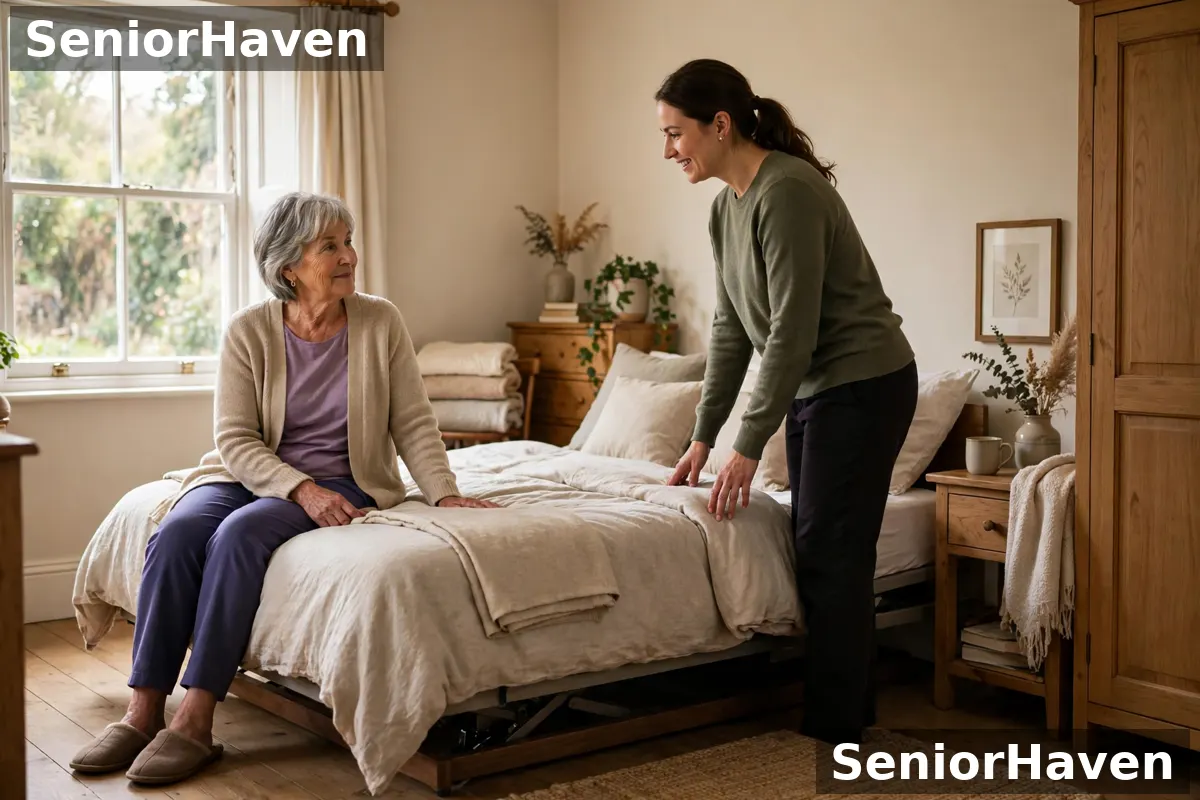
A profiling bed is a care-sector bed. Its mattress platform divides into sections — backrest, knee break, leg rest — that move independently, and on hi-lo models the whole platform rises and lowers. Profiling beds are the beds community nurses and occupational therapists prescribe for home care: they let a carer work at waist height and let the person in the bed be positioned for comfort, pressure care, and personal care. In UK community and care-home language, “profiling bed” is the standard term; “hospital bed” is the general word for the same shape of bed.
An adjustable base (sometimes called an adjustable bed frame) is a domestic product. It raises the head and foot sections, usually by remote control, and sits at a fixed height or inside a normal bed frame. Dreams Sleepmotion bases and Tempur Arc and Ergo frames are this kind: built for comfort — reading, television, easing stiffness — not for nursing care. They are not care beds.
The practical test: who will help, and what will they do? If nobody helps in bed and you want to sit up to read and raise your legs, an adjustable base is enough. If a carer, district nurse, or hoist is involved, you need a profiling bed — and an occupational therapy assessment before buying.
Height: the detail that decides independence
Bed height decides whether getting in and out of bed is a small daily effort or the hardest part of the day. It matters more than massage, more than app control, and more than any preset position. Yet it is the number most listings hide.
Three heights matter. The low height is how close the platform sits to the floor: the lower it goes, the shorter a fall. The Opera Classic Low lowers to 22cm; the Signature range to 24.5cm; ultra-low beds go below 15cm for the highest fall-risk situations. The high height is how far the platform rises: 73.5cm (Opera Signature) or 80cm (Opera Classic) brings the person to a carer’s waist height. The transfer height has no universal figure, so a wide height range lets you find yours.
Domestic adjustable bases do not play this game. The Dreams Sleepmotion 200i platform is 33cm deep before the mattress goes on, at a fixed height, with optional risers. Fine if transfers are easy and nobody provides care in bed; the wrong answer if transfers are already hard, because no preset position fixes a bed that is too high to sit on safely or too low to stand up from.
Measure before you order: sit on your current bed and notice where your feet land. Feet dangling means too high; knees far above hips means too low. Tell the retailer that measurement, and check the whole journey — bed height, chair height beside it, and the floor underfoot.
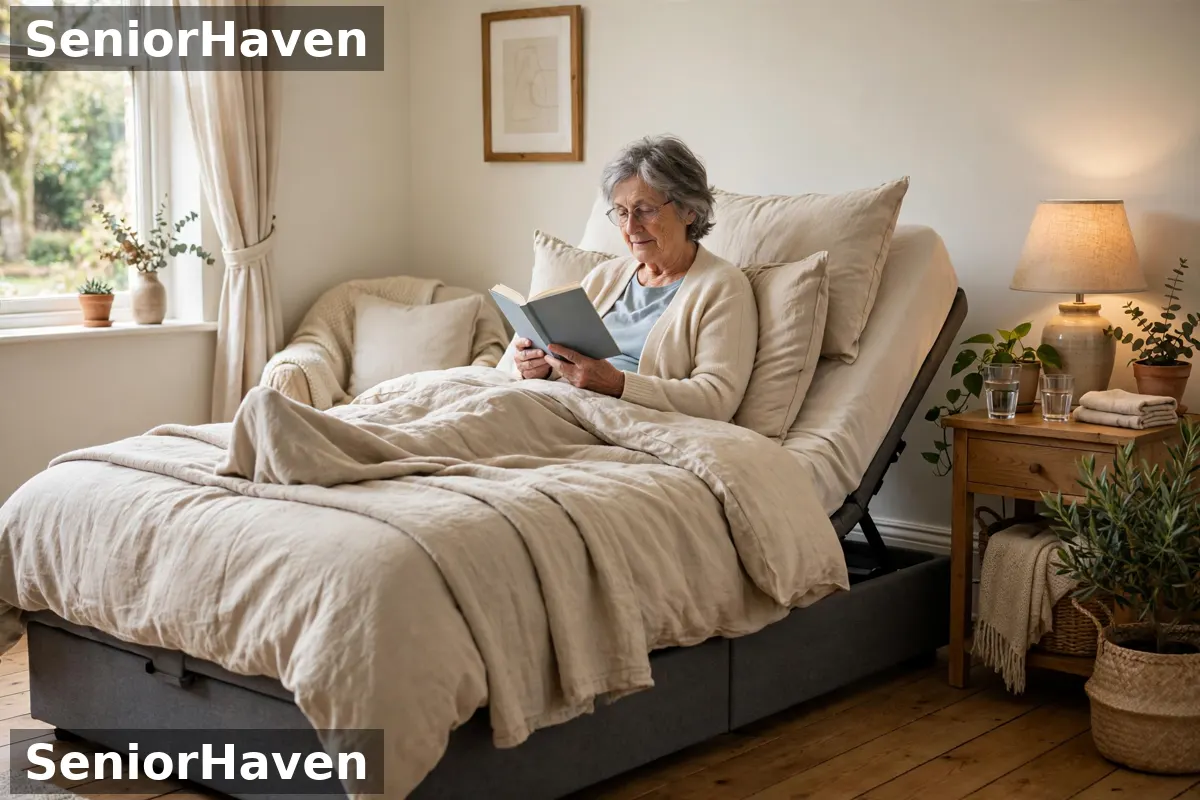
UK sizes: measure in centimetres, not in hope
UK bed sizes are imperial sizes wearing metric clothes. The metric figures are approximate conversions of the traditional imperial sizes, and a centimetre or two of tolerance is normal. What matters is matching the bed, the mattress, and the bedding to each other — and checking the length, because adjustable beds are often longer than the standard they replace.
| UK size | Mattress (cm) | Imperial | Who it suits |
|---|---|---|---|
| Small single | 75 × 190 | 2ft 6in × 6ft 3in | Children, box rooms, very small bedrooms |
| Single | 90 × 190 | 3ft × 6ft 3in | One adult, guest rooms, most care use |
| Small double | 120 × 190 | 4ft × 6ft 3in | One adult wanting more space, smaller rooms |
| Double | 135 × 190 | 4ft 6in × 6ft 3in | Couples in smaller rooms |
| King | 150 × 200 | 5ft × 6ft 6in | Couples wanting comfortable space |
| Super king | 180 × 200 | 6ft × 6ft 6in | Couples or tall sleepers wanting maximum space |
Three size traps catch UK buyers. First, length: a standard single is 190cm, but Adjust-A-Bed beds are 200cm long, and Dreams notes king-size Ergomotion bases need two small single mattresses at 200cm. Second, split sizes: a king or super king adjustable base is usually two linked halves, each needing its own mattress. Third, European sizes: a European single is 90 × 200cm and a European king 160 × 200cm — close to UK sizes, not the same. Check the centimetres on the listing, not the name on the box.
Mattress pairing: the half most buyers rush
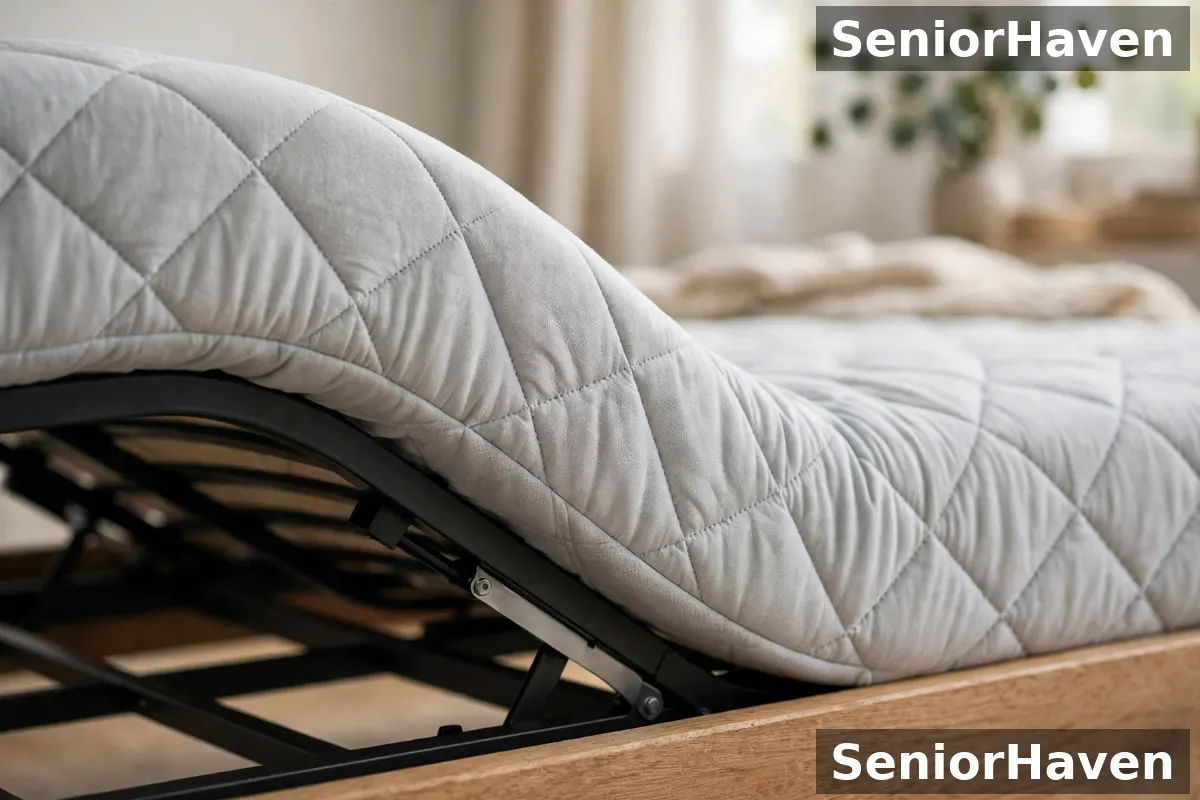
An adjustable bed is two purchases, and the mattress is the half most buyers rush. A mattress that cannot bend fights the base at every hinge, bunches up, or refuses to follow the shape — and a base blamed for a bad mattress is the commonest disappointment in this market.
The rule is simple: the mattress must be made to flex. Foam, latex, and some pocket-sprung mattresses can be suitable, but the material alone is not confirmation — one Sleepmotion 400i owner found their Tempur mattress too thick to bend with the base. Ask the seller to confirm compatibility for the exact mattress model and exact base model, in writing.
Search Amazon.co.uk for flexible mattresses for adjustable beds · Search Amazon.co.uk for pressure-relief mattresses (single)
Thickness matters: a very thick mattress resists bending and raises the sleeping surface, changing the transfer height; a very thin one may not support or cushion enough. Care-sector suppliers sell profiling mattresses designed for the job, and Adjustamatic bundles a mattress designed for adjustable bases with every bed.
Finally, pressure care. If the person in the bed spends long hours in it or has fragile skin, ask about pressure-relieving mattresses and overlays rather than assuming a standard mattress will do. This is clinical territory — an occupational therapist or district nurse can advise — and one more reason to get the assessment before the purchase, not after.
Weight capacity: read the limit in stone, then leave headroom
Weight capacity is published in stone, kilograms, or both — and sometimes not at all. In the UK, stone is the unit most buyers think in: 1 stone is 6.35kg, so 20 stone is about 127kg, 25 stone is about 159kg, and 30 stone is about 191kg. Always check whether the limit covers the sleeper alone or the sleeper plus the mattress plus bedding, because the two readings differ by 20kg or more.
What we verified: Adjust-A-Bed rates its Trilogy and Backcare Firm beds to 25 stone, rising to 30 stone with the Lifestyle upgrade base. The Dreams Sleepmotion range carries a 355kg limit including the mattresses. Opera’s Signature Bariatric bed is 120cm wide with a 300kg (47st 3lb) capacity. One seniors-titled UK guide, YouFirst, quotes 20–25 stone per side. Where a listing published no limit — including the Opera standard profiling beds above — this guide says so: ask before ordering.
Leave headroom: a 22-stone sleeper on a 25-stone limit leaves little margin once mattress and bedding are added, and motors work hardest at the top of their range. Step up a capacity class rather than running at the limit, and tell the retailer if two people, a leaning carer, or a hoist will ever load the bed.
The handset: the feature you will live with every day
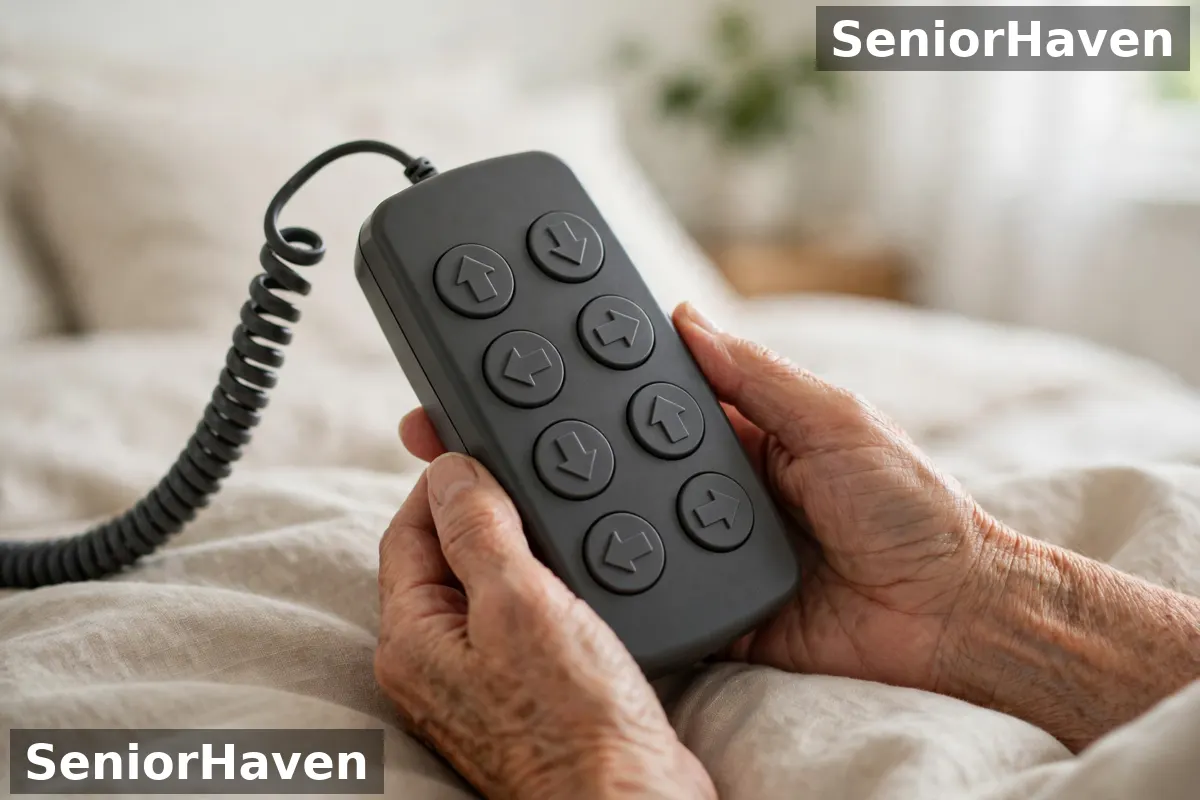
Every adjustable bed is operated by a handset, and the handset is the feature you will touch every day for years. A beautiful bed with a confusing handset becomes a bed stuck in one position. Judge the handset the way you would judge the bed: in your hands, in the dark, with the dexterity you actually have.
What to look for: large, well-spaced buttons findable by touch, clear symbols or backlighting for night use, a cord long enough to reach without stretching, and a simple layout — head up and down, foot up and down, flat — before any extras. Opera uses a wired handset; Dreams Sleepmotion bases use a wireless remote, and the Ergomotion Smart adds app control. Wireless is convenient; wired never needs charging and never gets lost down the side of the bed.
Three handset features deserve specific questions. Locking: can the handset be locked, so a confused sleeper or a visiting grandchild cannot move the bed unexpectedly? Memory: can favourite positions be saved to one button? Emergency lowering: if the power fails, can the bed be lowered to flat? Some bases include battery backup; others do not. Ask what happens in a power cut before you need to know.
If the person in the bed has arthritis, tremor, poor eyesight, or dementia, bring them into the handset decision. A handset with twenty buttons and a phone app is the wrong answer for hands that struggle with one button. Simpler wins, every time, for the person who actually sleeps in the bed.
Positions explained: what each one actually does
Adjustable beds sell positions with confident names. Strip the marketing away and there are only a few movements, and each does one honest job.
Head raised lifts the upper body. It is the position most people use most. Foot raised lifts the legs. It eases swollen ankles at the end of the day and takes pressure off the lower back for some sleepers. Knee break bends the knees slightly while the head is raised, which stops the body sliding down the mattress — without it, a raised head slowly becomes a slide towards the foot of the bed. Height adjustment (hi-lo beds only) raises or lowers the whole platform for transfers and care. Trendelenburg and reverse Trendelenburg tilt the whole bed, head-down or head-up. These are clinical positions, not comfort presets — do not buy a bed for Trendelenburg unless a clinician has a reason for it.
Zero gravity raises the head and feet so the knees sit slightly above the heart. Dreams describes it as raising the feet level with the heart. The name is more dramatic than the movement, but many people find the evenly spread weight comfortable for reading and resting. Anti-snore gently raises the head when snoring is detected; Tempur’s Ergo Smart Luxury does this automatically via Sleeptracker sensors. These features may reduce snoring for some people — they do not diagnose or treat sleep apnoea.
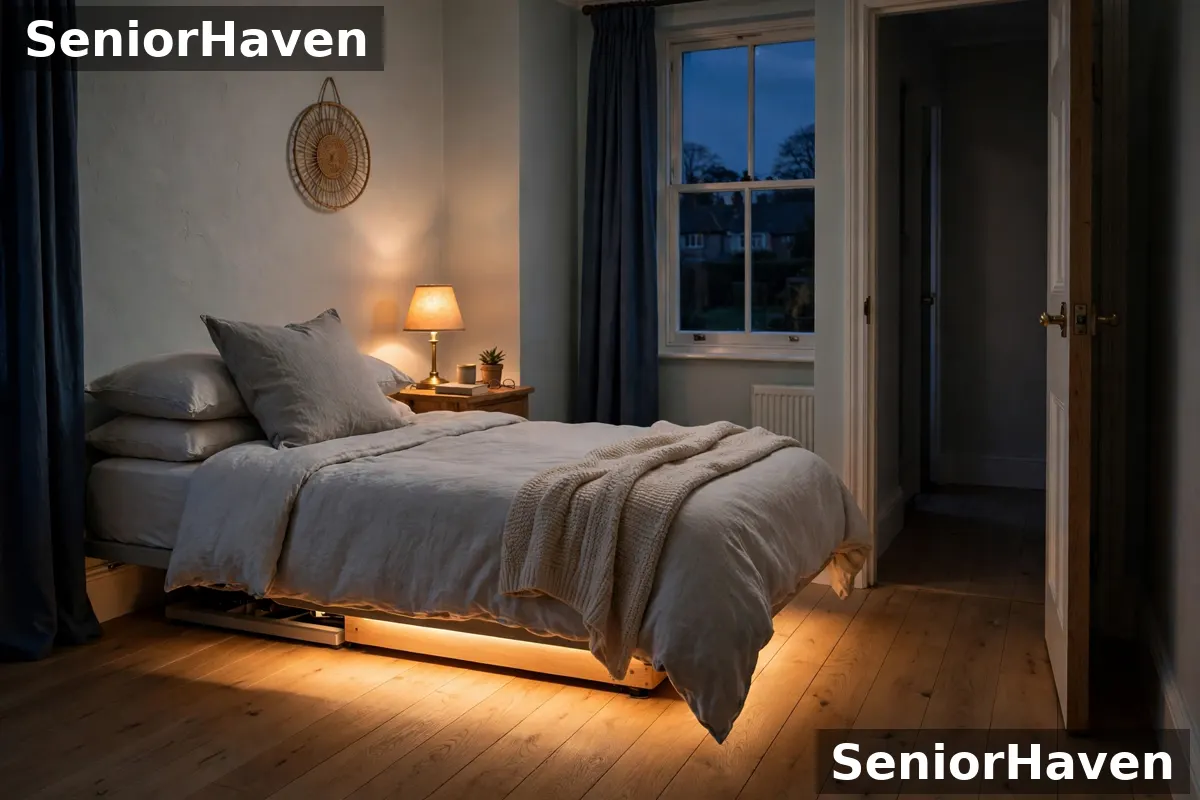
Massage vibrates the mattress, usually in two zones. It feels pleasant and some people find it relaxing before sleep, but it is the extra people overbuy: owners describe some built-in units as noisy and weak, and massage adds cost, weight, and something else to go wrong. Buy it only if you have tried it and liked it. Under-bed lighting, USB charging, and app control are conveniences — though the under-bed light has a genuine safety job, lighting the path to the bathroom at night.
Back pain, reflux, and snoring: comfort, not a cure
Adjustable beds are sold with health promises. Some of those promises are reasonable; some are not. This section keeps them apart, because a £3,000 purchase deserves honesty about what it can and cannot do.
For back pain, raising the knees slightly while the head is raised can take pressure off the lower back for some people. That is a comfort effect, not a treatment, and backs differ. No bed here is presented as treating back pain, and a bed never substitutes for assessment of new, severe, or worsening pain. See your GP; back pain with new weakness, numbness, or bladder or bowel changes needs urgent medical attention, not a new mattress.
For reflux and heartburn, sleeping with the head and upper body raised can reduce night-time symptoms for some people, and an adjustable base achieves the incline more comfortably than a pile of pillows, which bends the neck rather than raising the torso. Reflux that is new, frequent, or severe needs medical assessment; an inclined bed is a comfort measure alongside treatment, not instead of it.
For snoring and sleep apnoea, the honest line is firm: raising the head can reduce simple snoring, but sleep apnoea — repeated pauses in breathing, loud snoring, witnessed pauses, daytime sleepiness — needs assessment and treatment, usually with a CPAP machine. An adjustable bed does not treat sleep apnoea. Suspected apnoea belongs with your GP, not with a bed purchase.
Do doctors recommend adjustable beds? There is no blanket medical recommendation, and this guide claims none. In practice a GP or occupational therapist may recommend positioning — a raised head, raised legs, a hi-lo bed — for a specific person with a specific need, after assessment. If a retailer tells you a bed is “doctor recommended” without naming a doctor, study, or condition, treat it as advertising.
Couples: split and dual beds
Two people sharing one moving bed need two independent movements, or they must agree on every position for the rest of the bed’s life. That is why split and dual beds exist, and why they are worth their extra cost.
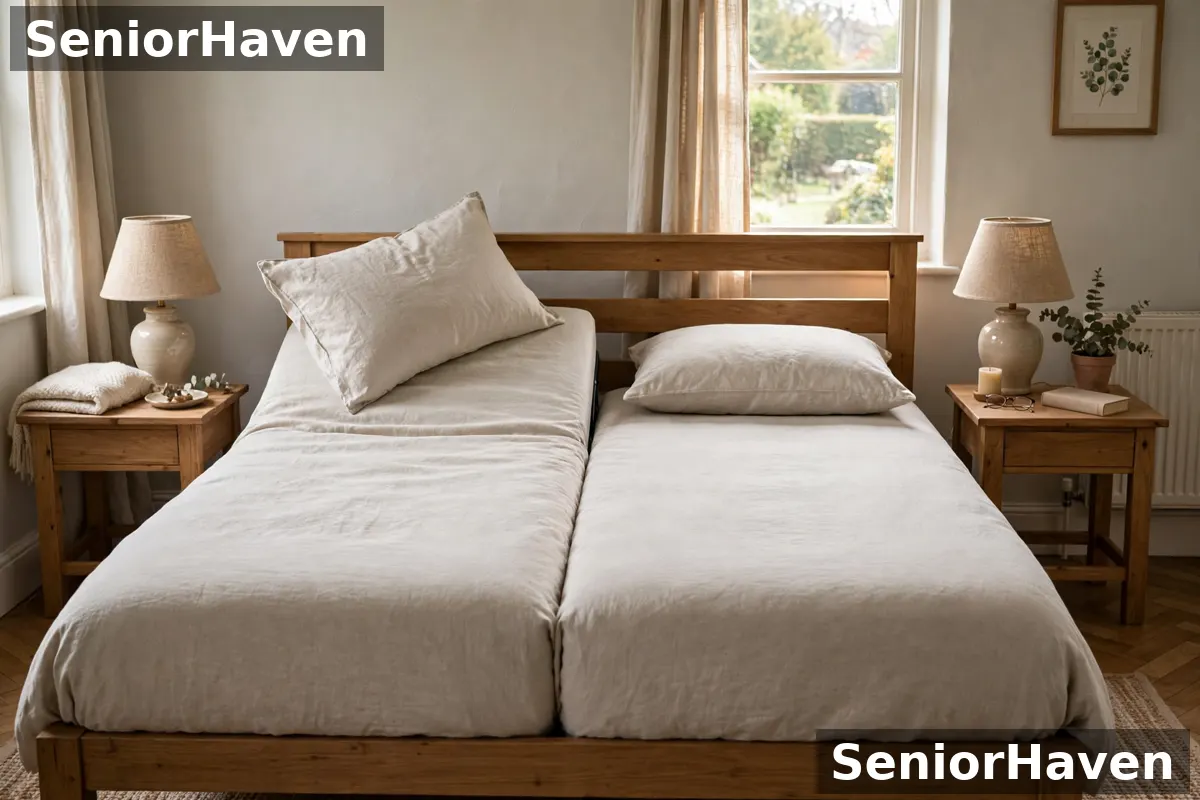
A split base divides a king or super king base into two independently moving halves, each with its own mattress and its own control. Dreams supplies king and super king Ergomotion and Sleepmotion bases as split designs with two linked bases that adjust independently or in unison. Adjust-A-Bed supplies king and super king sizes as a split design with two linked bases. The Opera Signature Comfort Plus Dual goes further: a split mattress platform for independent control either side of the bed, aimed squarely at couples where one person needs care positioning and the other does not.
Three practical points decide whether a split bed works. First, two mattresses: each half needs its own — two small singles (200cm long) for a Dreams king Ergomotion base, two singles for a super king. Second, the middle: where two mattresses meet there is a join; bridging pads exist, but a shared topper stiffens the bend, so check compatibility first. Third, controls: two handsets to charge, lose, and learn — label them and keep them on their own sides.
Search Amazon.co.uk for split adjustable beds (king)
Rails, brakes, and the nighttime path
Bed rails help some people and harm others, and the difference is decided by assessment, not by shopping. Rails fitted to the wrong bed, with the wrong mattress, or for the wrong person can trap or injure — the Health and Safety Executive’s bed-rail guidance records trapping between poorly fitting mattresses and rails, rolling over rails when overlays reduced their height, and trapping between rails and the mattress or headboard. That is a reason never to fit rails casually, not a reason to fear them.
The Royal College of Occupational Therapists’ briefing on prescribing beds for a domestic setting (2024, UK-wide) exists precisely because a prescribed bed in a home carries risks a shop-bought bed does not: falls, entrapment, and carer safety. Its core message: assess and manage the risks with the person, including the implications for carers. If an occupational therapist prescribes a bed with rails, the rail choice, mattress depth, and fitting are part of that prescription. If you buy rails yourself, check the manufacturer’s compatibility list for your exact bed and mattress, fit them exactly as instructed, and re-check the gaps whenever the mattress or bedding changes.
Beyond rails, four safety details deserve attention. Brakes: every castor must be lockable — the RCOT briefing was prompted by a death in which a bed moved from the wall because inner-wheel brakes were not locked and could not easily be reached. Check every brake, including those against the wall, whenever the bed is moved. Low height at night for anyone at risk of falling out of bed. Under-bed lighting marking the floor path. Power and cords off the floor path, with the power-cut plan known in advance.
Search Amazon.co.uk for bed rails for elderly (UK)
For people living with dementia, the safety conversation is wider than rails: night-time wandering, confusion about controls, and attempts to climb over rails all change the risk picture. A low bed, a locked handset, a clear floor path, and a carer alert system may matter more than any rail. Get the occupational therapy assessment — and be honest about night-time behaviour, not just daytime ability.
VAT relief: who pays 0%, who does not, and how to claim
VAT relief is the single biggest saving available on an adjustable bed in the UK — 20% of the price — and it is also the most misunderstood. The rules come from HM Revenue & Customs, and the version below follows HMRC's VAT Notice 701/7 as summarised on GOV.UK and by the specialist retailers who apply it every day. If anything here conflicts with what a retailer tells you, the retailer's declaration form and HMRC's notice win.
Who qualifies. For VAT purposes you are disabled or chronically sick if you have a physical or mental impairment with a long-term and substantially adverse effect on everyday activities; or a condition treated as chronic sickness, such as diabetes; or you are terminally ill. The product must be designed or adapted for your personal or domestic use. Electrically adjustable beds are explicitly listed as zero-rated, as are installation, repair, maintenance, spare parts, and accessories.
Who does not qualify. You do not qualify if you are elderly but otherwise able-bodied, or only temporarily disabled — a broken leg does not qualify, and old age with no diagnosis does not qualify. Business buyers (care homes, agencies, trade) pay VAT in full. And a standard bed does not become zero-rated because the buyer is disabled: the product itself must be designed or adapted equipment.
How to claim. Tell the supplier you are eligible before you pay. The supplier gives you a written declaration confirming your eligibility and that the goods are for your personal or domestic use, including a brief description of the condition; you complete it, the supplier keeps it, and you pay without VAT. Do not pay the VAT-inclusive price hoping to reclaim it later — relief is applied at the point of sale. If a supplier has no form, a written declaration can be provided instead.
The separate 5% scheme. People aged 60 or over may be eligible for a reduced 5% VAT rate on the supply and installation of certain mobility aids in their own home (HMRC VAT Notice 701/71). It is not the same as zero-rate disability relief, it only applies where the product is both supplied and installed in your own home, and whether a bed qualifies is for the supplier to confirm. Carriage-only delivery charges are not eligible for VAT relief.
VAT relief is a tax rule, not a discount code. Retailers showing “with VAT relief” prices — Opera shows them on every bed — are showing the lawful price for qualifying buyers. Retailers who never mention it are not necessarily hiding it; ask them. Keep the declaration safe: HMRC can audit relief claims, and the form is your evidence.
The NHS and occupational therapy route: assessment, not a promise
Many buyers ask whether the NHS will pay for an adjustable bed. The honest answer is: sometimes equipment is provided, usually it is not, and nobody can promise either outcome before an assessment. What the NHS and social care routes reliably offer is assessment — a professional looking at the person, the home, and the daily tasks, and recommending what would actually help.
An occupational therapist (OT) assesses daily living: getting in and out of bed, washing, dressing, cooking, and moving around the home. OTs work in the NHS, social services, and sometimes GP surgeries, registered with the Health and Care Professions Council; ask your GP, consultant, nurse, or physiotherapist for a referral, or use a private service. After assessment the OT reports recommendations that may include adaptations, different ways of doing tasks, and assistive products — including, where appropriate, an adjustable bed — plus advice on funding and grants. They cannot guarantee a bed, a grant, or a timescale.
The local authority route runs alongside. Contact your council’s adult social care team and ask for a care needs assessment. Equipment is provided on an assessed, needs-led basis in many areas — the need must be assessed and the equipment must be the right answer to it — and provision, loan arrangements, and waiting times vary by area and budget. A prescribed profiling bed for someone needing nursing care at home is a different conversation from a comfort purchase.
Practical advice: get the assessment before the purchase if you possibly can. An OT who has seen the bedroom, doorways, floor, and the person’s transfers will recommend a height range, size, and rail decision grounded in the actual home — and may identify a simpler answer, such as a bed lever or a room-layout change. If waiting is impossible — a hospital discharge next week, a rapidly changing condition — buy the bed that solves today’s problem, keep every receipt and the VAT declaration, and still ask for the assessment.
Delivery, installation, returns, and warranty
An adjustable bed is heavy, awkward, and often delivered in more than one piece. The delivery terms matter as much as the bed: a bed you cannot get upstairs, assemble, or return is not a bargain at any price.
Delivery and installation vary sharply. Opera charges £195 for standard installation (6–10 working days) and £95 with VAT relief for old bed and mattress removal. Land of Beds includes free UK delivery on the Tempur models it lists. Willowbrook delivers and installs free, removes the old bed free, and offers a free home demonstration — prices are in its brochure. Laybrook delivers and sets beds up in the bedroom, from £599. Dreams’ Tempur Arc Luxury showed free delivery with a 13–14 week lead time. Confirm: room-of-choice or kerbside? Stairs? Who assembles?
Returns and trials are where disappointment concentrates. Mattresses commonly carry trial periods — Dreams notes a 100-night comfort guarantee for mattresses purchased from Dreams — but frames and bases often carry different, shorter, or no trial terms, and a used base may not be returnable at all. Profiling and care beds bought for a specific assessed need are rarely returnable once installed. Get the return terms for the exact model in writing: how many days, who collects, what it costs, and what condition the bed must be in.
Warranties are published unevenly. Opera covers the Classic profiling bed for three years on parts and 12 months on labour. Tempur frames carry 10 years on the frame, five on the adjustable section, three on electrics. Adjust-A-Bed backs the Backcare Firm for five years. Read what “guarantee” covers — frames, motors, handsets, and mattresses sit on different clocks — and keep the paperwork with the VAT declaration.
Search Amazon.co.uk for adjustable beds (super king, UK)
What adjustable beds cost in the UK
Adjustable beds span a wider price range than almost any other bedroom purchase, and the range is honest: it reflects real differences in engineering, size, and what is included. The table below frames the market from the published guides and the verified prices in this article. Every figure is a range or a named listing — never a guess.
Adjustamatic’s UK cost guide puts basic single frames, often without a mattress, from £400–£500; mid-range packages including a mattress at £800–£1,500 single and £1,000–£3,000 double; high-end models from £3,000 to £5,000 or more, with luxury and custom dual setups reaching £6,000–£7,000+. Which? suggests £400–£1,600 for a single including base and mattress, and £700–£5,000 for a double. The guides agree on the shape: singles cluster around £1,000–£1,800 complete, doubles and kings climb fast, and the top end is bespoke.
Against that frame, the verified listings sit where you would expect: the Opera Classic at £1,095 with VAT relief is the care-sector entry point without a mattress; the Dreams Sleepmotion 200i from £649 is the mainstream entry point without a mattress; Adjust-A-Bed’s Trilogy from £1,199 single includes its mattress. At the top, the Tempur Ergo Smart Luxury at £6,799 for a king is a luxury smart frame without a mattress — sensors, app control, and the Tempur name as much as movement.
What moves the price: size, height range, mattress inclusion, upholstery and headboard choices, massage and smart features, and installation. What hides the price: a frame-only listing needing a £300–£600 mattress, delivery, installation (£195 at Opera), and old-bed removal (£95 with VAT relief at Opera). Add the whole journey before comparing two prices — and check VAT relief first: for a qualifying buyer, a £1,314 bed becomes £1,095.
Search Amazon.co.uk for adjustable bed mattresses (single) · Search Amazon.co.uk for hi-lo profiling beds · Search Amazon.co.uk for adjustable beds (king, UK)
Mistakes to avoid and the before-you-order checklist
Most adjustable-bed regret comes from five avoidable mistakes: buying the type before the need; forgetting the mattress; ignoring the weight limit; never checking return terms; and paying VAT before discovering you qualified for relief. The checklist below exists so none of those happen to you.
The verdict
For most UK seniors, the Opera Classic Profiling Bed is the right first call: a proper profiling bed at £1,095 with VAT relief (£1,314 including VAT) on 31 October 2026, with a 40–80cm height range that serves both transfers and care. If falls are the main worry, spend the extra £100 and take the Classic Low, which lowers to 22cm. If the bed must look like furniture and live in a normal bedroom, the Dreams Sleepmotion range is the mainstream answer, starting from £649 for the 200i platform — just remember the mattress, the fixed height, and the 355kg limit including mattresses. Couples should buy split: the Opera Dual at £5,595 with VAT relief if care positioning is involved, or a split Dreams or Adjust-A-Bed base if it is comfort alone. And whatever you buy, check VAT relief before you pay, confirm the mattress pairing in writing, and get the return terms before the delivery van arrives — those three checks are worth more than any feature on any listing.
Related reading: Best Adjustable Beds for Seniors (the US guide, for comparison — sizes, prices, and Medicare rules differ) · Best Bed Rails for Seniors · Best Walkers for Seniors · Fall Detection Devices for Seniors
Frequently asked questions
- What is the best adjustable bed for seniors in the UK?
- For most UK seniors, the Opera Classic Profiling Bed: a proper profiling bed at £1,095 with VAT relief (£1,314 including VAT) on 31 October 2026, raising from 40cm to 80cm. Choose the Classic Low (22cm low height) if falls are the worry, and a Dreams Sleepmotion base from £649 if the bed must look like ordinary furniture and nobody provides care in bed.
- Do doctors recommend adjustable beds?
- There is no blanket medical recommendation for adjustable beds. A GP or occupational therapist may recommend positioning — a raised head, raised legs, or a hi-lo bed — for a specific person with a specific need, after assessment. A retailer claiming a bed is "doctor recommended" without naming a doctor, study, or condition is advertising.
- What is the best bed type for an 80-year-old?
- It depends on transfers, not age. If getting in and out of bed is easy, a domestic adjustable base is enough. If transfers are hard, or a carer helps in bed, a profiling bed is the honest choice, and a hi-lo bed that lowers close to the floor is the safest shape if falls are a risk. Age alone never decides the bed — ability, strength, and care needs do.
- What is the difference between a profiling bed and an adjustable bed?
- A profiling bed is a care-sector bed whose mattress platform divides into sections and, on hi-lo models, rises and lowers for transfers and nursing care. An adjustable base is a domestic product that tilts the head and foot sections at a fixed height, for comfort. Profiling beds serve care needs; adjustable bases serve comfort. Buying the wrong type is the most expensive mistake in this guide.
- Can I get VAT relief on an adjustable bed in the UK?
- Yes, if you are chronically sick or disabled under HMRC's definition and the bed is for your personal or domestic use — electrically adjustable beds are explicitly listed as zero-rated goods. You complete a written declaration with the supplier and pay at 0% VAT. Elderly but able-bodied buyers and temporarily disabled buyers do not qualify, and business buyers pay VAT in full.
- Will the NHS pay for an adjustable bed?
- Sometimes equipment is provided after assessment, usually it is not, and nobody can promise either outcome in advance. Ask your GP for an occupational therapy referral, or ask your local authority's adult social care team for a care needs assessment. Equipment is provided on an assessed, needs-led basis and varies by area. Most people buy privately — get the assessment first if you can, because it may change what you buy.
- What size adjustable bed should I buy in the UK?
- Match the UK size table: single 90 × 190cm, double 135 × 190cm, king 150 × 200cm, super king 180 × 200cm. Measure the room in centimetres, remember some adjustable beds are 200cm long rather than 190cm, and remember split king and super king bases need two separate mattresses. A single suits most solo buyers and leaves room for a carer at the side.
- Do I need a special mattress for an adjustable bed?
- Yes — a mattress made to flex with the base. Foam, latex, and some pocket-sprung mattresses can be suitable, but the material alone is not confirmation: one owner found a Tempur mattress too thick to bend with a Sleepmotion 400i base. Ask the seller to confirm compatibility for the exact mattress model and exact base model in writing, and remember mattress weight counts towards the bed's weight limit.
- How much weight can an adjustable bed hold?
- It varies by model and is published inconsistently. Verified figures: Adjust-A-Bed beds hold 25 stone (30 stone with the Lifestyle upgrade base); the Dreams Sleepmotion range holds 355kg including the mattresses; Opera's bariatric bed holds 300kg (47st 3lb). Where a listing publishes no limit, ask before ordering — and always add the sleeper, mattress, and bedding together, with headroom to spare.
- Are adjustable beds safe for people living with dementia?
- They can be, with the right setup and assessment: a low bed to shorten any fall, a lockable handset so the bed cannot be moved unexpectedly, a clear floor path, and night-time supervision arrangements. Rails need professional advice — they can trap as well as protect. Get an occupational therapy assessment and be honest about night-time behaviour, not just daytime ability.
- Can two people share an adjustable bed with different settings?
- Only with a split or dual bed: two independently moving halves, each with its own mattress and control. Dreams king and super king bases and Adjust-A-Bed king sizes are supplied as split designs; the Opera Signature Comfort Plus Dual has a split platform for couples. A single moving surface forces both sleepers into the same position — buy split if your positions differ.
- Do adjustable beds help with snoring or sleep apnoea?
- Raising the head can reduce simple snoring for some people, and premium bases offer snore-response features that lift the head automatically. Sleep apnoea is a medical condition needing assessment and treatment, usually with a CPAP machine — an adjustable bed does not treat it. Suspected apnoea (loud snoring, witnessed pauses, daytime sleepiness) belongs with your GP, not with a bed purchase.
- What happens to an adjustable bed in a power cut?
- It depends on the model. Some bases include battery backup for emergency lowering to flat; others stay in position until power returns. Ask the retailer before buying: does this model lower without mains power, how, and is the backup battery included or an extra? Keep the handset where it can be found in the dark, and know the answer before you need it.
- How long do adjustable beds last, and what warranty should I expect?
- Warranties differ by part: Opera covers the Classic profiling bed for three years on parts and 12 months on labour; Tempur frames carry 10 years on the frame, five years on the adjustable section, and three years on electrics; Adjust-A-Bed backs the Backcare Firm for five years. A long headline guarantee can hide a short motor term — read the cover for frame, motor, handset, and mattress separately.
- Can I try an adjustable bed before buying?
- Often, yes — and you should. Dreams has high-street stores, Willowbrook offers a free home demonstration, and many care suppliers will demonstrate in your home. Trial and return terms vary sharply: mattresses commonly carry trials, but frames and installed care beds often do not. Get the return terms for the exact model in writing before ordering, including collection costs and condition requirements.