
Best Adjustable Beds in Australia for Seniors
Adjustable bed prices in Australia: same-scope AUD prices with conflicts shown, weight limits, battery backup, hi-lo beds, and NDIS, Support at Home, DVA and state funding — checked 31 October 2026.
Affiliate disclosure: As an Amazon Associate I earn from qualifying purchases. The prices and programme details in this guide come from research into Australian retailer and programme pages checked on 31 October 2026 — check the current listing before you buy. It costs you nothing extra and keeps this site free. Read our affiliate disclosure.
The short answer
If you only read one paragraph, read this one. For most Australian seniors, a standard motorised base that raises the head and feet — bought as a base plus a flexible mattress, in Queen or as a split king pair — is the right starting point, and the honest all-in cost must be added up from base, mattress, bedding, and delivery or setup, because sellers quote those pieces separately. A hi-lo bed that raises and lowers the whole bed is a different machine, for transfers and carer working height. No retail base should be bought hoping a programme will pay — check with the programme, with an assessment, before buying.
The pages behind this guide were opened and read on 31 October 2026: manufacturer, retailer, comparison, and official programme pages. This was not a certified google.com.au search results page. Where a page did not state a price, warranty, trial, or backup position, this guide says so. Seller health and funding claims are seller claims, not facts.
Lifestyle bases vs hi-lo and hospital beds: which mechanism do you actually need?
This distinction is the first decision to get right, because the two mechanisms solve different problems, and the comparison page opened in this research does not draw the line at all. This section follows the language the Australian pages opened actually use. Overseas hospital-bed and profiling-bed framings are not used here.
A lifestyle or retail adjustable base moves only the sleeping surface: head rises, foot rises, presets tilt both. The whole bed does not rise or lower; height is set by the legs. Ecosa, Origin, SleepMaker, Sealy, Onebed, Peace Lily, Mattress Crafters, Adjustapedic, and AH Beard sell bases of this kind, called “adjustable bed base”, “adjustable foundation”, and “motorised base”. The mattress is usually separate and must bend — see the mattress section.
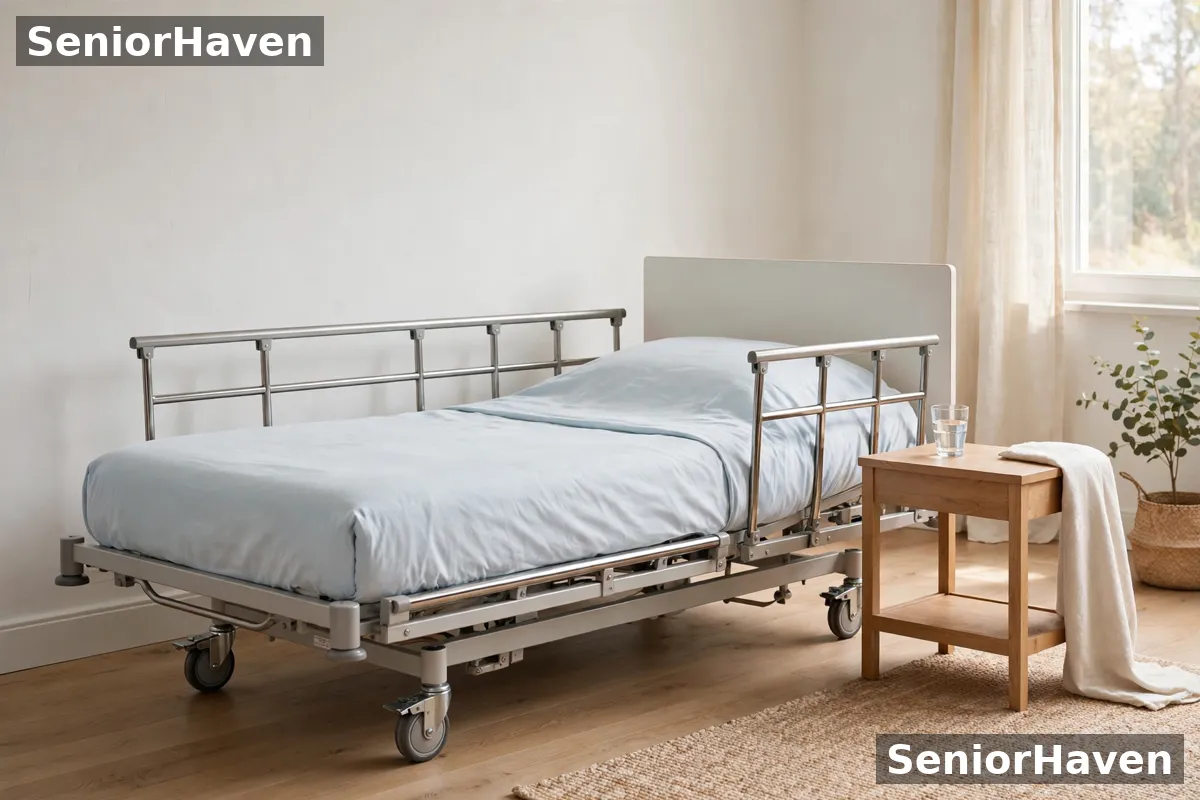
A hi-lo, hospital, or homecare bed also raises and lowers the whole bed. The fully specified example is the Gilani 5-function bed: 48 to 86 centimetres, Trendelenburg 0 to 12 degrees, full-length rails, lockable castors, corded handset, mattress included, 90 centimetres — single only. A clinical supplier adds an ultra-low bed at 195 millimetres floor height. If transfers are difficult, a carer helps you, or a clinician raised bed height or rails, get a clinical assessment first. A low-profile lifestyle base cannot rise for a transfer and is not hi-lo; ask for the height range in writing.
The line blurs in the middle. Seniors Plus describes an “enhanced” framing, and its Neo Plus as full height plus head and foot movement — but no height range was stated, so it is not classified here as a measured hi-lo bed. Classify by measured features: height range, rails, castors or legs, TGA registration, mattress restriction. TGA registration was stated only for Gilani, ARTG 404416. Gilani restricts the mattress to its included articulating foam mattress or a compatible pressure-care upgrade. Retailers sell lifestyle bases; clinical and NDIS suppliers sell hospital and hi-lo beds and handle assistive-technology quotes. Do not treat a retailer as a clinical assessor.
Australian sizes in centimetres, and split king
Australian bed sizes are stated in centimetres, and names do not match other countries. Always check centimetres, not names. The table comes from an Australian size guide opened 31 October 2026, updated 29 October 2026, corroborated on Queen and Long Single by retailer pages. Centimetres still vary by 1 centimetre between sellers; the variance is shown — no standards-body page was opened, so no single official standard is claimed.
| Size | Australian centimetres (width × length) | Notes |
|---|---|---|
| Single | 92 × 188 | Standard single length. |
| Long Single | 92 × 203 | Split king half. One retailer states 92 × 204 cm. Check the exact product. |
| King Single | 107 × 203 | Wider single. |
| Double | 138 × 188 | Sealy Element price is for a Double, 1385 × 1900 mm as stated for that product. |
| Queen | 153 × 203 | Most Queen prices here map to this size. A snippet-only guide gave 154 cm — not opened, not evidence. |
| King | 183 × 203 | Not a United States king (193 cm) or a United Kingdom king (150 × 200 cm). |
| Super King | 203 × 203 | Split super king dimensions were not found on any page opened — do not assume them. |
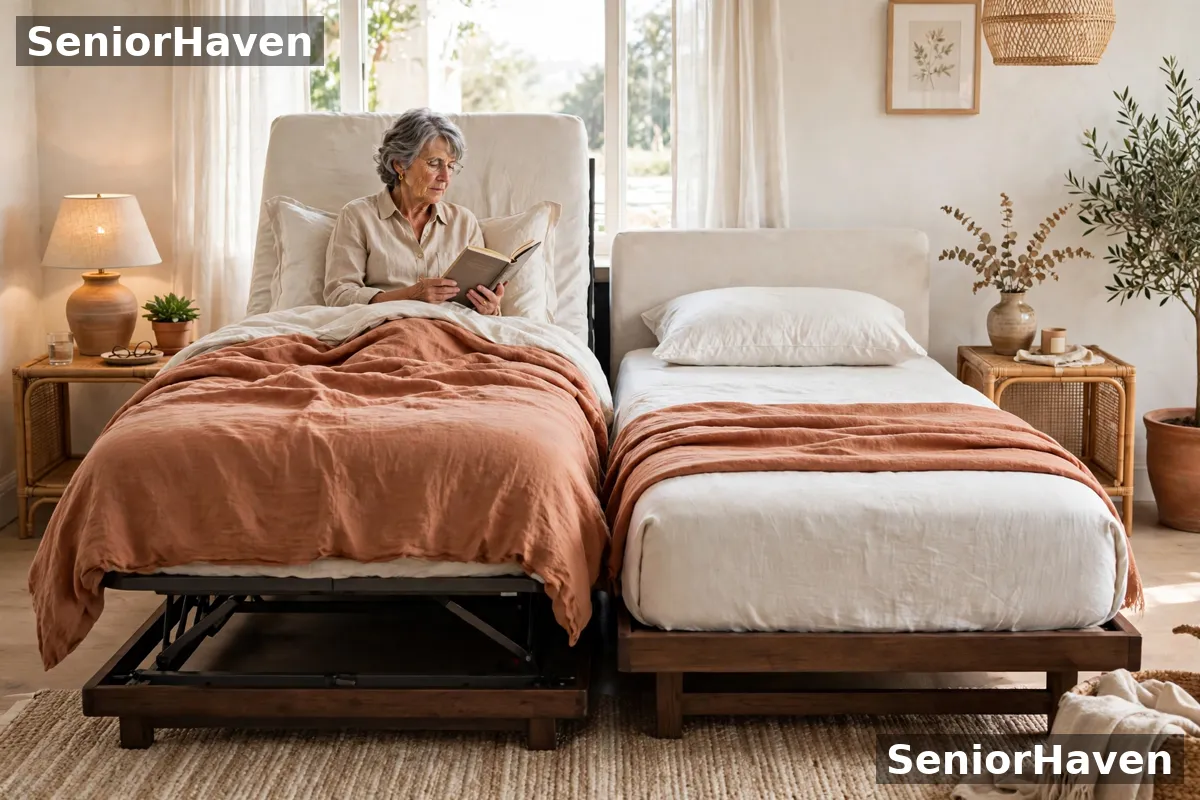
Split king is the one split configuration the opened Australian pages define: two Long Single bases and mattresses side by side, each with its own remote, matching an Australian king in width. Two at 92 centimetres give 184 centimetres, against a King at 183 — measure the exact bases, check the join, and check for a centre gap or step at different heights. Cost a split king as a pair: two bases, two mattresses, two bedding sets, delivery for two heavy pieces. A “split king price” that does not say one half or both is not a price to budget from.
Split Queen dimensions and split-head concepts were not verified on any Australian page opened, and a sister guide's Canadian split queen in inches was not imported. If offered one, ask for each half's centimetres, fitting mattresses and bedding, and each half's price, in writing. Measure the room and the route in first: one clinical bed here is 100 centimetres wide against an 82 centimetre standard doorway, rails removed to manoeuvre it. Ask the seller what the largest delivered piece measures in centimetres.
What an adjustable bed costs in Australia: same-scope prices, conflicts shown
There is no single Australian price: sellers quote a base alone, a base plus mattress, a “starting at” price for an unstated size, and a sale price. Scopes are kept apart, sizes stated only where the page states them, every figure dated. All figures are Australian dollars; delivery, setup, and GST treatment are extra unless stated. Confirm every figure on the seller's page before buying.
Base-only prices verified on pages opened 31 October 2026
| Base and scope | Price, AUD | What the opened page states |
|---|---|---|
| Ecosa ErgoLift — base only | $868, against $1,240 RRP, “Save 30%”; 4 payments of $217 | Mattress and base sold separately. Free metro delivery. 5-year limited warranty. 340 kg frame. Size not mapped. |
| Sealy Element, Double (ELM-ADJ-DBL) | $1,847, InStock | Double, 1385 × 1900 mm, 155 mm high, 62 kg. Legs 200, 75, 50 mm in box. Partial assembly: legs. 10-year manufacturer warranty, split unstated. No mattress mentioned. Postcode-gated delivery; no Australia-wide promise stated. |
| SleepMaker Delta | 1,500.00 AUD in Open Graph metadata, all variants identical | Scope unstated: no size, mattress, delivery, warranty, trial, or capacity. Not base-only or bundle. |
| Seniors Plus Caelum — starting price | From $3,400 | “Starting Price”, before the free-mattress offer. Size unstated. No warranty, trial, capacity, delivery, or installation terms on the page opened. |
| Seniors Plus Neo Plus — starting price | From $4,450 | “Starting Price”, same footnote. Full height plus head and foot, full-body massage, two memory positions, wireless remote, split option. Size and height range unstated. |
Conflict: Sealy Element Double. The 31 October 2026 page states $1,847; an older snippet from a crawl 58 days earlier stated $1,509. This guide uses $1,847 and records $1,509 so the change is visible. Do not average them — $1,678 is a price no page stated. Conflict: Seniors Plus free mattress. The headline presents a free mattress with any adjustable bed base; the terms narrow it to any size Caelum base, a Cosmos mattress in the corresponding size, one per purchase, limited time, while stocks last, no other offer. The narrower wording decides what you receive. Payment plans of 6 to 36 months are mentioned; no cost, interest, or fee was stated.
Kit prices: base plus mattress, Queen, 31 October 2026
Mattress Crafters sells Motion Crafter bases as a kit with a Boutique mattress, or base only. Kit figures are Queen figures. Common terms: free metro delivery, fee outside metro at checkout; 12-year frame, 6-year parts; 120-night trial on the mattress only; Seniors Card 10% off. “Bought separately” figures are the page's own.
| Kit, Queen | Kit, AUD | Queen base only, AUD | Difference |
|---|---|---|---|
| Motion Crafter 1.0 | $1,599; separately $1,898 | $1,299 | Base plus Boutique mattress. |
| Motion Crafter 2.0 | $1,999; separately $2,498 | $1,899 | Adds USB charging, vibration massage. |
| Motion Crafter 3.0 | $2,499; separately $2,998 | $2,399 | Adds ergonomic head tilt, massage wake-up alarm. |
Conflict: the compare table disagrees with the kit cards. The compare table, footer-stated as read 31 October 2026, gives “from” prices of $999, $1,699, and $1,999, size unstated — $200 and $400 below the Queen base prices for the 2.0 and 3.0. Both sets are shown, labelled. Check your size at checkout; budget from the size-tied kit figures.
Dated single-retailer prices: Griffith, read 10 September 2026
Adjustapedic Queen prices from one Griffith retailer, read from its own store 10 September 2026 and can change. Dated, single-retailer figures, not 31 October national prices. Delivery Western Riverina only.
| Product, Queen, 10 Sept 2026 | Price, AUD | What the page states |
|---|---|---|
| Adjustapedic 5.0 base | $1,695, was $2,695 | 320 kg. Under-bed lighting, 2 USB. Folds in half. 6 years motors/electrical, 12 years frame (5.0 and 7.0). |
| Adjustapedic 6.0 base | $1,895, was $2,895 | Adds pillow tilt, 4-setting massage. Warranty split for 6.0 unstated in text fetched. |
| Adjustapedic 7.0 base | $2,295, was $3,695 | Flagship. 320 kg; same stated warranty split as 5.0. |
| Luftstrom Norquay mattress, Queen | $1,749, was $3,499 | Only floor-stock mattress listed as suiting an adjustable base. 60-night guarantee does not apply to floor-stock sale mattresses. |
| 5.0 base + Norquay mattress | $3,444 | Page's own bundle figure ($1,695 + $1,749 as printed). 30% deposit, balance before delivery. Room placement, old-mattress removal on request. |
The page's range starts at $1,395 in Long Single — a smaller size, not a Queen price.
Secondary prices: July 2026 comparison page — labelled, never current
The comparison page opened states its prices were checked in July 2026. Every figure here is July 2026 secondary, none a 31 October verified price, shown dated as the only published figures for several bases.
| Base, July 2026 secondary | Figure | Scope and limits |
|---|---|---|
| Origin SmartComfort | $1,693, all sizes | Each size $1,693, “30% off $2,419 comparable retail average”. Base only; supply a flexible mattress. No Australian price verified on Origin's terms page. “340 kg-class build” is the comparison page's wording. |
| Ecosa ErgoLift | From $868 (Queen, RRP $1,240); King $1,370 | Corroborates $868/$1,240 and maps $868 to Queen. 5-year warranty. “No headline sleep trial.” 340 kg; mattresses to 40 cm. |
| Onebed Adjustable Bed Frame | From $1,250 (Long Single); Queen around $1,505 on sale; Split King higher, check site | 5-year warranty. No massage. Height-adjustable legs. Pricing “moves with promotions”. |
| Peace Lily | From $1,199 (Long Single $1,199; King Single $1,299; Double $1,399; Queen $1,499; Split King $2,199) | 2-year warranty, extendable to 5 free with bundle, or 10 for $300. 9 massage modes, as reported. |
| AH Beard Invigorate | No price stated | “Pricing varies by retailer… Premium tier.” No warranty figure; confirm current terms. Nothing asserted here. |
| Solace Sleep package | No headline price in text fetched | Base plus Allure mattress. 385 kg per side, head 75°, foot 45°, 100-night trial, “up to 25 years” warranty, terms apply — comparison page only. |
Conflict: Origin SmartComfort trial. The July 2026 page claims a 120-night money-back trial for the base. Origin's Australian terms, opened 31 October 2026, state the 120-day trial applies only to listed mattresses, the 120-night trial only to the timber frame, and “we do not offer returns or refunds for bed frames” for change of mind. No base trial is quoted here. The corroborated warranty split — frame/hydraulic 10 years, motor 5, control including Bluetooth 5, massage 5, ports 1, LED 1, remote 1 — is set out again in the delivery section. Never quote “10-year warranty” without the split.
The honest total: add it up yourself, in the same scope. Base-only excludes mattress, split bedding, delivery, setup, and checkout charges. An $868 Ecosa base plus a separate mattress is not comparable with a $1,599 Mattress Crafters kit including a mattress, nor with a $3,400 Seniors Plus starting price for an unstated size. A split king is costed as a pair. Not priced at all: Gilani hospital bed; AH Beard price and warranty; Onebed, Peace Lily, and Solace current manufacturer prices; Ecosa Pro upgrade price; no Amazon Australia listing for a named base was sought or verified.
Weight capacity: ask what the rating includes
No Australian page opened states the basis of a capacity rating — whether it includes mattress, sleeper or sleepers, bedding, or base. Ask for it in writing for the exact model and size. No page opened states a “subtract the mattress first” or percentage headroom rule, and neither is presented here as a standard.
| Base | Capacity as stated | Source and limits |
|---|---|---|
| Ecosa ErgoLift | 340 kg, steel frame | Manufacturer page. Basis unstated. |
| Origin SmartComfort | “340 kg-class build” | Comparison page wording, July 2026 — not a manufacturer specification from the terms page. |
| Solace Sleep package | 385 kg per side | Comparison page only, July 2026. Per side, not per bed. |
| Adjustapedic 5.0 / 6.0 / 7.0 | 320 kg, all three | Retailer page, 10 September 2026. Basis unstated. |
| Gilani hospital bed | 225 kg safe working load | Manufacturer page. Ask what the figure includes for this bed. |
| Aspire ComfiMotion | 200 kg safe working load | Clinical supplier page. Floor height 195 mm. |
| Sealy Element, SleepMaker Delta, Seniors Plus | Not stated on pages opened | No figure asserted. Ask in writing. |
The comparison page's general “340 to 385 kilograms” mixes whole-bed and per-side figures and is not a specification. Compare like with like. For a split king, ask whether each half is rated separately; for a single base, whether the rating covers the whole bed. If your combined weight approaches the rating, step up or ask the seller and your clinician or therapist whether the margin is enough.
Battery backup, remotes, and living alone
Battery backup is the largest open question in this guide, and it is stated as an open question. No Australian page opened for any named lifestyle base — Ecosa, Origin, SleepMaker, Sealy, Seniors Plus, Mattress Crafters, or Adjustapedic — states battery backup, emergency lowering, or a manual override. No backup claim is made for any of them. Do not import backup claims from overseas pages; none was opened as Australian evidence. Narrower facts opened are not backup claims: Gilani's corded handset (“no flat batteries”) is about the handset; Seniors Plus “battery wireless remote” means remote batteries; a clinical supplier's CPR release on an intensive-care bed is not a power-failure procedure.
If the power fails while the bed is raised, do not force the bed flat by hand. Ask the seller in writing whether the base has battery backup, what backup does — return to flat only, or full adjustment — how it is tested, and what to do if there is none. Test any backup on delivery day, power unplugged, with someone present. With no working backup: stay put if safe, use a charged phone or personal alarm within reach, and wait rather than climbing out. People living alone need that plan before the first night. Only Gilani states a 240 volt plug, for a hospital bed; for a lifestyle base, ask where the power point must sit and whether settings survive a power cut.
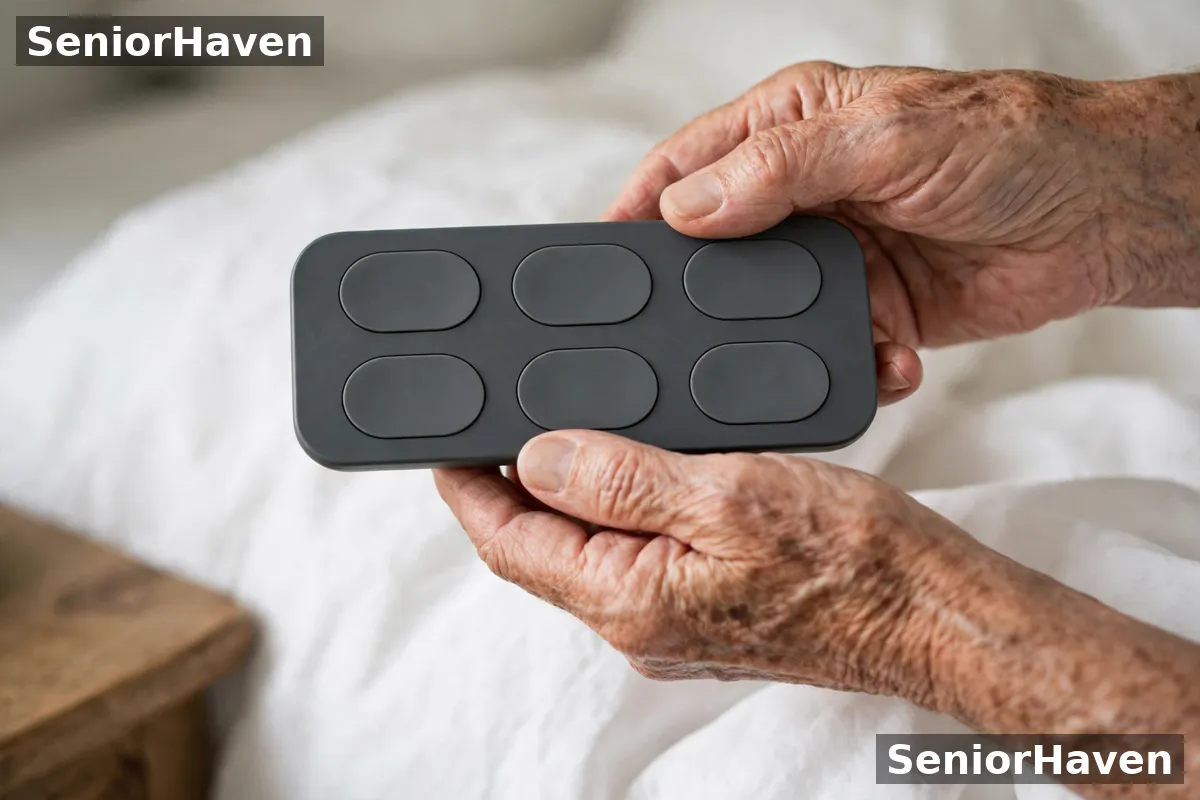
Remotes decide night-time usability, and no page opened compares remotes across brands. Handle the actual remote: large, shaped buttons findable by touch in the dark? Backlit — stated only for the Seniors Plus Caelum remote? Child lock — Ecosa Pro and Sealy Element? One-press flat-return — Gilani corded handset? Ecosa's standard remote uses 2 AAA batteries, presets plus fine adjustment; Sealy's is wireless with smart connectivity; Gilani's is corded and permanently attached. No replacement-remote cost was stated anywhere. Ask about a second remote, app, or base control, replacement cost, and delivery time.
Search Amazon.com.au for adjustable bed base replacement remotes · Search Amazon.com.au for bed remote holder pockets — accessories only; the bases in this guide are bought from Australian manufacturers, retailers, and clinical suppliers, not from Amazon. A replacement remote must match the exact base model.Getting in and out: measuring the right height
The right height is the height you can sit onto and stand from safely, with the support you normally use, on the mattress you will sleep on. No Australian page opened gives a knee-crease measuring method, and none is imported here. Measure with your occupational therapist or physiotherapist where transfers, balance, or strength are a concern, and test in person: sit, stand, and sit again, with your usual support in place. Ask the seller for the flat sleeping-surface height — base plus mattress at your leg setting — in centimetres, in writing.
Leg figures actually stated give the starting point. Ecosa: 33.2, 31.7, and 29.4 centimetres, plus extender pads to 2 centimetres, before the mattress. Sealy: legs of 200, 75, and 50 millimetres in the box. Gilani hi-lo: 48 to 86 centimetres floor to mattress base. Ultra-low clinical bed: 195 millimetres floor height. None is comparable without mattress thickness and leg setting. Add base height to mattress thickness, test the total, and adjust the legs before the delivery team leaves if the base allows it.
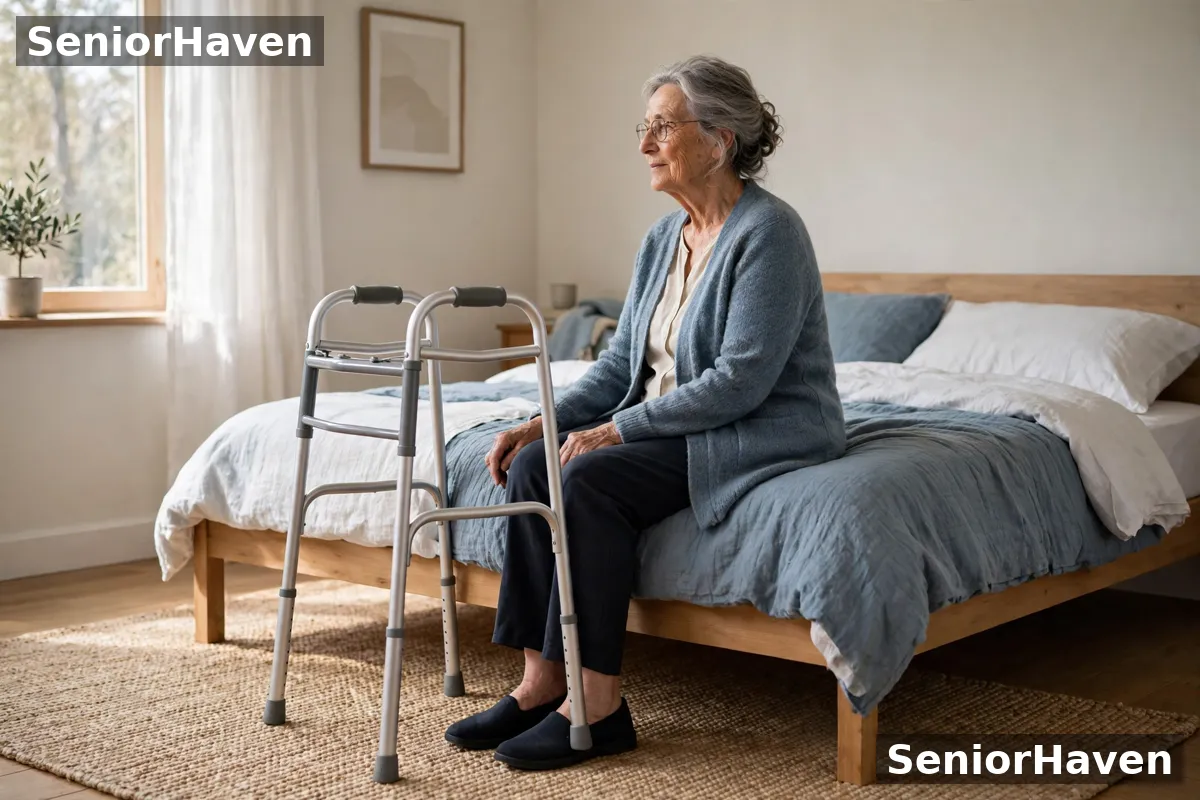
Edge stability matters as much as height. Test sitting on the edge as you would to stand — does it hold you or roll you forward? Test getting out from the raised position too, with bedding on. If standing is difficult or a carer assists you, the question becomes whole-bed height, and a therapist can assess transfer height, rails, and layout in one visit. Rails are separate: Gilani includes full-length rails; a clinical supplier describes rails as usually built-in or attachable for hospital beds, optional or not included for adjustable bases; no retail page prices rails. For split halves, test both at the same height and mattress thickness, or the centre becomes a step.
Wall clearance, zero-clearance, and night-time safety
Two features are often sold as one. Wall-hugger / wall-saver / wall-snuggler: the platform glides backwards as the head rises, keeping the sleeper near the headboard and nightstand. Zero-clearance: the base can sit on the floor, inside a platform frame, or flush against furniture and still articulate, usually with removable legs. Zero-clearance says nothing about staying near the wall. Ask about both, separately, in writing.
Wall-hugger status was not verified for any named Australian base. Do not accept “wall-hugging” unless the manufacturer's specification states a glide distance. The one clearance status verified is Sealy Element zero-clearance; Ecosa's fit-within-frame wording is frame compatibility, not a wall-glider claim. Test headboard distance at your reading position, or ask for it in centimetres, in writing. Ecosa states incompatibility with bed heads with large cushions. No page opened addresses nightstand reach when raised, so test it in person.
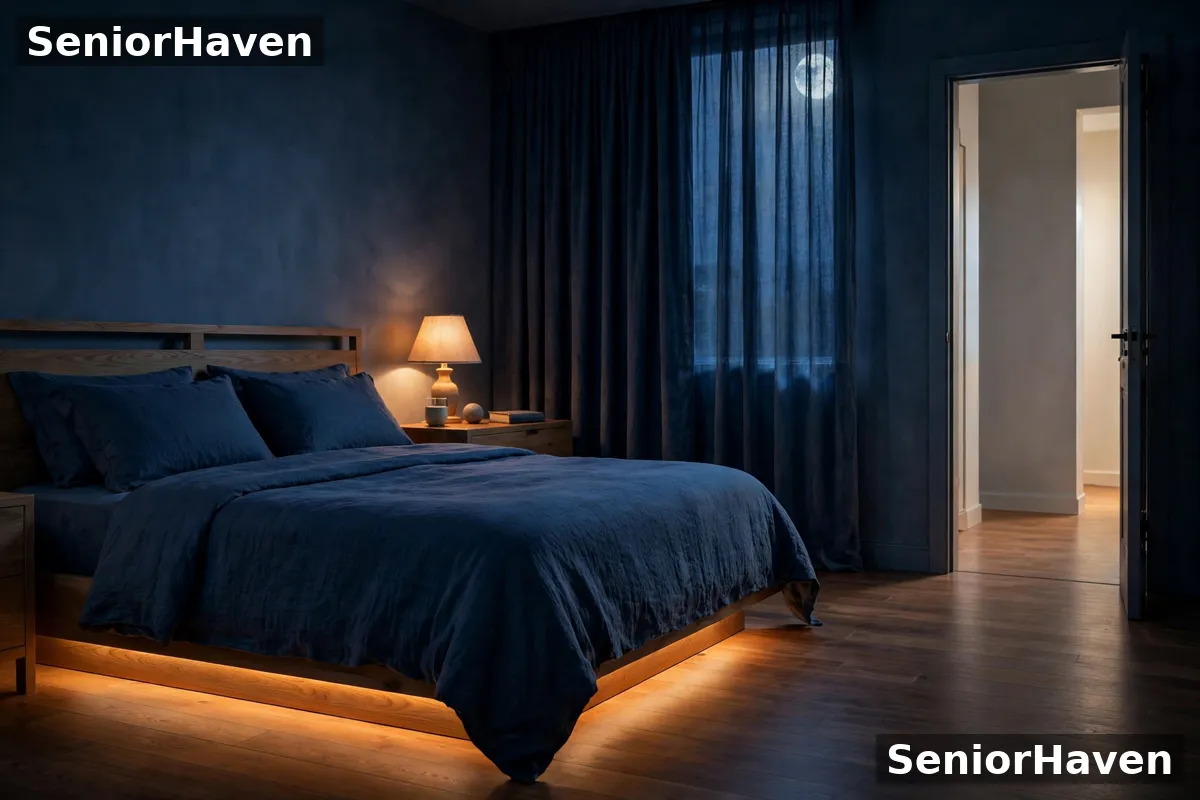
Under-bed lighting helps only if you can switch it on when you need it. It is stated for Adjustapedic bases and as a Pro-upgrade addition for Ecosa. Check how it switches on — remote only, app, motion sensor, or a switch reachable from bed. Ask about a motion sensor, a low-level setting, and whether it works when the bed is flat. Keep the floor path clear and test the lighting in the dark on delivery day.
Search Amazon.com.au for under-bed motion sensor lights · Search Amazon.com.au for motion sensor night lights — accessories only; the bases in this guide are bought from Australian manufacturers, retailers, and clinical suppliers, not from Amazon.Will your mattress work? Compatibility, thickness, and split halves
A mattress that cannot bend fights the base, damages itself, or never reaches the position chosen. Check compatibility with the mattress maker, in writing, for the exact mattress and base, before buying either.
What the opened pages say will bend: memory foam, latex, and pocket-spring hybrids, whose individually wrapped coils move independently — the comparison page's summary, matching Mattress Crafters pairing bases with a flexible Boutique mattress. What will not: traditional continuous-coil innerspring with Bonnell coils, which resists bending and can break down faster. Ecosa is most specific: its base fits most mattresses under 40 centimetres, and is not compatible with its TrueFirm mattress, Bonnell spring mattresses, mattresses over 40 centimetres, Sierra or Elio frames, or bed heads with large cushions. That 40 centimetre cap is Ecosa's figure; no other centimetre thickness guidance was found on a page opened. A worn or sagging mattress should be replaced with the base.
The clinical bed reverses the rule. Gilani includes an articulating foam mattress; only it or a compatible pressure-care upgrade may be used. Do not swap retail and hospital mattresses unless the supplier for that exact bed confirms it in writing. At Griffith, only the Norquay mattress is listed as suiting an adjustable base. Origin compatibility statements were snippet-only, not opened, and are not cited. Split halves must match: same model, thickness, and firmness, or the centre becomes a step. Confirm halves, sheets, and protectors exist for the exact bases, at what price. A split king needs bedding for two Long Singles, not one King set.
Search Amazon.com.au for memory foam mattresses suited to adjustable beds · Search Amazon.com.au for queen mattress protectors for adjustable beds · Search Amazon.com.au for split king sheet sets — accessories and bedding only; confirm mattress compatibility with the mattress maker in writing.What an adjustable bed can and cannot do for health
An adjustable base is a positional and comfort aid, not a treatment. This guide makes no claim that a bed treats, cures, or improves any condition — not reflux, snoring, back pain, arthritis, circulation, or swelling. Seller and review pages opened do make such claims, including “genuinely therapeutic” and pain-relief claims. Those are seller and reviewer claims, recorded only as claims, not endorsed. Talk to your general practitioner, physiotherapist, or occupational therapist before buying for a health or mobility need, and keep using prescribed treatment. Feeling more comfortable in a position is not evidence a condition was treated.
Funding: NDIS, Support at Home, DVA, and state schemes — check before you buy
Every scheme below requires steps completed before purchase, through assessment or a prescriber, and none is presented as covering a retail adjustable base. Seller claims that a bed is “eligible” or “accessible through the NDIS” are seller assertions, not official statements. Buy first and funding may be gone for that purchase. No eligibility or outcome is promised here; all funding facts come only from official pages opened 31 October 2026. See also our Support at Home guide.
NDIS: powered adjustable beds are higher-risk assistive technology
Official NDIS pages list “powered adjustable beds” as assistive technology, funded only where reasonable and necessary and an NDIS support, decided on needs, goals, evidence, and whether another source should fund it. Official cost bands: low-cost under $1,500; mid-cost $1,500 to $15,000; high-cost over $15,000. A seller page giving different thresholds is not the official position. “Adjustable beds” are explicitly higher-risk assistive technology: specialised advice to buy, set up, and use safely, and written advice to buy or rent, generally after assessment by an assistive-technology advisor. Most retail bases here fall in low or mid bands by price alone, but band does not decide funding. No dollar cap, item code, or approved-product list for beds was found on the pages opened.
Support at Home and AT-HM: tiers, and a list-only rule
The Assistive Technology and Home Modifications (AT-HM) scheme gives Support at Home participants separate access to assistive technology and home modifications, without saving from the quarterly ongoing-services budget. Access follows an aged-care assessment, with an assistive-technology tier, a home-modifications tier, or both, in the Notice of Decision and support plan. Tiers: Low under $500; Medium up to $2,000; High up to $15,000 or more if needed. Funding covers the item, a prescription if needed, and wraparound services if needed, generally for 12 months (24, extendable to 48, for specific progressive conditions on medium and high tiers). Over-$15,000 requests need a form and evidence, including a quote and valid prescription.
The decisive rule is list-only: AT-HM funding may only be used for items on the AT-HM list addressing the person's assessed clinical need in their support plan. Whether an adjustable bed appears on the AT-HM list was not verified — the list was not opened — and this guide does not state that Support at Home funds adjustable beds. Check the current list, your support plan, and your provider. Most AT-HM items require a participant contribution; rates were not stated and are not quoted. Participants who transitioned from Home Care Packages must use unspent Home Care Package funds first. Home Care Package levels framing is stale: Support at Home replaced Home Care Packages on 1 November 2025.
DVA Rehabilitation Appliances Program: item AB01, prescriber first
The Rehabilitation Appliances Program (RAP) supplies aids, equipment, and modifications to help clients stay independent; its equipment list includes “beds and related appliances”. Eligibility requires assessed clinical need plus a Veteran Card — All Conditions, or Specific Conditions for a covered condition. Process: see your general practitioner, who assesses or refers; the prescriber prescribes the safest and most suitable item, contacts DVA if approval is needed, and sends the prescription to a contracted supplier, who arranges delivery and installation at no cost. The RAP Schedule lists AB01, “Bed – Adjustable Electrical”, prescribers occupational therapist (general), physiotherapist, and registered nurse. Official warning: “If you decide to buy one without a clinical assessment and prescription, we may not reimburse you afterwards.” No dollar limit or named-product eligibility was stated. Check with DVA, your general practitioner, or prescriber before buying. Items requested through DVA cannot be requested again through another government-funded programme.
New South Wales and Victoria: state schemes, and what was not found
New South Wales — EnableNSW. The SEED Program list includes “positioning equipment — for example, a wheelchair backrest or adjustable bed”. Prescriber requests must meet each category's eligibility and funding criteria. There is a co-payment for most EnableNSW services, based on financial situation at application. EnableNSW is responsible for repairs on equipment loaned through SEED. Full eligibility, any bed dollar limit or subsidy, and loan-versus-own for beds were not found on the pages opened. Victoria — SWEP. The State-wide Equipment Program supports eligible Victorians with subsidised funding; it does not fund the full cost of every item, and a gap may apply. Applications go through a SWEP-registered health professional or assistive-technology practitioner, with assessment of safe use. SWEP gives no retrospective funding. Bed scope, subsidy amounts, and further eligibility were not found on the page opened. Queensland, South Australia, Western Australia, Tasmania, Northern Territory, and the Australian Capital Territory: no official state page was opened, and nothing is asserted, including Queensland MASS, seen only as an unopened snippet. Private health insurance contributions were not verified on any insurer page opened and are not asserted; check with your insurer, in writing, with prescription and exact model.
Delivery, installation, and returns: the heavy part nobody quotes
“Free delivery” and “carried upstairs, assembled, old bed removed” are different services. Ecosa: fast and free metro delivery, no regional cost stated. Mattress Crafters: free metro delivery, fee outside metro at checkout. Gilani: free Australia-wide delivery on online orders for its hospital bed, metro 3 to 7 business days, regional 5 to 14. Griffith: Western Riverina only. Appliances Online wording for Sealy is postcode-gated, no bed-specific Australia-wide promise stated. Origin's terms add delivery-date and address changes within 48 hours of payment, or fees may apply. Get the metro-versus-regional position for your postcode in writing before paying.
Installation varies just as much. Ecosa: stress-free assembly, one box. Sealy Element: partially assembled, legs to fit. Mattress Crafters: 20 to 30 minutes, minimal tools. Griffith: transport and placement in the room of choice, old-mattress removal on request. Gilani: professional setup on request — delivery, assembly, demonstration — plus in-person trial at its Sydney showroom. Ask what your order includes and the cost of each item not included. A heavy base is a two-person lift; a split pair is two.
Trials and warranties are separate contracts — base versus mattress, frame versus motor versus remote. Origin's terms state no change-of-mind returns for bed frames; its 120-day trial covers listed mattresses only, its 120-night trial the timber frame only, and frames carry a 3-hour damage-report window. Mattress Crafters' 120-night trial covers the mattress only; the base is not returnable. Ecosa, Sealy, SleepMaker, and Seniors Plus stated no trial terms on the pages opened. The Griffith 60-night guarantee does not apply to floor-stock sale mattresses. Warranties where stated: Ecosa 5-year limited; Sealy Element 10-year manufacturer, split unstated; Mattress Crafters 12-year frame, 6-year parts; Adjustapedic 6 years motors/electrical, 12 years frame (5.0 and 7.0); Gilani 1 year, annual servicing recommended; Origin frame/hydraulic 10, motor 5, control 5, massage 5, ports 1, LED 1, remote 1. SleepMaker and Seniors Plus stated no warranty. Get base trial and warranty split in writing, and keep packaging until the trial ends.
Search Amazon.com.au for long single fitted sheets · Search Amazon.com.au for bedside caddy organisers — accessories only; the bases in this guide are bought from Australian manufacturers, retailers, and clinical suppliers, not from Amazon.Questions to ask, and mistakes to avoid
- Base only or bundle, which size, sale or regular — what is included, and what is the total?
- Lifestyle or hi-lo — whole-bed height range in centimetres, in writing?
- Capacity for this size — what does the rating include: mattress, sleeper, bedding?
- Battery backup on this model — what does it do, and can we test it unplugged?
- Wall-hugger? Zero-clearance for my frame? Answer both separately, in writing.
- Will my mattress work — maker confirmation in writing, and the thickness limit?
- Base trial in writing — length, refund or exchange, return freight, restocking fee?
- Frame, motor, electrics, remote warranties — years each, and cost after full cover?
- Remote lost or dead — second remote, app, base control, replacement cost and wait?
- Delivery, upstairs carry, assembly, old-bed removal — cost of each, for my postcode?
- Split pair — same height both halves, joining, centre gap, Long Single bedding?
- Funding confirmed in writing before purchase, from the programme and a prescriber?
Mistakes to avoid: comparing base-only with bundle prices; trusting one figure where a seller's own pages disagree; buying for a health condition without a clinician; buying an app-dependent base without a phone beside the bed; buying on massage presets with no stated capacity, backup, or trial; asking about funding after buying. Skip a retail base for now if transfers need help, a clinician has raised homecare equipment, you are largely bedbound, or you live alone without a tested backup plan. Assessment first, purchase second. A Seniors Card discount on bases was stated for Mattress Crafters (10% off bases and kits) in this research — do not assume a general Seniors Card bed discount.
Search Amazon.com.au for deep-pocket queen sheets for adjustable beds · Search Amazon.com.au for bed rails for seniors — accessories only; rails must fit the exact base and suit the sleeper — check with your clinician or therapist before fitting one.The verdict
Our verdict, at the bottom as at the top: buy the mechanism your body needs, on a total cost you added up yourself, from a seller who answered the twelve questions in writing. For most Australian seniors that is a standard lifestyle base in Queen or split king, with a flexible mattress and a measured getting-in-and-out height. Whole-bed height means a clinical assessment first; the Gilani bed is the only fully specified hi-lo bed here, its price was not stated, and it is never a substitute for assessment.
General information only — not medical advice. Persistent reflux, sleep apnoea, heart failure or swelling, a spinal condition, post-surgical recovery, pressure-care needs, or fall risk: talk to your general practitioner, physiotherapist, or occupational therapist before buying. Prices, availability, programme rules, and lineups change; the seller's and programme's own pages are the final word.
Frequently asked questions
- What is the best adjustable bed in Australia for seniors?
- There is no single best base. A standard Queen lifestyle base with a flexible mattress suits most seniors who want head and foot movement. Couples wanting independent sides should consider a split king. Whole-bed height needs a hi-lo bed and a clinical assessment first. Prices were checked 31 October 2026.
- What is the difference between a lifestyle base and a hi-lo bed?
- A lifestyle base moves only the sleeping surface; height is fixed by the legs. A hi-lo bed also raises and lowers the whole bed: the Gilani hospital bed moves from 48 to 86 centimetres, helping sitting and standing and letting a carer work safely. If transfers are difficult, get a clinical assessment first.
- How much does an adjustable bed cost in Australia in total?
- Verified 31 October 2026 figures include Ecosa ErgoLift base only at $868, Sealy Element Double at $1,847, and Mattress Crafters Queen kits at $1,599 to $2,499 including a mattress. Add a mattress if buying base only, plus split bedding, delivery, and setup. Never compare base-only with bundle prices without saying which is which.
- What is a split king, and how much does it cost in Australia?
- A split king is two Long Single bases and mattresses side by side, each with its own remote, matching an Australian king in width. Cost the pair, two mattresses, bedding, and delivery together, with each half priced in writing.
- What weight capacity do I need in an adjustable bed?
- Ask what the rating includes first. Stated capacities are Ecosa ErgoLift 340 kg, Adjustapedic 320 kg, Gilani hospital bed 225 kg safe working load, and Aspire ComfiMotion 200 kg safe working load. Sealy, SleepMaker, and Seniors Plus stated no capacity on the pages opened.
- What happens if the power goes out while my adjustable bed is raised?
- Do not force the bed flat by hand. Battery backup was not verified for any named lifestyle base on the pages opened, so ask the seller in writing what backup exists and test it on delivery day, power unplugged. With no working backup, stay put if safe, use a phone or personal alarm, and wait for help.
- Will my current mattress work on an adjustable bed?
- Maybe. Check with the mattress maker in writing for the exact mattress and base. Memory foam, latex, and pocket-spring hybrids bend; traditional continuous-coil innerspring resists bending and can be damaged. Ecosa caps mattress height at 40 centimetres for its base. Hospital beds allow only their included or compatible pressure-care mattress.
- How do I measure the right bed height for getting in and out?
- No Australian page opened gives a measuring formula, so measure with your occupational therapist or physiotherapist where transfers are a concern, and test the movement in person. Ask the seller for the flat sleeping-surface height, base plus mattress, in centimetres, in writing. Test edge sitting and standing with your usual support.
- What does the Ecosa ErgoLift cost, and what is included?
- On the page opened 31 October 2026, the ErgoLift base only was $868 against $1,240 RRP, with fast and free metro delivery and a 5-year limited warranty. Mattress and timber or upholstered base are sold separately. Size was not mapped in the fetched text, and no trial terms or Pro upgrade price were stated.
- Does the Origin SmartComfort have a 120-night trial or a verified Australian price?
- Neither was verified. No Australian base price was found on Origin's terms page, and a July 2026 secondary figure of $1,693 is not current evidence. The comparison page claims a 120-night base trial, but Origin's terms state the 120-night trial applies only to the timber frame, with no change-of-mind returns for bed frames.
- Does the NDIS cover an adjustable bed?
- Do not budget on it. Official pages list powered adjustable beds as assistive technology funded only if reasonable and necessary, and adjustable beds as higher-risk technology needing written advice and generally an assessment. Bands are under $1,500, $1,500 to $15,000, and over $15,000. No cap, code, or approved list for beds was found.
- Does Support at Home or the AT-HM scheme cover adjustable beds?
- It was not verified. AT-HM funds only items on the AT-HM list addressing an assessed clinical need, in tiers under $500, up to $2,000, and up to $15,000 or more. Whether adjustable beds are on the list was not verified, as the list was not opened. Check the current list, your support plan, and your provider before buying.
- Does DVA cover an adjustable bed through RAP?
- Possibly, through assessment, never by buying first. The RAP Schedule lists AB01 Bed Adjustable Electrical, with occupational therapist, physiotherapist, and registered nurse prescribers. DVA requires assessed clinical need and a Veteran Card, and warns buying without assessment and prescription may not be reimbursed. No dollar limit was stated.
- Do New South Wales or Victoria fund adjustable beds?
- Check before buying; neither route was verified as covering a retail base. NSW EnableNSW SEED lists positioning equipment including an adjustable bed as an example, with prescriber requests and a co-payment for most services. Victoria SWEP offers subsidised funding with a possible gap, through a registered practitioner, and no retrospective funding.
- Are trial and returns terms for the base the same as for the mattress?
- No. Mattress Crafters gives a 120-night trial on the mattress only; the base is not returnable. Origin's terms give no change-of-mind returns for bed frames. Ecosa, Sealy, SleepMaker, and Seniors Plus stated no base trial terms on the pages opened. Get the base trial in writing before you pay.