
← Back to Mobility & Daily Living
Mobility & Daily Living · United KingdomBest Mobility Scooters in the UK: Honest Picks for Pavements, Hills, and the Road
The UK version: Class 2 and Class 3 rules as GOV.UK states them, steep-hill capability from published gradient and motor figures, and £ prices seen at UK retailers on 31 October 2026.
Affiliate disclosure: As an Amazon Associate I earn from qualifying purchases. The picks come from research into specifications, UK rules, and real ownership costs — check the current listing before you buy. It costs you nothing extra and keeps this site free. Read our affiliate disclosure.
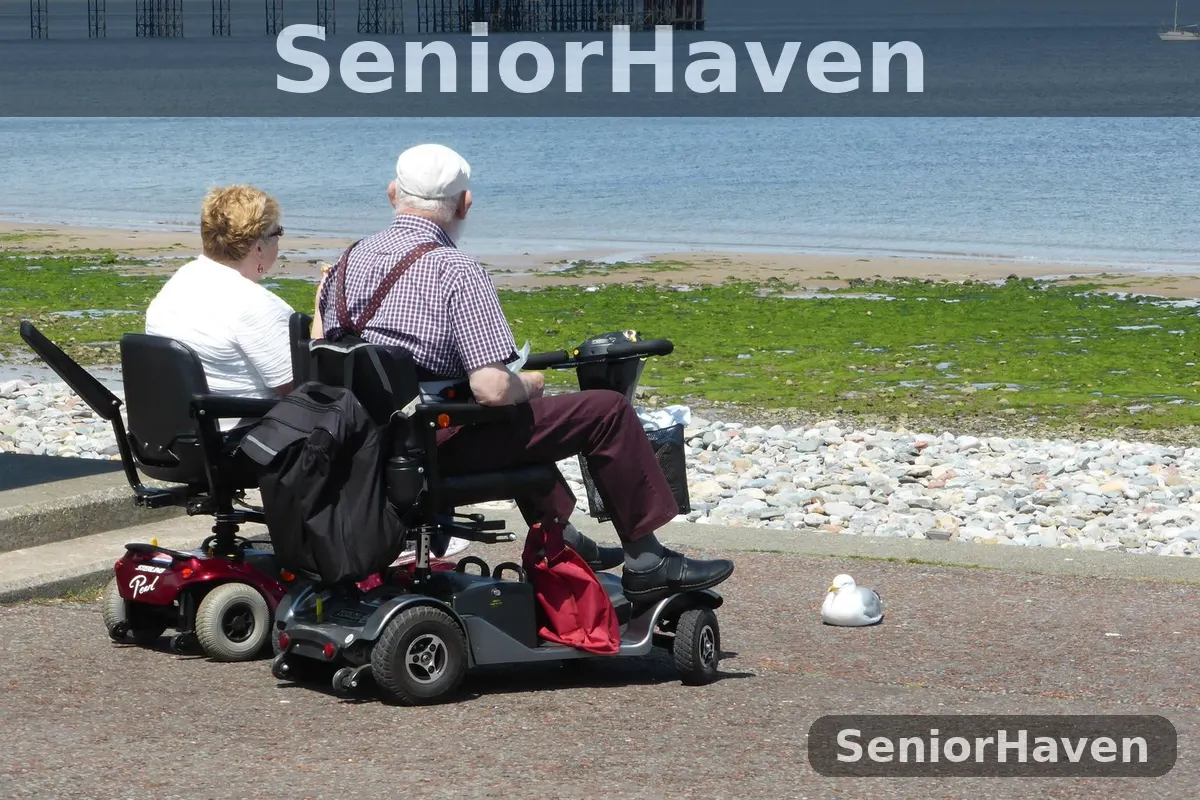
The right scooter fits your body, home, car boot, and steepest hill — in that order. The wrong one is bought on a single number: headline range, top speed, or price, all measured in conditions you will never ride in.
This guide starts from the UK rules, then the machines, then the money: the two legal classes, what "climbs hills" means in gradient degrees and motor watts, real-world range, VAT relief, Motability, and the five-year cost. Every price and specification was seen on a live UK page on 31 October 2026, with contested figures sourced.
The short answer
If you only read one paragraph, read this one. For most UK buyers, the best first scooter is a Class 2 boot scooter that comes apart into liftable pieces — the Pride Go-Go Elite Traveller LX (£1,095.00, Amazon UK, 31 October 2026), light, widely stocked, heaviest piece 15.2 kg. Never lifting it into a car, the heavier Pride Revo 2.0 (£1,639.00) rides better and further. For hills or road use, a Class 3 scooter with a big motor — the Scooterpac Ignite (1,400 W, 12°, £3,199.00) or Savvy 8 (15°, £1,989.00 at 0% VAT, Essential Aids) — registered with the DVLA. No scooter here is "free", and no headline range should be believed: knock 20–30% off every maker range (ReviewMobility, October 2026).
Our verdict, up front: class first, scooter second. Class 2 (4 mph, pavements, no registration) suits most people, most of the time. Class 3 (8 mph, road use, DVLA registration) suits longer journeys, hills, and rural lanes — with duties: lights, indicators, horn, mirror, road discipline.
One honest note. We did not road-test these scooters. We read the live GOV.UK rules pages, manufacturer and retailer specification sheets, and ReviewMobility's October 2026 ranking (specifications last checked 3 September 2026). Where sources disagreed, we used the least favourable figure. Treat every price as seen on 31 October 2026 and check before you buy.
The 10 scooters at a glance
Ranges are maker figures — read the hills section before comparing them. "Unpublished" means no maker or retailer figure was found on a live page, not that the scooter cannot climb. Prices are as seen on 31 October 2026 at the retailer named in each pick section.
| Scooter | Class | Top speed | Maker range | Gradient limit | Motor | Heaviest piece | Max user weight | Price seen |
|---|---|---|---|---|---|---|---|---|
| Go-Go Elite Traveller LX | Class 2 | 4 mph | 6–9.75 miles | Unpublished | Unpublished | 15.2 kg | 125 kg | £1,095.00 |
| Apex Rapid | Class 2 | 4 mph | 5.5–10.5 miles | Unpublished | Unpublished | About 16.6–17.75 kg | 136 kg | £1,197.00 |
| Monarch Genie | Class 2 | 4 mph | Up to 9 miles | 8° | Unpublished | 12 kg (no battery) | 120 kg | £1,558.00 |
| GoGo Carbon Ultra Lite | Class 2 | 4 mph | 9.3 miles | Unpublished | Unpublished | 13.7 kg (no batteries) | 120 kg | £2,499.00 |
| Roma Sovereign 4 | Class 2 | 4 mph | Up to 20 miles | Unpublished | Unpublished | Does not dismantle | 136 kg | £1,499.00 |
| Revo 2.0 | Class 2 | 4 mph | Up to 17 miles | Unpublished | Unpublished | 25.85 kg | 170 kg | £1,639.00 |
| Livewell Pavement | Class 2 | 4 mph | 10–11 miles | Unpublished | Unpublished | Unpublished | 115–136 kg (confirm) | £565.00 |
| Green Power Super Lightweight | Class 2 | 4 mph | 15 miles (claimed) | Unpublished | Unpublished | Unpublished | 121 kg | £489.00 |
| Savvy 8 | Class 3 | 8 mph | Up to 28 miles | 15° | 600 W / 800 W (conflict) | Does not dismantle | 180 kg | £1,989.00 (0% VAT) |
| Scooterpac Ignite | Class 3 | 8 mph | Up to 40 miles | 12° | 1,400 W | Does not dismantle | 178 kg | £3,199.00 |
Gradient limits are published for only three of these ten scooters — the hills section explains how to judge the rest. And the lightest scooters are the shortest-range ones: every kilogram saved comes out of the battery.
Boot and travel scooters
Boot scooters come apart — usually into four or five pieces: seat, battery pack, front and rear sections, sometimes the tiller — so no single lift is too heavy. Class 2: 4 mph, pavements and pedestrian areas, no DVLA registration. The trade is comfort and range: small wheels, little or no suspension, small batteries. If you almost never lift it, skip to the pavement section — you are paying for lightness you will not use.
The honest test is not total weight but the heaviest single piece, lifted to boot-lip height by the person who will do the lifting, on a wet day. Do that test before you buy.
1. Pride Go-Go Elite Traveller LX — the best all-rounder
ReviewMobility's October 2026 ranking puts the LX first among boot scooters: five pieces, heaviest 15.2 kg, 35.8 kg without batteries, 125 kg maximum user weight. Range 6 miles (12 Ah) or 9.75 miles (18 Ah) — the listing decides. No suspension, only a sprung seat post. Price seen: £1,095.00 on Amazon UK, 31 October 2026.
Who it suits: most first-time buyers who travel by car: shopping, appointments, days out. Watch for: the 6-mile battery is a short leash — over 5 miles round trip, buy the 18 Ah version. No published gradient limit: test it on a steep drive first. Dealer prices vary enormously — Welzo £958.44 with VAT relief, Marks Mobility £1,679.00 — so compare VAT-relieved prices.
Search Amazon.co.uk for the Pride Go-Go Elite Traveller LX
2. Apex Rapid — the comfortable boot scooter
The Apex Rapid is for people who feel every bump: the only one here with front and rear suspension, ReviewMobility's most comfortable lightweight. 41 kg without batteries, heaviest section about 16.6–17.75 kg, carries up to 136 kg. Range 5.5 miles (12 Ah) or 10.5 miles (18 Ah). Clearance is low — 3.4–3.6 cm — so high kerbs need care. Price seen: £1,197.00 on Amazon UK, 31 October 2026.
Who it suits: buyers with back pain or arthritis who need suspension and dismantling. Watch for: the low clearance and heavier sections than the LX. Try it through your own front door and gate before buying.
Search Amazon.co.uk for the Apex Rapid mobility scooter
3. Monarch Genie — the lightest lift, with a gradient figure
The Genie is the lightest lift here: 12 kg without battery, pieces no heavier, and one of only three scooters with a published gradient limit — 8°, per ReviewMobility's specification check. Range up to 9 miles, or 18 with a second battery. Maximum user weight 120 kg. The 5-inch solid tyres never puncture but ride firmly; no suspension. Price seen: £1,558.00 on Amazon UK, 31 October 2026.
Who it suits: smaller, lighter users, and anyone whose limit is lifting — including a spouse or carer. Watch for: 8° is modest — many steep residential streets are steeper, so see the hills section before assuming it climbs your road. On long, rough pavements the Apex Rapid will be kinder.
Search Amazon.co.uk for the Monarch Genie mobility scooter
4. GoGo Carbon Ultra Lite — the folding carbon scooter
The Carbon Ultra Lite folds rather than dismantles: carbon-fibre frame, 13.7 kg without batteries, 120 kg maximum user weight, 288 Wh battery. Specification-table range 9.3 miles; a 15-mile marketing figure is disregarded by ReviewMobility, and by us. No suspension; 2.5 cm clearance — the lowest here. Price seen: £2,499.00 on Amazon UK, 31 October 2026.
Who it suits: buyers who cannot manage dismantling and need a one-piece fold — small car, taxi, or train. Watch for: the price buys lightness, not range or comfort. Low clearance rules out rough ground, and the small battery means short trips. Check the folded dimensions against your boot before paying £2,499.00.
Search Amazon.co.uk for the GoGo Carbon Ultra Lite
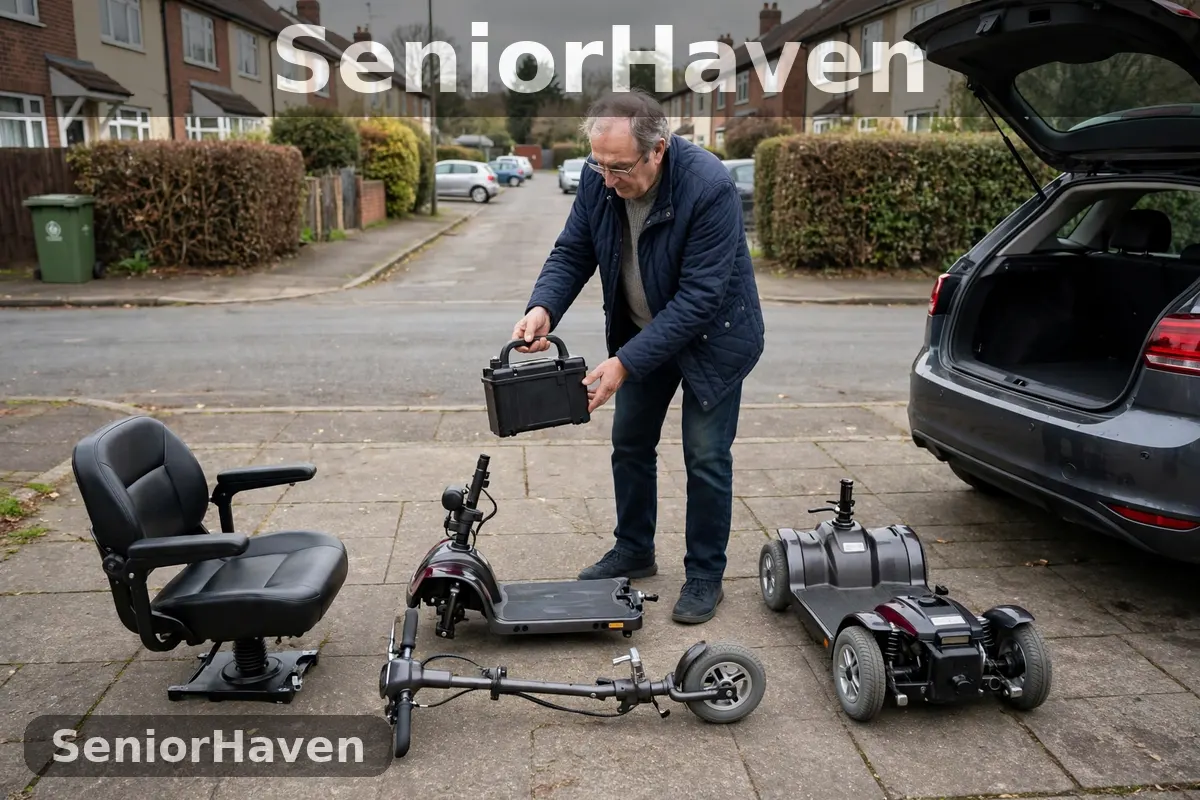
Two budget notes. The Livewell Pavement (£565.00, Amazon UK) is the cheapest here: Class 2, 4 mph, 10–11 miles, about 38–41 kg, no headlight, no suspension, quoted maximum user weight differing between sources (115–136 kg) — confirm it for the exact listing. The Green Power Super Lightweight (£489.00) claims 15 miles, publishes no weight, carries 121 kg; treat the range claim with caution and ask the seller the weight. Price-bought scooters need the test-ride checklist most.
Pavement scooters
Pavement scooters do not dismantle for a car boot — or dismantle into pieces too heavy to be useful. The weight buys ride quality: bigger wheels, bigger batteries, suspension, comfortable seats, and ranges for a real day out. Still Class 2: 4 mph, pavements, no DVLA registration. They suit riders who store and charge in a garage or shed. Test one over your worst pavement, up your kerbs, and through your gate: one that cannot turn in your hallway is the wrong scooter.
5. Roma Sovereign 4 — the long-range pavement scooter
The Sovereign 4 is the range pick: up to 20 miles, 82 kg, carrying up to 136 kg. Pneumatic tyres with 7.5 cm of clearance — the most of any Class 2 scooter here — ease kerbs and uneven pavements. No suspension, so the tyres cushion. Price seen: £1,499.00 on Amazon UK, 31 October 2026.
Who it suits: riders who go far and want the longest leash in the class. Watch for: 82 kg does not go in a car boot. Pneumatic tyres can puncture — carry the repair kit or know who fixes it locally. No published gradient limit: test your hills.
Search Amazon.co.uk for the Roma Sovereign 4
6. Pride Revo 2.0 — the comfortable heavyweight
The Revo 2.0 is the comfort pick: Comfort-Trac suspension, large seat, highest honest load rating here — 170 kg brochure, 181 kg product page; where sources conflict, the least favourable figure is used. Range up to 17 miles, with ReviewMobility's honest split: 17.8 miles at 91 kg, 14.8 miles at 181 kg — proof range depends on the rider. About 82 kg with batteries; heaviest piece 25.85 kg, so it technically dismantles but the pieces are heavy. Price seen: £1,639.00 on Amazon UK, 31 October 2026.
Who it suits: larger riders, riders with pain needing suspension, and daily riders on imperfect pavements. Watch for: the weight. If anyone must lift it — into a vehicle, up a step, over a threshold — it is the wrong choice. Measure your doorways: a wide, heavy machine.
Search Amazon.co.uk for the Pride Revo 2.0
Class 3 road scooters
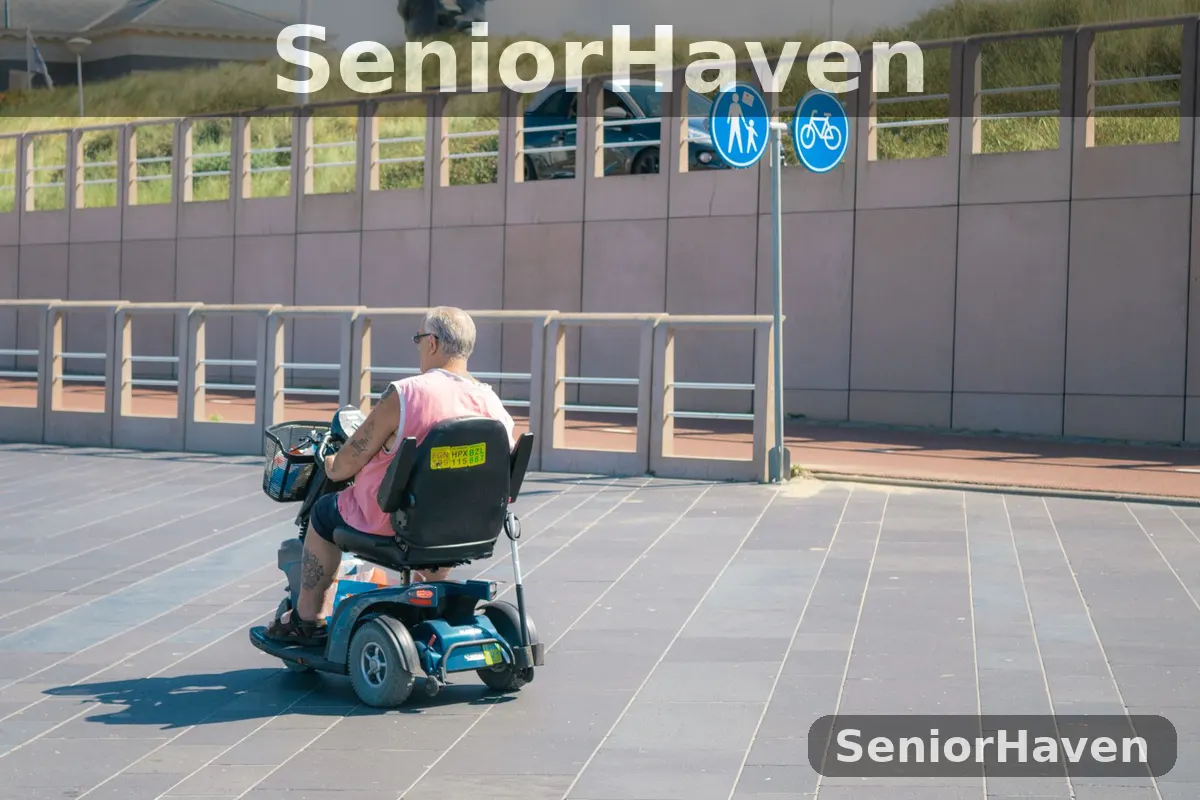
Class 3 is a different machine and legal position: up to 8 mph, road use, DVLA registration, required lights, indicators, horn, and mirror. Heavy — 135 kg and 147 kg here — and non-dismantling. For longer journeys, rural lanes, and hills, demanding road awareness, the Highway Code, and confidence in traffic. For pavements and shops only, it is more machine, weight, and duty than you need.
7. Savvy 8 — the hill-capable Class 3 at a VAT-relief price
The Savvy 8 carries the strongest hill figure here: 15° published gradient limit (Welzo), up to 28 miles, 180 kg maximum user weight, 135 kg machine. The motor figure is contested — 600 W (ReviewMobility, Welzo) versus 800 W (Bell Mobility) — confirm it on the maker's sheet before buying on motor power. Price seen: £1,989.00 at 0% VAT at Essential Aids (reduced from £2,795.00), 31 October 2026; higher elsewhere (£2,050.00 VAT-relieved at Welzo; £2,395.00 excluding VAT at Felgains, older listing) — compare VAT-relieved like with like.
Who it suits: hilly areas, longer journeys, and heavier riders needing the 180 kg capacity. Watch for: the motor conflict, and the weight — 135 kg needs a ramp or garage, not a boot. DVLA registration is required before road use; see the rules section.
Search Amazon.co.uk for the Savvy 8 mobility scooter
8. Scooterpac Ignite — the most powerful scooter here
The Ignite is the heavyweight here: 1,400 W, up to 40 miles, 12° gradient limit, 147 kg, 178 kg maximum user weight, heated seat. For the longest journeys and hardest hills, at £3,199.00 on Amazon UK, 31 October 2026. ReviewMobility also lists the Ignite Grande, a bariatric version carrying 210 kg at £4,499.00 — worth knowing if 178 kg is not enough.
Who it suits: steep or rural areas, maximum power and range, storing and charging at home. Watch for: 147 kg, the highest price here, and the same Class 3 duties as the Savvy 8. The heated seat is comfort, not a reason to choose it — choose on gradient, range, weight capacity, and price.
Search Amazon.co.uk for the Scooterpac Ignite
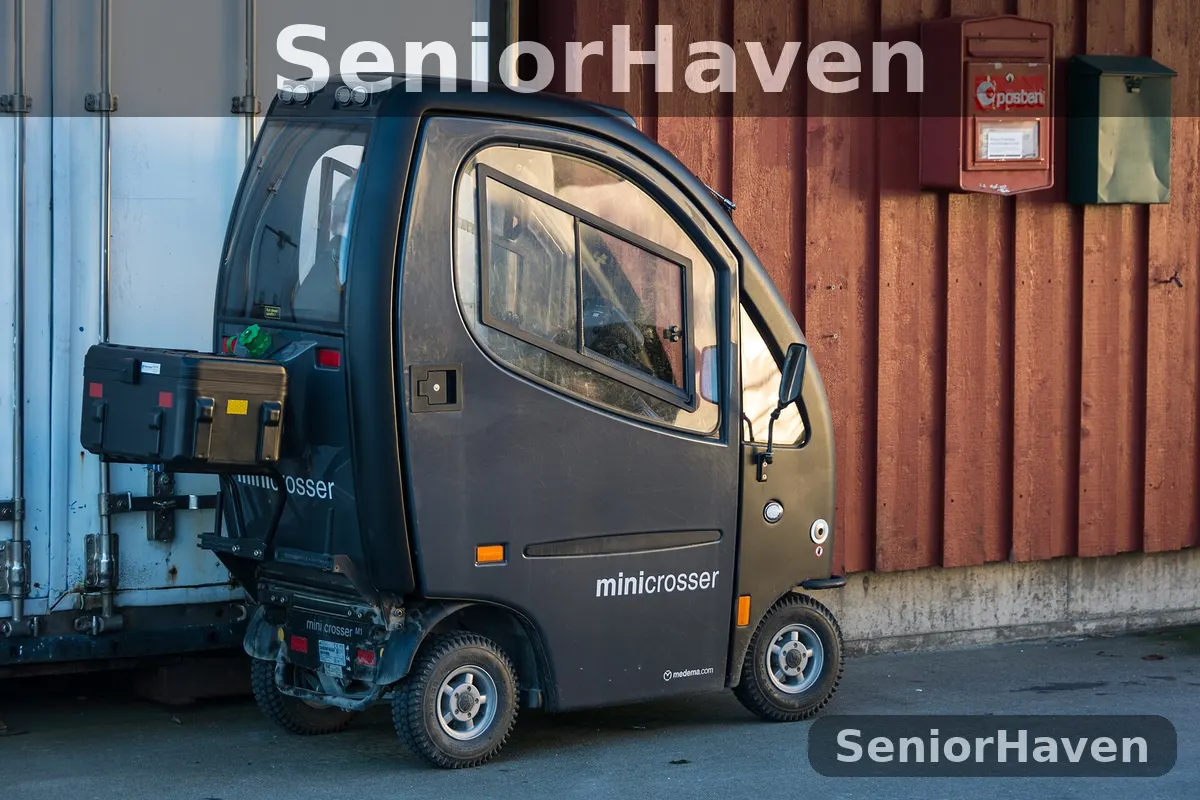
Enclosed cabin scooters exist in the UK — the best known is the Scooterpac Cabin Car — but no UK price was verified live for one on 31 October 2026, so none is priced here.
Steep hills: gradients, motors, and the descent
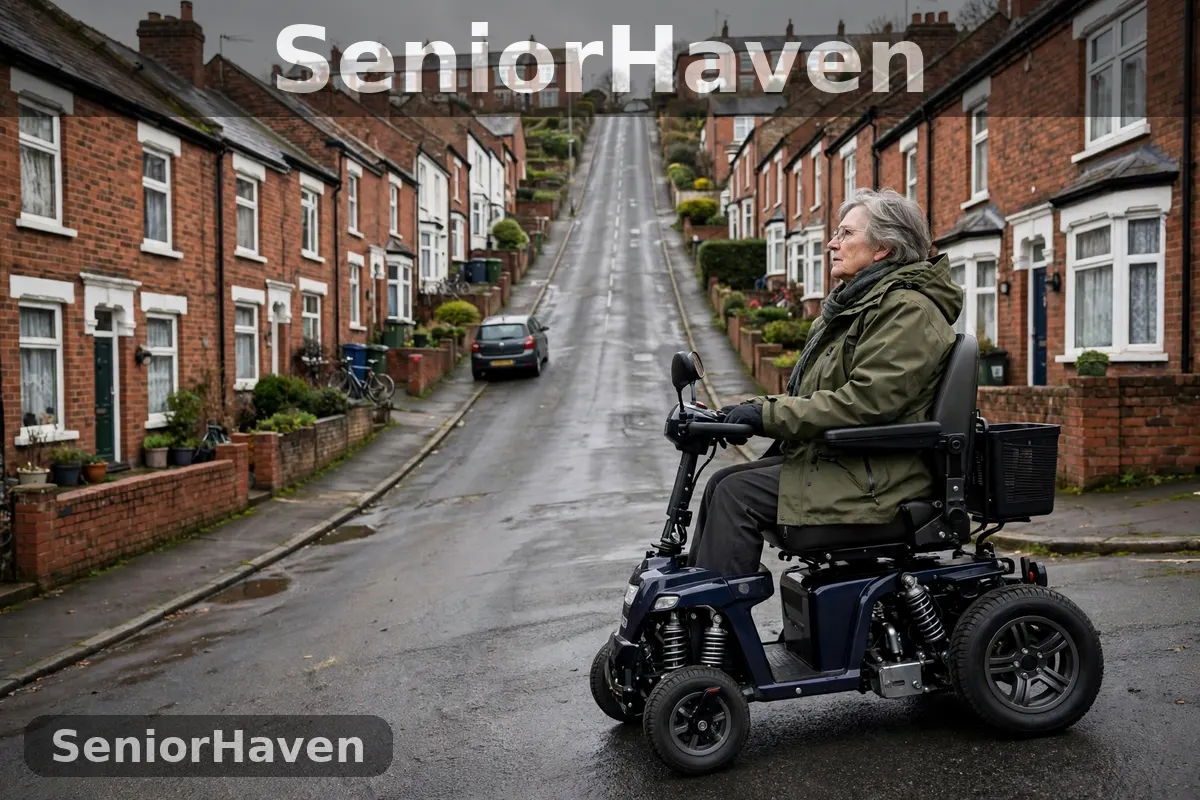
The section most UK guides skip, and the one that decides whether a scooter works where you live. A showroom slope is not your street: a scooter may stop, strain, or roll back there. The honest pre-test evidence is three figures: gradient limit, motor power, and the range penalty on hills. Only three scooters here publish a gradient limit; for the rest, the motor figure and a test on your hill are all you have.
| Scooter | Gradient limit (published) | Motor | What it means |
|---|---|---|---|
| Savvy 8 | 15° (Welzo listing) | 600 W / 800 W (conflict — confirm) | Steepest published limit here |
| Scooterpac Ignite | 12° (ReviewMobility) | 1,400 W | Most powerful motor here |
| Monarch Genie | 8° (ReviewMobility) | Unpublished | Modest hills only; test your street |
| All other picks | Unpublished | Mostly unpublished | No figure, no promise — test first |
What does a gradient mean on your street? 1-in-10 is about 5.7°; 1-in-6 about 9.5°; the steepest residential streets reach 1-in-4, about 14°. An 8° scooter will not hold 14°, however slowly you approach it. A 15° scooter is rated for the steepest streets most people live on. Published limits are maker or retailer figures for a stated load on a dry, even surface — a ranking, not a guarantee for a wet, potholed hill with shopping aboard.
The motor rule. Easy Living Mobility's July 2026 steep-hill guide: for steep hills, look for at least 700 W. The Ignite (1,400 W) and the 1,000 W hill models clear it; the Savvy 8 sits near it (contested 600/800 W); the boot scooters, mostly unpublished, do not. Power is not the whole story — weight, tyres, and gradient matter too — but below 700 W a hill scooter is a contradiction, and a seller claiming otherwise should give the gradient figure in writing.
Range on hills. Hills eat range. ReviewMobility applies a 20–30% discount to maker ranges for real-world riding; hills, cold, and a heavier rider push further. A 20-mile scooter returning 14–16 on the flat may return 10–12 on a hilly round trip. Plan your longest journey at 60% of the maker figure; if that is not enough, buy more battery, not more hope.
The descent matters as much as the climb. Coming down, a scooter needs controlled braking: electromagnetic braking holds speed without fading, and releasing the throttle should slow and stop the machine, not let it run away. The Titan lists front disc, rear drum, and electromagnetic braking — ask other sellers about that combination. Never ride down a hill you have not first climbed slowly, never descend diagonally across a camber, and keep both hands on the tiller. A descent that frightens you on a test ride will frighten you every day.
Hill picks from Easy Living Mobility
Easy Living Mobility's steep-hill guide (15 July 2026) names five Class 3 hill models, priced on its own site on 31 October 2026 — specialist hill machines at retailer prices, not Amazon prices, and none in ReviewMobility's top ten. Summit 8mph, £1,399.99: Class 3, 8 mph, 1,000 W, 16-inch tyres. Titan, £2,399.99: Class 3, 1,000 W, front disc plus rear drum plus electromagnetic braking — the strongest braking here. Vogue, £1,799.99: Class 3, 1,000 W, 13.5-inch pneumatic tyres. iGlide Emperor, £2,051.00: 25 miles, high clearance, captain's seat. Model T, £1,899.99: 8 mph, 700 W dual-motor, folding, 10-inch tyres — the only folder meeting the 700 W rule. No gradient limits were published for these five; ask for the figure for your weight, and test your own hill.
Search Amazon.co.uk for the Summit 8mph scooter
Search Amazon.co.uk for the Titan Class 3 scooter
Search Amazon.co.uk for the Vogue Class 3 scooter
Class 2 vs Class 3: the rules, DVLA, and insurance
The class decides where you may ride, how fast, and what paperwork you owe. Definitions below are from GOV.UK's "Using mobility scooters and powered wheelchairs: classes", read live on 31 October 2026; other sources are named where used.
| Rule | Class 2 | Class 3 |
|---|---|---|
| Maximum speed | 4 mph | 8 mph |
| Pavements and pedestrian areas | Yes | Yes, max 4 mph |
| Cycle tracks | Yes | Yes |
| Cycle lanes | No | No |
| Roads | No | Yes |
| DVLA registration | Not required | Required |
| Required equipment | None specified | Lights, indicators, horn, mirror |
| Bus lanes, motorways, dual carriageways over 50 mph | Not applicable | Must not use |
Cycle track versus cycle lane is a real distinction most guides blur. A cycle track is separated from the road by a barrier or distance, and both classes may use it; a cycle lane is painted on the road, and scooters must not use it. Paint means stay off; a separate track behind a kerb or barrier means you may use it. When in doubt, treat it as a lane.
DVLA registration for Class 3. A Class 3 scooter must be registered with the DVLA before road use. Registration carries no fee and Class 3 scooters are exempt from vehicle tax — confirm both on GOV.UK. Registration is not a licence or a test: there is no driving test for mobility scooters. Keep the document with the scooter's paperwork, and give your insurer the number.
Licence, age, and insurance. No driving licence is needed for either class. Retailers consistently state the minimum age for Class 3 is 14; GOV.UK's classes page sets class definitions, not the age rule, so verify that point on GOV.UK's rules page if it matters to you. Insurance is not legally required for either class, per ReviewMobility — but "not legally required" and "not needed" differ: a £500–£4,500 machine can injure a pedestrian and be stolen from a hallway. Before your first road journey, read the Highway Code section for mobility scooter users.
Not in a class. GOV.UK also defines a third group: faster than 8 mph, wider than 0.85 metres, or over 150 kg (200 kg with attached equipment). Those may only be used on the road, need a licence and DVLA registration, may need insurance, and carry car-level penalties. None of the scooters here falls in that group, but if a seller offers a machine faster than 8 mph or wider than 0.85 metres, check its legal position before paying.
VAT relief: the 20% most buyers miss
Most eligible buyers can buy at 0% VAT — a 20% saving — and many never claim it because no one tells them. HMRC VAT Notice 701/7 zero-rates certain goods for people who are chronically sick or disabled, for personal or domestic use. Not means-tested, no registered-disability status or HMRC permission needed, but a written declaration to the supplier is required. The supplier keeps the declaration; you keep the saving.
In practice: a scooter listed at £1,197.00 including VAT costs £997.50 at 0% VAT. The Savvy 8's £1,989.00 at Essential Aids is a VAT-relieved price; at full VAT it would be about £2,387.00. Always compare VAT-relieved with VAT-relieved: the Go-Go LX spread (£958.44 VAT-relieved at one dealer, £1,679.00 at another) only makes sense once you know which prices include VAT. Ask every seller first: "Is that price with or without VAT relief?"
Two cautions. Amazon charges full VAT at checkout — almost never the VAT-relieved price — so a VAT-relieving dealer is often cheaper even when Amazon's headline looks lower. And repairs are contested: one source says the relief carries to repairs, another says it does not. Ask the supplier whether a repair or part qualifies, in writing, before paying. A seller who will not discuss VAT relief is a seller to leave.
Motability: a route to check, not a promise
The Motability Scheme leases mobility equipment to people receiving certain mobility allowances — the most misunderstood route here, routinely described as "free scooters", which it is not. The allowance is exchanged for a lease, typically covering scooter, insurance, servicing, and breakdown cover. You do not own the scooter, and if the allowance stops, the lease ends.
Eligibility turns on the allowance, not the diagnosis, as stated consistently across sources checked on 31 October 2026. Qualifying allowances: PIP Enhanced Rate Mobility (£75.75 per week), DLA Higher Rate Mobility, Armed Forces Independence Payment, the War Pensioners' Mobility Supplement, and, in Scotland, Adult Disability Payment Enhanced Rate Mobility — generally with at least 12 months remaining. Daily-living alone, or Standard Rate mobility, does not qualify. Whether the rules apply to you is for Motability and the Department for Work and Pensions — no website should promise eligibility, funding, or a particular scooter.
Lease terms conflict between sources — three years in one guide, five in another — so no single term is stated here: confirm the current term, any advance payment, and the end-of-lease position with Motability before signing. Compare the lease honestly against buying: inclusive insurance, servicing, and breakdown cover suit someone wanting no surprises, not someone keeping a bought scooter eight years. Check Motability's own website and helpline — not a retailer with a scooter to sell.
The real five-year cost
The purchase price is the smallest honest number in scooter ownership. Over five years, insurance, batteries, servicing, tyres, and accessories add up — for a cheap scooter, they can exceed the purchase price. Budget for all of them: the scooter you can afford to run is the one you will still ride in year three.
Insurance: £30–£80 a year. That range comes from ReviewMobility's October 2026 guide, which also notes insurance is not legally required. Over five years: £150–£400, protecting a £1,000–£4,000 machine against theft, accidental damage, and third-party claims — the last matters most, as a claim can far exceed the scooter's price. Specialist mobility insurers cover all three; home insurance usually does not cover a scooter away from home. Get a quote before buying, and check theft cover for a shed or garage, where most scooters live.
Batteries: the largest single running cost. Batteries are consumables: lead-acid packs last roughly two to three years of regular use; lithium lasts longer and costs more. No single battery price is stated here — packs differ sharply by model and chemistry — so ask the seller for the replacement price for your exact model, in writing, before buying. A battery left flat over winter may never recover.
Servicing, tyres, and the rest. Budget for an annual service — brakes, tyres, steering, battery health, electrics — and ask the cost before buying; prices differ by dealer and area. Pneumatic tyres puncture and wear; solid tyres do not puncture but ride harder and still wear. Add a waterproof cover, a lock, and, for Class 3, a high-visibility vest — small money preventing large bills. A ramp or shed modification can cost more than the scooter: measure doorways, thresholds, and storage before ordering.
Second-hand and refurbished, safely
A second-hand scooter can be the best value here — or the most expensive mistake. The difference is the battery: a machine may be £300 and its replacement pack several hundred more, and private sellers rarely know the battery's true condition. Never buy second-hand without a test ride and a battery check, and never pay before riding it up a hill.
Refurbished from a dealer is the safer route. A reputable dealer refurbishes with a new or tested battery, services brakes and steering, and gives a warranty — typically three to twelve months. Ask for the warranty in writing, the battery's age and test result, and the service history. A dealer-refurbished Go-Go LX with fresh battery and six-month warranty beats a private £400 scooter with unknown battery and no comeback. Private sales need a checklist: ride twenty minutes including your hill; check the gauge under load; inspect tyres, seat, tiller, and charger; ask how it was stored and the batteries' age; confirm the charger is correct — the wrong charger damages batteries and can be a fire risk. A seller refusing a proper test is a seller to leave.
Red flags that end a deal: cutting out under load; a gauge dropping sharply on a slope; cracked tyres; a wobbling tiller; a hot or smelling charger; no paperwork for a Class 3 machine; any scooter "just needing a new battery" — price the battery first, because "just" does a lot of work. A machine wintered in a damp shed will have corrosion and a tired battery whatever the advertisement says.
The test-ride checklist
Run this checklist on every scooter you seriously consider, in this order. It takes an hour and prevents a £1,000–£4,000 mistake. Bring the rider, the person who will lift it, and the shoes and coat the rider actually wears.
- Ride your own hill. Not the showroom ramp — your steepest street, at your weight, with shopping aboard. Climb slowly, stop halfway if safe, pull away again, then descend, checking the brake holds speed without grabbing.
- Do the boot test. Dismantle it, lift every piece into your boot, reassemble, and time it. Any piece too heavy, or pieces that do not fit, fail the scooter whatever its specification says.
- Do the doorway test. Ride it through your front door, gate, and narrowest hallway, and turn it in your smallest room. If it cannot turn where you live, it cannot live with you.
- Do the kerb test. Mount and drop a standard kerb slowly, straight on, checking clearance. Never mount a kerb at an angle — that is how scooters tip.
- Do the seat test. Sit twenty minutes, adjust seat, armrests, and tiller, and check knees, back, and hands. A seat hurting in twenty minutes will hurt for years. Check the controls with winter gloves on.
- Do the control test. In a quiet area, practise stopping, reversing, and tight turns. Check the speed control is smooth at the slowest setting — pavement riding is slow, and a jerky throttle exhausts. Test horn, lights, and indicators on Class 3.
- Do the battery test. Ask the dealer for the battery's charge state and age, and ride until charge visibly drops. A gauge falling fast on a short ride tells you the battery's real condition.
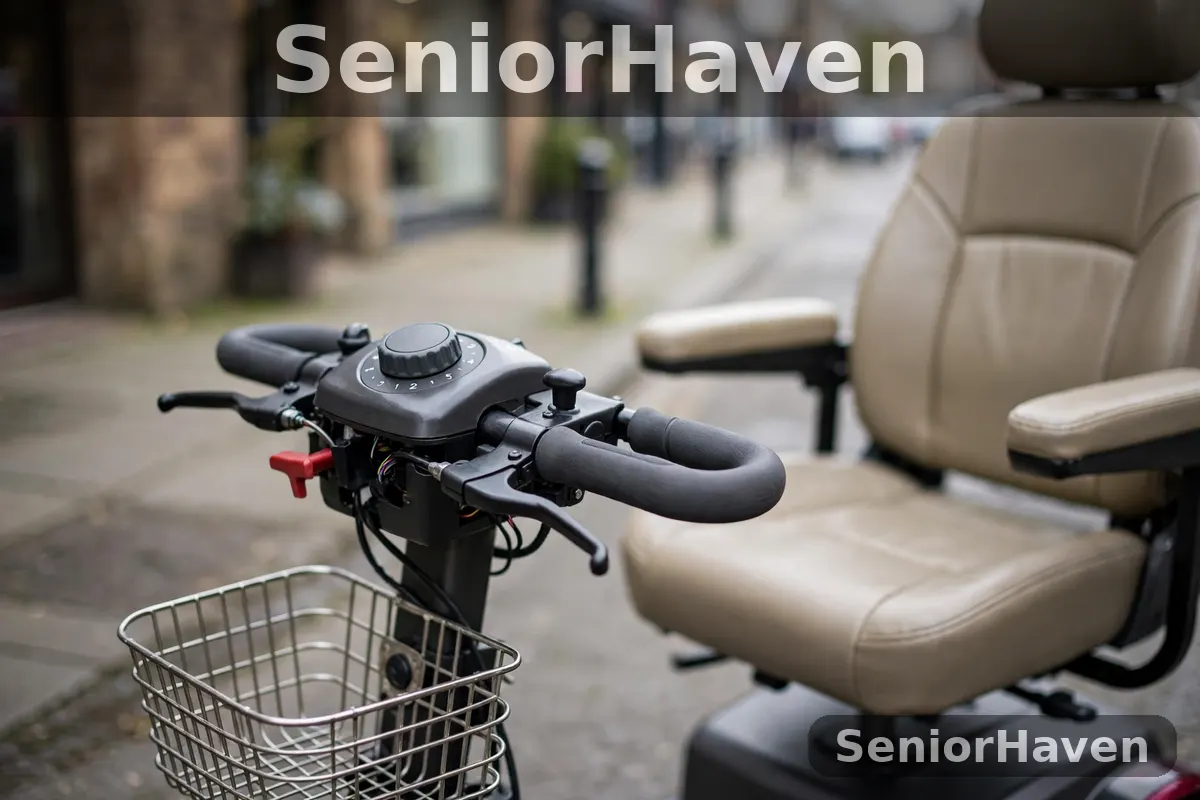
Ask for a home demonstration — the only honest way to run this checklist: your hill, doorways, boot, and storage. A dealer demonstrating only in a showroom is selling a showroom scooter. Note every machine: model, price with and without VAT relief, battery size and replacement cost, warranty terms, service charges. Two demonstrations beat one long day; fatigue hides discomfort.
Battery care, charging, and winter
Batteries decide whether a scooter is reliable or anxious. Most here use sealed lead-acid; some use lithium. The rules agree: charge little and often, never leave a battery flat, keep it warm and dry.
Charging: charge after every substantial use, even at half gauge — partial charging does not harm modern batteries, but deep discharge does. Use only the charger for that model, at a dry indoor socket, never on a wet pavement or in a damp shed. Unplug at full; never leave it charging for days. If unused for weeks, charge fully first and top up monthly — a battery left flat over winter is often replaced in spring.
Winter: cold cuts range — 15 summer miles may be 10–12 in January, and the 20–30% discount rule is a summer figure. Store dry and above freezing if you can, charge indoors, wipe road salt off machine and charging port after every winter ride: salt corrodes connectors, mimicking a dead battery. In an unheated shed, bring a removable pack indoors in the coldest weeks — check the manual first; some packs stay with the machine.
When to replace: a battery no longer covering your shortest journey, dropping sharply under load, or swelling, leaking, or smelling needs replacing — do not nurse it. Buy the correct pack for the exact model; dispose of the old one via retailer take-back or council battery recycling, never household waste. Keep receipt and date; battery age is the first question any buyer or dealer asks.
Storage, transport, buses, trains, and flying
A scooter lives somewhere every night — sort it before it arrives: dry, secure, level, with a power socket nearby — garage, dry shed with power, or a hallway wide enough to pass safely. It must not block a fire escape, doorway, or neighbour's access. Measure with the scooter's actual length and width, plus room to walk around and plug in. Damp storage without charging costs a battery; hallway storage blocking the front door costs an argument with the fire service.
Cars: boot scooters dismantle into a boot; pavement and Class 3 need a ramp, hoist, or adapted vehicle. Ramps need a safe gradient and a second person for heavy machines; hoists need professional fitting. Measure the boot with seats in place, and check the ramp's rating against the scooter's weight — 147 kg on a 100 kg ramp is an accident. Buses and trains: the position differs by operator, route, and vehicle. Many accept Class 2, often with a size limit or permit scheme; Class 3 is generally too large for buses. Check with your local operator, and trial a journey off-peak. Never assume one bus means every bus on the route. Flying: airlines carry scooters as mobility aids, but batteries have airline rules — especially lithium, with watt-hour limits and declarations. Contact the airline well before flying, with battery type and watt-hour rating from the manual, and arrive early. Never turn up with no prior arrangement.
Mistakes, and who should skip a scooter
The common mistakes are one error: buying before understanding the life it must fit. Buying on headline range — the 40-mile scooter returning 25 miles with you aboard, in winter, on hills. Buying on top speed — 8 mph is a road speed; most riding is at 4 mph or less. Buying cheapest without pricing battery, service, and insurance. Buying Class 3 for pavement-only use — more weight, more duty, no benefit. Buying without a home demonstration. Ignoring VAT relief — paying 20% more than the next buyer. Storing damp and uncharged — replacing the battery in spring.
Who should skip a scooter, or pause: poor balance, vision, or reaction time means a professional assessment first — GP, occupational therapist, or mobility assessment centre. No safe charging and storage at home means solving storage first. Daily crossings of fast, busy roads with no pavement alternative mean looking at the route, not just the machine. Buying for someone else without them present means stopping: the rider's weight, hands, eyesight, and confidence decide, and a surprise scooter is a surprise problem. A walking aid, rollator, powered wheelchair, or community transport scheme may be better — this guide helps you buy the right scooter if one is right, not to sell scooters to everyone.
The verdict
For most UK buyers, the Pride Go-Go Elite Traveller LX (£1,095.00, Amazon UK, 31 October 2026) is the right first scooter: light pieces, wide availability, room for insurance, a cover, and a lock. Riding from home without lifting, the Pride Revo 2.0 (£1,639.00) is the comfort choice, the Roma Sovereign 4 (£1,499.00) the range choice. For hills or long journeys, Class 3 with a real gradient figure and a motor over 700 W — the Savvy 8 (£1,989.00 at 0% VAT) or Scooterpac Ignite (£3,199.00) — registered with the DVLA, ridden with lights and indicators. Whatever you buy: claim VAT relief if you qualify, get a home demonstration on your hill, budget for insurance, batteries, and servicing first.
The scooter is only half the purchase; the routine is the other half: charged after every ride, stored dry, serviced yearly, insured, ridden within its limits. A £565.00 scooter ridden daily beats a £3,199.00 scooter in a damp shed; a scooter that climbs your hill beats one that climbs only a showroom ramp. Class first, scooter second, hill test last — in that order, you buy once.
Related reading: Mobility Scooters for Seniors (US Guide) · Best Ice Grips for Shoes for Seniors in the UK · Fall Detection Devices for Seniors
Frequently asked questions
- What is the best mobility scooter in the UK?
- It depends on class and job. For most buyers, the Pride Go-Go Elite Traveller LX (£1,095.00, Amazon UK, 31 October 2026) is the best first buy — Class 2, 15.2 kg heaviest piece. For comfort at home, the Pride Revo 2.0 (£1,639.00). For hills and roads, Class 3: the Savvy 8 (£1,989.00 at 0% VAT) or Scooterpac Ignite (£3,199.00). Class first, then scooter.
- What is the difference between a Class 2 and a Class 3 mobility scooter?
- Class 2: up to 4 mph, pavements, pedestrian areas, cycle tracks, no DVLA registration. Class 3: up to 8 mph, road use, DVLA registration, required lights, indicators, horn, mirror. Neither may use cycle lanes, bus lanes, motorways, or dual carriageways over 50 mph. Definitions from GOV.UK's classes page, read 31 October 2026.
- Do I need to register a mobility scooter with the DVLA?
- Only Class 3, before road use; Class 2 needs none. Registration carries no fee and Class 3 scooters are exempt from vehicle tax — confirm both on GOV.UK. Registration is not a licence, and there is no driving test for mobility scooters.
- Do I need a driving licence or insurance for a mobility scooter?
- No driving licence is needed for either class. Insurance is not legally required, per ReviewMobility, but is strongly worth having: £30–£80 a year for theft, accidental damage, and third-party cover. Retailers consistently state the minimum age for Class 3 is 14 — verify it on GOV.UK's rules page if it matters to your household.
- What is the best mobility scooter for steep hills?
- A Class 3 scooter with a published gradient limit and motor of at least 700 W: Savvy 8 (15°), Scooterpac Ignite (12°, 1,400 W), or Easy Living Mobility's Summit, Titan, Vogue, Emperor, Model T (700–1,000 W). Always test on your own steepest street; a published figure is for a stated load on a dry, even surface.
- What gradient can a mobility scooter climb?
- Only the published figure for that model. Savvy 8: 15°. Ignite: 12°. Genie: 8°. Most scooters publish none, which means no promise. As a scale: 1-in-10 is about 5.7°, 1-in-6 about 9.5°, 1-in-4 about 14°. An 8° scooter will not hold a 14° street.
- How far will a mobility scooter really go on one charge?
- Less than the maker figure. ReviewMobility's October 2026 ranking applies a 20–30% real-world discount; hills, cold, and a heavier rider reduce it further. The Revo 2.0: 17.8 miles at 91 kg, 14.8 miles at 181 kg. Plan your longest regular journey at 60% of the maker figure.
- Can I take a mobility scooter on a bus or train?
- It depends on operator, route, and vehicle. Many accept Class 2, often with a size limit or permit scheme; Class 3 is generally too large for buses. Check with your local operator and trial a journey off-peak. Never assume one bus means every bus on the route.
- Can I get VAT relief on a mobility scooter?
- Most eligible buyers can buy at 0% VAT under HMRC VAT Notice 701/7, if chronically sick or disabled and the scooter is for personal or domestic use. Not means-tested; no HMRC permission or registered-disability status needed; a written supplier declaration is required. A £1,197.00 scooter costs £997.50 at 0% VAT. Amazon charges full VAT, so a VAT-relieving dealer is often cheaper.
- Can I get a mobility scooter through Motability?
- Possibly, with a qualifying allowance: PIP Enhanced Rate Mobility (£75.75 per week), DLA Higher Rate Mobility, Armed Forces Independence Payment, War Pensioners' Mobility Supplement, or, in Scotland, Adult Disability Payment Enhanced Rate Mobility — generally with 12 months remaining. The scheme leases the scooter for the allowance; it is not free, and you do not own it. Check with Motability directly.
- How much does a mobility scooter cost in the UK?
- From £489.00 (Green Power) and £565.00 (Livewell), through £1,095.00–£1,639.00 mainstream, to £1,989.00 at 0% VAT (Savvy 8) and £3,199.00 (Ignite) — all seen 31 October 2026. Add insurance (£30–£80 a year), servicing, and a replacement battery over five years. Claim VAT relief where you qualify.
- What is the lightest mobility scooter that fits in a car boot?
- The Monarch Genie (12 kg without battery) is the lightest lift; the Go-Go LX dismantles with a 15.2 kg heaviest piece; the GoGo Carbon Ultra Lite folds as one piece at 13.7 kg without batteries. The test is the heaviest piece lifted to boot-lip height by the person who will do it.
- How long do mobility scooter batteries last?
- Lead-acid: roughly two to three years of regular use; lithium lasts longer and costs more. Charge after every substantial use, never leave a battery flat, store dry and above freezing, top up monthly if unused. A battery no longer covering your shortest journey, or dropping sharply under load, needs the correct pack for your model.
- Can I use a mobility scooter on the pavement?
- Yes. Both classes may use pavements and pedestrian areas; Class 3 must keep to 4 mph there. Both may use cycle tracks (separated from the road) but not cycle lanes (painted on the road). Give way to pedestrians, slow in crowds, take care at driveways and dropped kerbs.
- Should I buy a second-hand mobility scooter?
- Refurbished from a reputable dealer, with tested or new battery and written warranty, can be good value. A private sale is riskier: the battery is the unknown cost, so ride twenty minutes including a hill, check the gauge under load, inspect tyres, steering, and charger, and price a replacement battery first. Leave any seller refusing a proper test.